The landscape of the National Football League is often defined by mid-season maneuvers that, at first glance, appear to be minor adjustments to a roster but eventually evolve into franchise-altering events.
On October 22, 2019, one such transaction occurred when the Detroit Lions opted to move veteran safety Quandre Diggs to the Seattle Seahawks.
This decision was met with immediate scrutiny from fans and analysts alike, as Diggs was not only a productive starter but also a captain and a cornerstone of the locker room culture.
To understand the full scope of this exchange, one must look beyond the names and evaluate the strategic intent, the draft capital involved, and the long-term impact on both organizations.
This analysis provides a deep dive into what the Detroit Lions received in exchange for one of their most respected defensive leaders and how the ripple effects of that day are still felt years later.
The Transaction Ledger: Assets Exchanged
In the high-stakes environment of the NFL trade deadline, value is often subjective. The Detroit Lions, led at the time by General Manager Bob Quinn and Head Coach Matt Patricia, were looking to “rebuild” the defensive identity.
In contrast, the Seattle Seahawks were searching for a veteran presence to stabilize a secondary that was transitioning away from the legendary “Legion of Boom” era.
The following table outlines the specific assets involved in the trade:
| Asset Category | Provided by Detroit Lions | Received by Detroit Lions |
|---|---|---|
| Players | Quandre Diggs (Safety) | None |
| Draft Capital | 2021 Seventh-Round Pick | 2020 Fifth-Round Pick |
| Transaction Date | October 22, 2019 | October 22, 2019 |
As the records indicate, the Lions sent Quandre Diggs and a future 2021 seventh-round draft pick to the Seahawks. In return, the Lions acquired a 2020 fifth-round pick, which they ultimately used to select running back Jason Huntley.
The Return on Investment: Evaluating Jason Huntley
When a team trades a proven veteran for a mid-round draft pick, the success of that trade is inherently tied to the performance of the player selected with that pick.
For the Detroit Lions, the “face” of the Quandre Diggs trade became Jason Huntley, a dynamic running back out of New Mexico State.
- Draft Profile: Huntley was known for his elite speed and capability as a kick returner. In the context of the 2020 NFL Draft, the Lions viewed him as a potential “gadget” player who could provide a spark on special teams and depth in the backfield.
- The Outcome: Despite the excitement surrounding his speed, Huntley’s tenure in Detroit was remarkably brief. He failed to make the final 53-man roster during his rookie training camp and was waived in September 2020.
- Post-Detroit Career: After being waived by the Lions, Huntley was claimed by the Philadelphia Eagles. While he managed to find a role as a depth piece and returner elsewhere, the Lions realized zero on-field production from the primary asset they received in the Diggs trade.
This lack of “return” is a critical point of failure in the Lions’ management strategy during this period.
Divesting a high-value human asset like Diggs for a draft pick that resulted in a player who never played a regular-season snap for the franchise is a textbook example of poor asset optimization.
Strategic Misalignment: Why the Trade Happened
To understand why the Lions would accept such a lopsided deal, one must examine the internal philosophy of the Detroit front office in 2019. The organization was attempting to implement a rigid, “scheme-first” defensive system.
Diggs, known for his outspoken leadership and instinctive style of play, reportedly had friction with the coaching staff’s restrictive approach.
Culture vs. Talent
The trade was widely viewed as a “message” move. By trading a captain, the coaching staff signaled that compliance with the system was more important than individual talent or locker room seniority.
Financial Flexibility
While the Lions gained some minor salary cap relief, the primary motivation was the acquisition of draft capital to continue the “Patriot Way” rebuilding process.
Market Valuation
At the time of the trade, many league insiders were surprised by the low price point. A fifth-round pick for a Pro-Bowl caliber safety in his prime is generally considered below market value.
The Seattle Perspective: A Masterclass in Acquisition
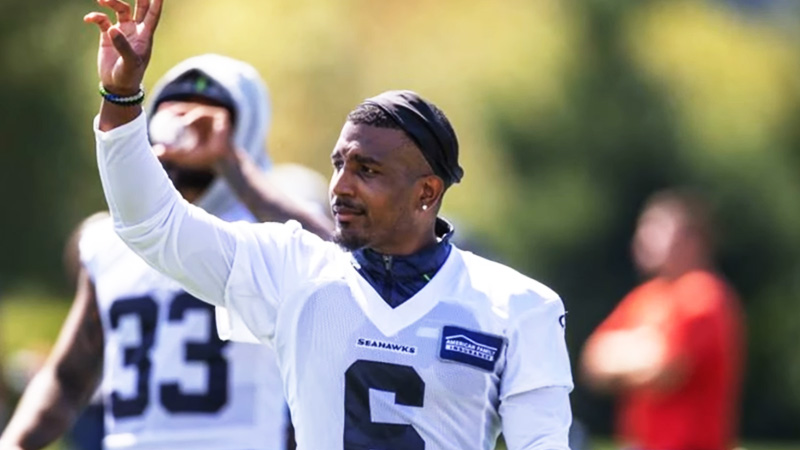
While Detroit struggled to justify the move, the Seattle Seahawks executed one of the most successful mid-season trades in recent history. By acquiring Diggs and a 2021 seventh-round pick, they solidified their defense for several seasons.
The Impact of Quandre Diggs in Seattle:
- Immediate Integration: Diggs recorded three interceptions in his first five games with the Seahawks, instantly transforming their turnover differential.
- Accolades and Consistency: During his tenure in Seattle, Diggs earned three consecutive Pro Bowl selections (2020, 2021, 2022). He became the first player in the league to record at least three interceptions in six consecutive seasons.
- Locker Room Stability: Diggs filled the leadership vacuum left by departing veterans, becoming a mentor for younger defensive backs and a vocal leader on the field.
Locker Room Fallout and Defensive Decline
The departure of Diggs had a devastating effect on the Detroit Lions’ defensive performance and team morale. Defensive players openly expressed their shock and disappointment following the announcement on October 22, 2019.
- Statistical Regression: Following the trade, the Lions’ secondary saw a significant increase in passing yards allowed and a decrease in total takeaways.
- Erosion of Trust: Trading a popular leader for a future fifth-round pick damaged the trust between the players and the front office. It created a perception that no player was safe, regardless of their contribution to the team’s success.
- The Secondary Vacuum: The Lions spent the next several years attempting to find a consistent starter at the safety position, often spending high draft picks and significant free-agent capital to fill the hole left by Diggs.
Critical Analysis: Lessons in Organizational Management
From a corporate and management perspective, the Quandre Diggs trade serves as a cautionary tale regarding the dangers of prioritizing “process” over “people.” In any high-performance organization, the value of a veteran leader who understands the institutional knowledge and commands respect from his peers cannot be easily quantified by a draft value chart.
- Avoid Devaluing Proven Assets: Trading a “sure thing” (a Pro Bowl safety) for a “possibility” (a 5th-round pick) requires a high degree of confidence in your scouting department. If that scouting fails, the trade becomes a total loss.
- Cultural Continuity Matters: Drastic changes to organizational culture—especially those that involve removing popular leaders—often lead to a period of instability and decreased productivity.
- Market Timing: Trading a player mid-season when your team is in a “win-now” window (or pretending to be) sends a confusing message to stakeholders and employees alike.
Final Verdict
The trade of Quandre Diggs on October 22, 2019, remains one of the most polarizing moments in recent Detroit Lions history.
While the organization sought to gain draft capital and reshape its defensive culture, the actual return—a fifth-round pick used on Jason Huntley—failed to provide any tangible value to the franchise.
Meanwhile, the Seattle Seahawks gained a perennial Pro Bowler who anchored their defense for years.
This move serves as a reminder that in the world of professional sports, the most expensive mistakes are often the ones where a team trades away a known leader for the mere hope of a future star.
For the Lions, the cost of the trade was much higher than just a safety; it was a loss of identity that took years to reclaim.