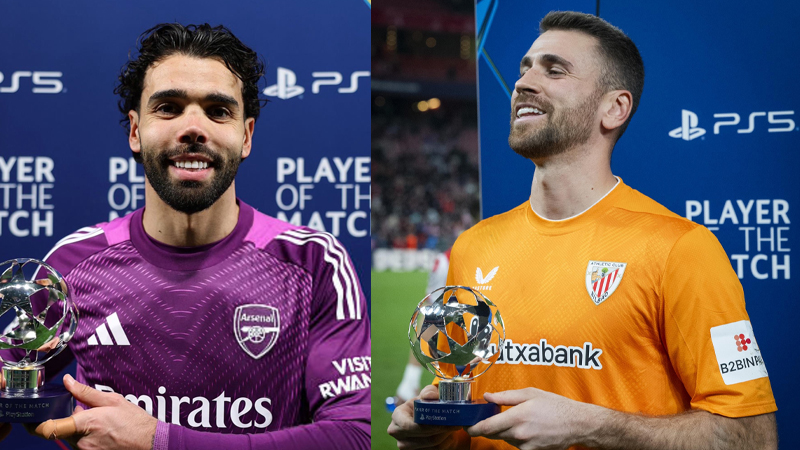
The debate over Spain’s starting goalkeeper has reached a fever pitch as the 2026 World Cup approaches, pitting David Raya’s record-breaking Premier League form against Unai Simón’s established international pedigree.
While English media outlets hail Raya as a world-class revolutionary for Arsenal, Spanish manager Luis de la Fuente remains steadfast in his loyalty to Simón, the man who anchored Spain’s Euro 2024 triumph.
This creates a fascinating tactical divide: do you prioritize the modern, ball-playing dominance of Raya or the tournament-tested stability of Simón?
Understanding who is truly “better” requires looking beyond basic saves and into the tactical soul of the Spanish national team.
The Statistical Disconnect: Comparing Elite Club Performance
When examining raw data from the 2025–2026 domestic season, the gap between the two contenders appears staggering.
David Raya has enjoyed a historic campaign with Arsenal, leading the Premier League in clean sheets and drawing praise from club legends like Thierry Henry, who suggested Raya deserves Player of the Season honors.
Conversely, Unai Simón’s numbers at Athletic Club reflect the challenges of a team sitting mid-table, facing significantly more pressure than the disciplined Arsenal backline.
The following data highlights the performance disparity between the two during their most recent club campaigns:
| Metric | David Raya (Arsenal F.C.) | Unai Simón (Athletic Club) |
|---|---|---|
| Clean Sheets | 21 | 7 |
| Goals Conceded | 25 | 60 |
| Save Percentage | 69.8% | 64.9% |
| Passing Accuracy | 64.9% | 58.1% |
| Appearances | 40 | 38 |
While these figures favor Raya, it is essential to note that Arsenal’s elite defensive structure limits the volume of shots Raya faces, whereas Simón is often left exposed in a less possession-heavy Athletic Club system.
Raya’s 21 clean sheets are a testament to his concentration and organization, but Simón’s lower save percentage is influenced by the higher difficulty of chances he encounters weekly in La Liga.
Why Unai Simón Remains the “Indisputable” Choice
Despite the overwhelming statistical evidence supporting Raya, Luis de la Fuente has explicitly labeled Unai Simón as “indisputable” for the national team.
This decision isn’t based on a refusal to acknowledge Raya’s talent; rather, it is rooted in a management philosophy that values continuity and the specific psychological demands of international knockout football.
The Euro 2024 Legacy and Political Cover
Winning a major trophy buys a manager significant “political cover” when making controversial selection choices. Because Simón was the starting goalkeeper during Spain’s successful Euro 2024 campaign, De la Fuente has the social and professional capital to ignore calls for a change in goal.
In the eyes of the coaching staff, Simón has already proven he can handle the highest stakes, making him a “safe” bet for the World Cup despite his fluctuating club form.
Defensive Structure and Tactical Chemistry
A goalkeeper’s value in the Spanish system is measured by more than just shot-stopping; it is about the “structure” they enable. De la Fuente argues that Simón’s long-standing relationship with Spain’s center-backs allows the defensive line to push higher and press more aggressively.
This familiarity, built over years of shared training and major tournaments, creates a level of stability that a manager is hesitant to disrupt just three months before a World Cup.
To the Spanish coaching staff, the risk of miscommunication between a new goalkeeper and the established defense outweighs the potential benefits of Raya’s superior individual form.
David Raya: The Modern Sweeper-Keeper Blueprint
David Raya represents the evolution of the goalkeeping position, functioning as an eleventh outfielder for an Arsenal side that dominates possession.
His style is perfectly aligned with the modern “sweeper-keeper” role, characterized by high-risk, high-reward distribution and an aggressive starting position.
Elite Playmaking and Distribution
Raya is widely considered “vastly superior” to Simón in terms of distribution and playmaking. With a passing accuracy of nearly 65%, Raya acts as a primary playmaker from the back, possessing the composure to pick out long-range passes even under intense pressure.
This is an area where Simón has historically struggled, often being labeled a liability when forced to play out from the back against high-pressing opponents.
For a team like Spain that prides itself on building through the thirds, Raya’s skill set seems like a natural fit, yet it remains underutilized at the international level.
Dominance in Cross-Claiming and Reflexes
Beyond his feet, Raya possesses a unique ability to claim crosses at their highest point, a trait that is considered elite despite his relatively shorter stature for a goalkeeper.
This allows him to alleviate pressure on his defense before a shot is even taken. Furthermore, Raya has proven he can deliver game-deciding “big saves,” such as his viral stoppage-time reflex save against Chelsea, which served as a reminder of his instinctive shot-stopping capabilities.
While Simón is known for his athletic, “miraculous” performances, Raya offers a level of modern consistency that is currently unmatched in the Premier League.
The Luis de la Fuente Perspective: Pedigree vs. Performance
The tension between Raya and Simón highlights a classic managerial dilemma: do you pick the player in the best form, or the player who fits the existing system?
Luis de la Fuente has made it clear that he is aware of the English media’s high opinion of Raya, but he remains frustrated that the Spanish media does not offer the same level of scrutiny or support.
The Argument for Loyalty
For De la Fuente, international football asks different things of a player than club football. He values Simón’s “tournament nerves” and the fact that Spain finished their World Cup qualifying campaign undefeated with Simón in goal.
In this view, rotating goalkeepers in a winning system is an unnecessary gamble. The manager’s priority is maintaining the psychological equilibrium of the squad, and dropping an established leader like Simón could send ripples through the dressing room.
The Danger of Ignoring Form
Critics, including former Spain goalkeeper Santi Cañizares, have noted that the gap between the two keepers has widened to a point where it is becoming a “high-profile issue”.
The concern is that football has a way of “stripping away cover” during major tournaments. If Simón makes a high-profile error—something he has been prone to in the past—De la Fuente will face immense pressure to explain why he left a statistically superior Raya on the bench.
The Third Contender: Is Joan Garcia Being Ignored?
While the Raya vs. Simón debate dominates the headlines, there is a third name that adds a layer of complexity to the Spanish goalkeeping situation: Joan Garcia.
The Barcelona goalkeeper has recorded 12 clean sheets in La Liga this season—the highest in the division—yet he remains on the fringes of the national team setup.
The Barcelona Frustration
Fans of the Catalan club have expressed outrage at Garcia’s exclusion, with some accusing De la Fuente of bias. Garcia, at just 24 years old, represents the future of Spanish goalkeeping and is performing at a level that arguably surpasses Simón’s current club output.
By calling up four goalkeepers but failing to commit to a clear pecking order, De la Fuente is seen by some as using a “deliberate strategy” to avoid making a definitive choice between form and reputation.
This creates an environment of uncertainty that could either motivate the contenders or breed resentment as the World Cup draws closer.
Frequently Asked Questions
Why does David Raya stay on the bench despite better stats?
The decision is primarily tactical and psychological. Manager Luis de la Fuente prioritizes the “defensive structure” and the existing chemistry between Unai Simón and his center-backs.
Simón’s experience in winning Euro 2024 provides him with a level of trust from the manager that raw statistics cannot easily overcome.
Is Unai Simón’s distribution a liability for Spain?
Simón’s passing accuracy (58.1%) is significantly lower than Raya’s (64.9%). While he maintained a higher accuracy during World Cup qualifying (90.1%), his ability to handle a high press remains a concern for many analysts.
He is often viewed as a more traditional shot-stopper rather than the modern playmaker that Raya is for Arsenal.
Who is more likely to start the opening World Cup game?
Based on recent match selections and De la Fuente’s public comments, Unai Simón remains the heavy favorite to start. Unless Simón suffers an injury or a significant collapse in confidence during pre-tournament friendlies, Raya is expected to remain the backup option.
Final Verdict: Tactical Utility vs. Tournament Grit
Choosing between Unai Simón and David Raya is ultimately a choice between two different philosophies of football.
- The Case for David Raya: He is the ideal choice for a team that wants to dominate the pitch with an extra playmaker. His elite cross-claiming, superior distribution, and current world-class form make him the “better” keeper on paper for any modern, possession-heavy system.
- The Case for Unai Simón: He is the preferred option for a manager who values tournament experience and established defensive cohesion. His ability to deliver in knockout scenarios and his deep understanding of the national team’s tactical requirements make him the “indisputable” leader in De la Fuente’s eyes.
As the World Cup looms, the debate will likely continue. If Spain succeeds, De la Fuente’s loyalty will be hailed as visionary. However, should a goalkeeping error lead to an early exit, the decision to bench the statistically dominant David Raya will be remembered as a massive tactical oversight.