The intersection of elite athletics and personal conviction often creates a fascinating narrative, yet few stories are as quietly compelling as the one surrounding Ousmane Dembélé.
While the internet frequently buzzes with the question “Is Ousmane Dembélé Muslim?”, the answer lies not in public declarations but in a deeply rooted personal lifestyle.
As a cornerstone of Paris Saint-Germain and a historic Ballon d’Or winner, Dembélé maintains a “quiet architecture” of faith that serves as his professional foundation.
This exploration delves into how his Islamic beliefs, family values, and footballing excellence form a cohesive identity away from the media spotlight.
Decoding the Identity of Ousmane Dembélé
To understand the player, one must first understand the structural framework that governs his life. Dembélé does not view his religious identity as a branding tool; instead, it is a private operating system that dictates his discipline, recovery, and social circles.
This low-key approach is often misinterpreted as distance from faith, but within West African and French Muslim circles, it is recognized as a commitment to modesty and “baraka” (blessing).
The F3-Grid: Faith, Family, and Football
The “F3-Grid” is a conceptual model used to analyze how Dembélé balances the immense pressures of modern football with his internal values.
In this triangle, Faith represents his personal practice, Family provides the supportive environment, and Football serves as the arena where both are tested under global scrutiny.
These three lanes are constantly overlapping, from the pre-dawn meals during holy months to the prayers whispered in stadium tunnels before a match begins.
This grid explains why he avoids the typical excesses associated with global superstars, choosing instead to stay anchored to a close-knit group of childhood friends and relatives.
The “Demsheikh” Phenomenon in Fan Culture
Online fan communities have developed their own shorthand to celebrate Dembélé’s adherence to his values, often using playful nicknames that signify respect.
While he remains reserved in traditional media, his “underground timeline” on social media is filled with viral clips of him in mosques or participating in religious gatherings, which fans quickly code into local jargon.
| Abbreviation / Slang | Definition and Context |
|---|---|
| Demsheikh | A blend of “Dembélé” and “sheikh,” used when he is seen in religious contexts or mosques. |
| HF Mode | Short for “Halal Family mode,” referring to his scandal-free, family-oriented lifestyle. |
| Ramapace | A mash-up of “Ramadan” and “pace,” describing his ability to maintain high speed while fasting. |
| Masjid Lock-in | Refers to his tendency to avoid nightlife in favor of community or religious activities. |
The Cultural Roots of a Global Icon
Dembélé’s identity is inextricably linked to his West African heritage, specifically the traditions of Mali and Mauritania. Growing up in Vernon, Normandy, he was raised in a household where Islamic values were not merely spoken but lived daily.
His parents—a Malian father and a Mauritanian-Senegalese mother—instilled a “home operating system” that emphasized respect for elders, scriptural study, and a strict adherence to halal practices.
Malian and Mauritanian Spiritual Foundations
The religious landscape of Dembélé’s background is a rich tapestry of Sufi traditions from Mali and scriptural discipline from Mauritania.
Mali is known for its community-oriented mosques and deep respect for religious teachers, while Mauritania is celebrated for its rigorous study of Islamic texts.
By merging these influences, Dembélé’s upbringing created a sense of “fear of God” and personal discipline that remains non-negotiable, even as his weekly wages reached the hundreds of thousands of euros.
A Private Commitment to Modesty
In 2021, Dembélé’s personal life took center stage when he married Rima Edbouche, a Moroccan woman, in a traditional Muslim ceremony. The marriage underscored his preference for a lifestyle centered on Islamic values and modesty.
Unlike many of his peers who frequently engage with celebrity influencers, Dembélé’s inner circle remains focused on childhood friends and community figures who share his cultural and religious background.
This commitment to privacy is a hallmark of his West African upbringing, where talking too much about one’s piety can be seen as a lack of humility.
Performance Science Meets Religious Practice
One of the most challenging aspects of being a world-class Muslim athlete is managing the physical demands of professional football during the holy month of Ramadan.
For a high-intensity winger like Dembélé, who relies on explosive sprints, the lack of hydration and nutrition during daylight hours requires a masterclass in physiological management.
Navigating Ramadan at the Elite Level
During Ramadan, Dembélé’s daily rhythm is completely rewired to accommodate fasting from dawn until sunset.
At clubs like Paris Saint-Germain, performance staff and nutritionists work closely with him to model data, ensuring he can still perform 60–80 minutes of high-intensity play while running on an empty stomach. His routine typically involves:
- Suhoor: A pre-dawn meal loaded with slow-release carbohydrates and high liquid content to sustain him through the day.
- Segmented Sleep: Resting in short blocks to maximize recovery between late-night meals and early-morning training sessions.
- Iftar Recovery: A tight window after sunset where he must refuel and rehydrate rapidly to prepare for the next day’s demands.
On-Pitch Rituals and Visible Faith
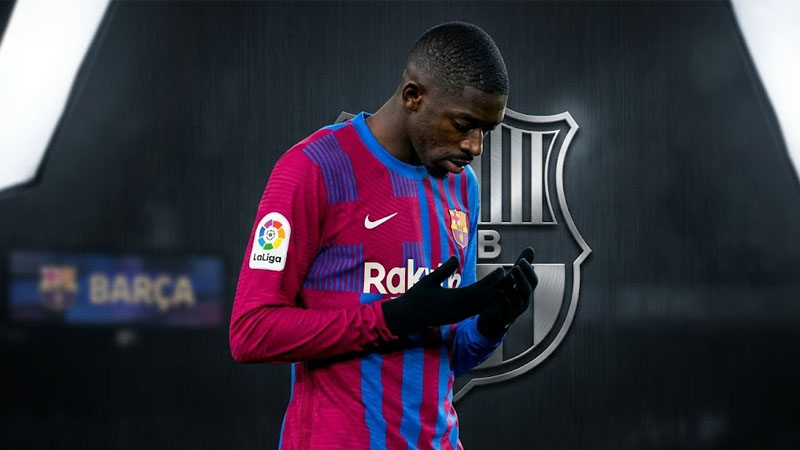
While he shies away from long interviews about his beliefs, Dembélé’s faith is visible in the moments before a match kicks off.
He is frequently observed making “du’a” (short prayers) on the pitch, a ritual shared by many Muslim athletes to seek strength and protection.
These small, consistent actions serve as a signal to his fans—particularly those in the diaspora—that he remains connected to his roots even on the world’s biggest stages.
For these fans, wearing a Dembélé jersey is more than a show of support for a club; it is a statement of belonging and shared identity.
Philanthropy and a Historic Legacy
The impact of Dembélé’s faith extends far beyond his performance on the pitch, manifesting in a deep commitment to charitable work and community building.
His philanthropic endeavors are often directed toward his ancestral homes in West Africa, reflecting a sense of duty to share the blessings of his professional success.
Building Foundations in Mauritania and France
Following France’s victory in the 2018 FIFA World Cup, Dembélé made headlines by donating his tournament earnings to fund the construction of a mosque in his mother’s hometown of Diaguily, Mauritania.
This was not an isolated incident; he has also donated significant sums—approximately €100,000—to his first French club, Évreux FC 27, when they faced financial collapse.
These actions demonstrate a practical application of the Islamic principle of “Sadaqah” (charity), focusing on long-term communal benefits rather than personal accolades.
The 2025 Ballon d’Or: A Watershed Moment
The year 2025 marked a historic milestone in both football and religious history when Ousmane Dembélé was awarded the Ballon d’Or.
As the first Black Muslim player to win the award, and only the third Muslim overall—following legends Zinedine Zidane and Karim Benzema—Dembélé’s victory was celebrated as a triumph for representation in the sport.
This achievement was particularly poignant as it occurred while he was playing for Paris Saint-Germain, making him the first player in the club’s history to claim the prestigious honor.
Career Progression and Core Values
Throughout his career—from his debut at Rennes to his record-breaking transfers to Borussia Dortmund, FC Barcelona, and finally PSG—Dembélé’s core values have remained constant.
Despite the astronomical transfer fees and the glare of the media, he has maintained a reputation for being a “quiet, family-first” individual who avoids the party circuit in favor of his “HF mode” lifestyle.
| Career Stage | Major Achievements and Faith Integration |
|---|---|
| Rennes | Senior debut and scoring 12 goals in 29 matches; initial grounding in professional discipline. |
| Borussia Dortmund | Won the DFB-Pokal and named Bundesliga Rookie of the Season; maintained diet and prayer rituals in a new culture. |
| FC Barcelona | Multiple La Liga and Copa del Rey titles; navigated high-pressure Spanish media while keeping a private religious life. |
| Paris Saint-Germain | Won Ligue 1 and the 2026 Champions League; awarded Best FIFA Men’s Player and the 2025 Ballon d’Or. |
Frequently Asked Questions
What are Ousmane Dembélé’s dietary restrictions?
Adhering to his Islamic faith, Dembélé follows a strict halal diet. This means he abstains from consuming pork and does not drink alcohol, even in celebratory environments where champagne is often the norm.
This discipline is part of his “home operating system” that he has maintained since childhood.
How does Dembélé’s family influence his career?
Dembélé’s family, particularly his mother, plays a central role in his decision-making. His mother’s hometown in Mauritania was the recipient of his World Cup mosque donation, and his inner circle consists primarily of relatives and close childhood friends.
This family-first approach provides the emotional and spiritual anchor necessary to navigate the volatility of elite football.
Why is Dembélé so private about his religion?
His privacy is a combination of personal temperament and cultural background. Naturally reserved and shy, he avoids turning his faith into “content” or public branding.
Additionally, West African Muslim culture often emphasizes keeping one’s piety private to ensure the “baraka” or blessing of the act is not lost to vanity.
Has Dembélé won any major international trophies?
Yes, he was a key member of the French national team that won the 2018 FIFA World Cup in Russia. He also played in all games during the 2022 World Cup in Qatar, where France finished as runners-up.
His international career is marked by the same quiet professionalism that defines his club play.
Conclusion: The Quiet Strength of Conviction
Ousmane Dembélé represents a modern archetype of the elite athlete: one whose excellence is fueled by a structural, rather than performative, faith.
By adhering to the “F3-Grid” of Faith, Family, and Football, he has reached the pinnacle of the sport—culminating in his 2025 Ballon d’Or win—without sacrificing the values instilled in him in Vernon.
His story is a powerful reminder that staying anchored to one’s roots and maintaining private discipline can be the ultimate competitive advantage in the high-stakes world of global football.
For fans and observers alike, the “Demsheikh” legacy is not just about the goals scored, but about the quiet strength of a man who knows exactly who he is and where he comes from.