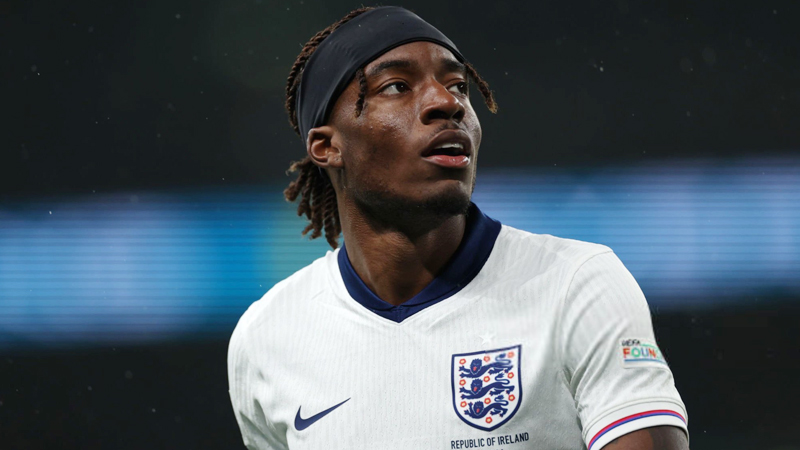
Arsenal’s decision to finalize the Noni Madueke transfer in July 2025 marked a pivotal moment in Mikel Arteta’s squad evolution.
At a total package of £52 million, the move initially raised eyebrows across North London, with many questioning the logic of another Chelsea-to-Arsenal transition.
However, as the 2025/26 season unfolded, the England international silenced critics by becoming a cornerstone of a title-winning campaign.
This analysis explores the fiscal details, tactical reasoning, and impressive performance metrics that transformed a controversial signing into a masterstroke of recruitment for the Gunners as they solidified their Premier League dominance.
The Financial Architecture of the Agreement
The acquisition of Noni Madueke was not merely a tactical move but a significant financial commitment by the Arsenal board.
By analyzing the contract structure, it becomes clear that the club prioritized long-term stability and performance-related incentives over a massive upfront flat fee.
Breakdown of the Transfer Package
The total financial outlay for the winger reached £52 million, though the deal was carefully tiered. Arsenal agreed to an initial guaranteed payment of £48.5 million, with an additional £3.5 million in performance-related add-ons.
This structure allowed Chelsea to realize a significant profit on the £29 million they originally paid PSV Eindhoven in 2023, while giving Arsenal some protection against injury or underperformance.
Salary and Contract Longevity
Madueke committed to a five-year contract at the Emirates Stadium, ensuring his presence until at least June 30, 2030. His salary reflects his status as an elite Premier League attacker.
| Contract Element | Financial Detail |
|---|---|
| Base Weekly Salary | £150,000 |
| Base Annual Salary | £7,800,000 |
| Maximum Annual Bonuses | £1,950,000 |
| Potential Weekly Total | £187,500 |
| Total Guaranteed 5-Year Earnings | £39,000,000 |
This contract puts the 24-year-old in the upper echelon of the Arsenal wage bill, emphasizing his importance to the project.
Tactical Versatility and the Bukayo Saka Support System
One of the most persistent questions following the Noni Madueke transfer was where he would fit in a team that already featured Bukayo Saka.
Critics, including Paul Merson, were “flabbergasted” by the spending of such a high fee on a player who primarily operates in the same right-wing space as Arsenal’s star man.
Relieving the Burden on Saka
For seasons, Arsenal struggled with the lack of a reliable deputy for Saka, who was often forced to play through fatigue or minor injuries.
Madueke’s arrival provided a “known quantity” from the Premier League who could start at a high level without a drop-off in team performance.
His presence allowed Arteta to rotate the squad effectively, keeping both players fresh for the grueling final months of the season.
Flexibility Across the Front Line
While Madueke is naturally a right winger, his versatility proved essential throughout the 2025/26 campaign. He demonstrated an ability to operate on the left wing when necessary, offering tactical flexibility that Chelsea had rarely utilized.
This adaptability made him more than just a backup; he became a tactical tool that Arteta could use to exploit specific defensive weaknesses in opposition lineups.
Overcoming the “Stamford Bridge Pipeline” Stigma
The move was initially met with significant skepticism from the Arsenal fanbase, largely due to the history of players moving between the two London rivals. Many fans felt the club was once again acting as a “junkyard” for Chelsea’s unwanted talent.
The Seventh Signing in Six Years
Madueke became the seventh player since 2019 to swap Stamford Bridge for the Emirates, following the likes of David Luiz, Willian, Jorginho, and Kai Havertz.
This “Chelsea-to-Arsenal” narrative had created a sense of fatigue among supporters, particularly when past signings like Willian failed to meet expectations.
A poll conducted during the transfer process indicated that a majority of voters felt Madueke would be a “bad signing,” with some fans even starting petitions to block the deal.
Silencing Critics Through Results
The narrative shifted rapidly as Madueke integrated into the squad. Unlike some of his predecessors from West London, Madueke arrived at a younger age (23) with significant room for development.
His work ethic and willingness to learn under Arteta’s system quickly differentiated him from the “mercenary” label sometimes attached to cross-London moves.
By the time he hoisted the Premier League trophy, the initial petitions and online protests had been replaced by widespread acclaim.
A Statistical Revolution in the 2025/26 Season
Performance data from Madueke’s debut season at Arsenal highlights why the recruitment team was so insistent on his signing. He successfully improved his end product, a metric that had frustrated Chelsea fans during his two-and-a-half-year stint there.
Scoring and Creativity Metrics
In his first full season under Arteta, Madueke made 42 appearances across all competitions. He recorded a highly respectable 8 goals and 4 assists, proving that he could contribute consistently to the scoreline.
- Total Goals: 8
- Total Assists: 4
- Key Appearances: 42
- Signature Moment: A fine half-volley on the final matchday of the season against Crystal Palace, securing a 2–1 victory and the league title.
Improved Consistency
One of the primary complaints about Madueke at Chelsea was his “inconsistency,” often having a standout game followed by weeks of invisibility.
Under Arteta’s rigorous tactical framework, his positioning and decision-making matured. He moved from being a player who relied solely on individual dribbling to a coordinated part of a high-functioning offensive unit.
International Recognition and Future Prospects
The Noni Madueke transfer did not just benefit Arsenal; it also significantly boosted the player’s international standing. His performances in the red and white of Arsenal made him impossible for the national team selectors to ignore.
Selection for the 2026 World Cup
Following his successful domestic campaign, the 24-year-old was selected by Thomas Tuchel for England’s 2026 FIFA World Cup squad.
This selection was a direct result of his increased game time and improved goal contributions at Arsenal. Representing his country on the global stage cemented his status as one of England’s premier attacking talents.
Managing Fitness for Elite Competition
Despite his success, fitness management remains a priority for the Arsenal medical staff. On the final day of the 2025/26 season, Madueke suffered a minor injury scare when he was seen clutching his leg after the match against Crystal Palace.
However, the player was later seen celebrating the title victory without a visible limp, easing concerns ahead of Arsenal’s UEFA Champions League final against Paris Saint-Germain.
This ability to bounce back from minor setbacks has been a hallmark of his tenure at the Emirates.
Analyzing the Strategic Advantage for Chelsea
While Arsenal celebrated the signing, the deal was also viewed as “great business” for Chelsea from a financial perspective. The Blues were able to nearly double their investment in a player who had fallen down their pecking order.
Reinvestment in New Talent
Chelsea’s decision to sanction the sale was driven by their continued heavy investment in other attacking options.
The arrivals of Liam Delap, Joao Pedro, and Jamie Gittens meant that Madueke’s path to consistent starting minutes at Stamford Bridge was increasingly blocked.
By selling him for a high fee, Chelsea generated the necessary funds to balance their books while refreshing their squad with younger prospects like Estêvão.
The Profitability Factor
Chelsea’s marketing and sales team received praise for their ability to command such a high fee for a player who had only 32 Premier League appearances in the season prior to his sale.
Securing a £52 million package for a winger with only seven Premier League goals in that period is cited as a prime example of Chelsea’s ability to maximize value in the transfer market.
Frequently Asked Questions (FAQ)
What was the final transfer fee for Noni Madueke?
Arsenal paid an initial fee of £48.5 million plus £3.5 million in performance-related add-ons, bringing the total potential package to £52 million.
How long is Noni Madueke’s contract at Arsenal?
He signed a five-year deal that runs until June 30, 2030.
What is Noni Madueke’s salary at Arsenal?
He earns a fixed base salary of £150,000 per week (£7.8 million per year), with the potential for an additional £1.95 million in annual bonuses.
How many goals did Madueke score in his first season at Arsenal?
In the 2025/26 season, he recorded 8 goals and 4 assists in 42 appearances across all competitions.
Did Noni Madueke win any trophies in his first year at Arsenal?
Yes, he was a key part of the squad that won the 2025/26 Premier League title, even scoring on the final day of the season.
Is Noni Madueke going to the 2026 World Cup?
Yes, he has been selected for Thomas Tuchel’s England squad for the 2026 FIFA World Cup following his impressive form.
Conclusion: A Masterclass in Scouting and Integration
The Noni Madueke transfer serves as a case study in effective squad building. Arsenal identified a specific gap in their team—the lack of elite-level competition for Bukayo Saka—and were willing to pay a premium to fill it with a player who already understood the demands of the league.
Despite the heavy initial criticism and the historical baggage of the Chelsea connection, Madueke’s technical ability, combined with Mikel Arteta’s coaching, resulted in a highly successful partnership.
With a Premier League title already secured and a long-term contract in place, Madueke is poised to be a central figure in Arsenal’s quest for continued European and domestic dominance.