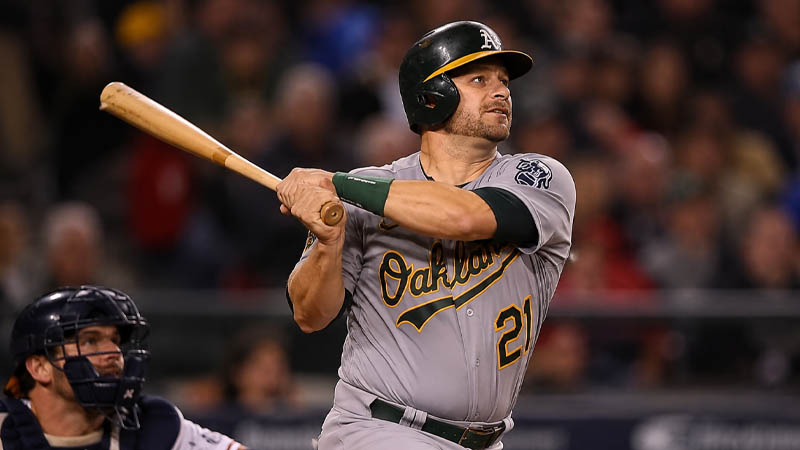
In an era of Major League Baseball dominated by advanced sports science, customizable protective gear, and high-tech batting gloves engineered for microscopic friction control, a quiet rebellion persists at the plate.
Walk up to any big-league cage or peer into a modern dugout, and you will see a sea of synthetic leather, neoprene wrist wraps, and branded hand protection. Yet, a select group of athletes chooses to walk to the batter’s box carrying only raw lumber and their bare hands.
Batting without gloves is a rare sight in modern Major League Baseball, practiced by only a handful of traditionalists who reject the modern norm in favor of a bare-handed feel and heavy pine tar.
This choice is not merely a stylistic statement; it is a profound commitment to sensory feedback, a nod to the sport’s deep history, and a mechanical preference that alters how power is transferred from the body to the bat’s barrel.
To understand why these players buck the modern trend, one must understand the tactile intimacy of hitting. For the gloveless batter, every swing is a conversation with the wood. The raw vibrations, the micro-adjustments in grip tension, and the direct contact with the bat handle create a sensory loop that gloves can occasionally deaden.
The Sensory Mechanics: Why Go Bare-Handed?
The human hand is one of the most nerve-dense areas of the body. When a batter wraps their fingers around a handle, those nerves send instantaneous feedback to the brain regarding the bat’s path, the angle of the barrel, and the exact moment of contact.
Traditionalists argue that batting gloves act as a barrier to this neural pathway. By stripping away the synthetic layers, a hitter gains a pure, unaltered feel of the bat’s handle.
However, hitting a baseball traveling at nearly 100 miles per hour with bare skin poses immense physical challenges.
Without the friction provided by synthetic glove leather, players must rely on alternative methods to maintain a secure hold on the bat. The two most prominent solutions are:
- Heavy Pine Tar: This sticky substance, harvested from pine trees, has been a staple of baseball dugouts for over a century. When applied to raw wood or directly to bare skin, it provides a tacky, reliable grip that prevents the bat from slipping, even during high-velocity swings.
- Customized Wrapped Bat Grips: Modern grip wraps offer a compromise, providing a cushioned, textured surface that adheres well to bare skin without requiring the heavy stickiness of pine tar.
For those who choose this path, the reward is an unparalleled connection to their equipment. Let us examine the modern practitioners who keep this traditionalist craft alive in today’s game.
The Modern Vanguard: Active and Recent Gloveless Players
While the modern player pool is overwhelmingly gloved, a dedicated contingent of athletes continues to swing bare-handed.
These players come from different backgrounds and play different positions, but they share a common bond: a refusal to let synthetic leather come between their hands and their bats.
Tim Locastro: The Pine Tar Purist
Among active big-leaguers, Tim Locastro stands out as one of the most prominent examples of the traditional bare-handed approach.
Locastro’s hitting mechanics are defined by his unique equipment configuration. Instead of relying on batting gloves, he utilizes a customized wrapped bat grip.
This specialized wrap provides the baseline friction necessary to control the bat during explosive swings.
To complement this custom wrap, Locastro relies heavily on pine tar to maximize stickiness and prevent any micro-slippage during his plate appearances.
For Locastro, the bare-handed feel is not an occasional preference but a core component of his offensive identity, allowing him to maintain peak bat control and a lightning-fast swing.
Luis Guillorme: The Old-School Craftsman
Known across the league for his smooth defensive glovework, Luis Guillorme takes the opposite approach when he steps into the batter’s box. Guillorme is widely recognized for his old-school, bare-handed approach at the plate.
For Guillorme, hitting without gloves is a natural extension of his highly analytical and contact-oriented approach to the game.
By opting for a bare-handed grip, he maximizes the sensory feedback required to make precise, late-second adjustments to breaking pitches.
His comfort with raw contact reflects a deep-seated appreciation for the classical fundamentals of the sport, demonstrating that even in a high-tech era, traditional methods remain highly effective.
Trent Grisham: The Rare Glove-Free Outfielder
While infielders and catchers occasionally hit bare-handed due to their constant defensive glove transitions, outfielders almost universally wear batting gloves to protect their hands during long stretches in the field and on the basepaths. This makes Trent Grisham a fascinating outlier in the modern landscape.
Grisham is frequently noted as one of the few outfielders swinging completely glove-free in Major League Baseball. Outfielders who run the bases and slide frequently face a higher risk of hand abrasions, yet Grisham prioritizes the raw feel of the bat above all else.
His willingness to swing bare-handed demonstrates a deep conviction in the mechanical benefits of direct wood contact, proving that the tactile advantages of a gloveless grip transcend traditional positional boundaries.
Wil Myers: Consistency Across a Prominent Career
For over a decade, Wil Myers established himself as a versatile, productive major-league hitter. Throughout the vast majority of his prominent big-league career, Myers was famous for sticking to a bare-handed grip.
Whether playing outfield, first base, or third base, Myers remained steadfast in his refusal to wear batting gloves. His career stands as a testament to the durability of the bare-handed approach.
While critics often suggest that hitting glove-free leads to excessive blistering and hand fatigue over a grueling 162-game season, Myers proved that a player can maintain an elite level of offensive production year after year using nothing but bare skin and raw lumber.
Joey Wendle: Simplicity in the Infield
Joey Wendle built a reputation as a gritty, highly dependable utility infielder who valued simplicity and hard work. This no-nonsense attitude was perfectly reflected in his equipment choices—or lack thereof.
Wendle was widely known for shunning batting gloves during his various infield stints. For a utility player who might move from second base to third base to shortstop in a single game, keeping equipment to a minimum streamlines the transition between defense and offense.
By keeping his hands bare, Wendle maintained a consistent feel whether he was fielding a ground ball with his defensive glove or gripping the bat handle for a crucial late-inning plate appearance.
Austin Hays: The Traditional Raw Feel
Another rare outfielder in the gloveless club, Austin Hays has deliberately chosen to steer clear of modern hand protection at the plate. Hays opted out of wearing batting gloves specifically to seek a traditional raw feel.
In a sport where hitters constantly search for a competitive edge through technology, Hays found his advantage by stripping away the extras.
The raw feel of the bat handle allows him to feel the barrel throughout his entire swing path, providing immediate feedback on pitch contact.
This dedication to traditional touch underscores a growing appreciation among a select group of younger players for the simple, unadorned mechanics of the past.
Legendary Historical Precedents: The Pioneers of the Bare Hand
The modern bare-handed hitters are not inventing a new style; rather, they are preserving a lineage that stretches back to the dawn of professional baseball.
Before the widespread adoption of batting gloves in the late 20th century, hitting bare-handed was the standard.
Even as gloves became ubiquitous, several iconic Hall of Famers and All-Stars refused to convert, leaving an indelible mark on the history of the game.
Vladimir Guerrero Sr.: The Free-Swinging Hall of Famer
Perhaps the most famous bare-handed hitter in modern memory is the legendary Hall of Fame outfielder Vladimir Guerrero Sr. Guerrero was renowned for his extraordinary ability to hit pitches virtually anywhere—from eye-level fastballs to balls bouncing in the dirt—and he did it all bare-handed.
To manage his aggressive, high-velocity swing without gloves, Guerrero famously coated his bats in incredibly thick, dark layers of pine tar. The pine tar on his bats was so prominent that it often stained his helmet and jersey.
This massive coat of tar allowed him to maintain a vice-like grip on the bat, giving him the stability needed to launch towering home runs on pitches other batters could not even reach.
Guerrero’s bare-handed success proved that natural hand-eye coordination and raw feel could dominate the sport at the highest level.
George Brett: Direct Contact with the Lumber
Another legendary figure who resisted the transition to batting gloves was Kansas City Royals icon and Hall of Famer George Brett. Brett’s relentless intensity and masterful batting eye made him one of the most feared hitters of his generation.
Brett famously refused to wear batting gloves, preferring direct contact with the wood. He believed that any material between his skin and the bat handle diminished his ability to control the barrel.
This preference for raw wood contact was central to his identity as a hitter. Brett’s legendary pursuit of a .400 batting average in 1980 was conducted entirely bare-handed, cementing the bare-handed grip as a symbol of elite, artistic hitting craftsmanship.
Jorge Posada: The Iconic Catching Anchor
In the pressure-cooker environment of New York, catcher Jorge Posada served as the gritty, passionate anchor of the New York Yankees dynasty during the late 1990s and 2000s.
Amidst a lineup filled with high-profile superstars, Posada stood out for his old-school toughness.
Posada was an iconic Yankees catcher who never adopted the batting glove trend. Hitting as a catcher is incredibly demanding on the hands, as catching hundred-mile-per-hour pitches for nine innings creates immense wear and tear.
Despite this physical toll, Posada insisted on hitting bare-handed throughout his illustrious career. His dedication to the glove-free grip became a trademark of his physical and mental toughness, inspiring teammates and fans alike.
Technical Breakdown: Pine Tar, Bat Wraps, and Grip Physics
To fully appreciate how these athletes compete at the highest level without hand protection, we must examine the physical elements that make a bare-handed grip viable.
Grip safety is paramount in Major League Baseball; a slipping bat can fly into the stands or dugouts, posing a significant safety hazard. Therefore, gloveless hitters rely on precise tactile management.
| Player | Grip Strategy | Positional Context | Career Era |
|---|---|---|---|
| Vladimir Guerrero Sr. | Thick, heavy coats of pine tar | Outfield / Hall of Fame | Historical Legend |
| Tim Locastro | Customized wrapped bat grip + heavy pine tar | Outfield / Pinch Runner | Active Modern |
| George Brett | Direct raw wood contact | Third Base / Hall of Fame | Historical Legend |
| Wil Myers | Traditional bare-handed consistency | Utility / Outfield | Modern / Recent |
| Austin Hays | Opt-out for traditional raw feel | Outfield | Active Modern |
The Role of Heavy Pine Tar
Pine tar is a sticky, viscous substance created by the high-temperature carbonization of pine wood. When applied to the handle of a baseball bat, it interacts with the natural moisture of the hitter’s hands to create a powerful bond.
For bare-handed hitters like Vladimir Guerrero Sr. and Tim Locastro, pine tar is a crucial safety and performance tool
It allows the hitter to maintain a relaxed grip on the bat handle, which reduces muscle tension in the forearms and wrists, leading to a quicker, more fluid swing.
Customized Grip Wraps
For players who prefer not to deal with the messy buildup of traditional pine tar, modern athletic tape and specialized grip wraps offer an excellent alternative. Players like Tim Locastro utilize customized wrapped grips to create a textured, high-friction surface.
These wraps are engineered to absorb sweat and moisture, allowing the bare hand to maintain a secure hold on the bat even in hot, humid summer conditions.
Frequently Asked Questions (FAQ)
Why do some MLB players choose not to wear batting gloves?
Players choose to hit bare-handed primarily to achieve a pure, raw feel of the bat and to receive direct sensory feedback from the wood.
This immediate tactile connection allows them to feel the barrel’s path and make subtle, instantaneous adjustments during their swing.
How do bare-handed hitters prevent their bats from slipping?
Bare-handed hitters rely on powerful gripping agents like heavy pine tar or customize their bat handles with modern wrapped grips to ensure a secure, slip-free hold on the bat.
Who are some famous historical players who hit without gloves?
Legendary bare-handed hitters include Hall of Fame third baseman George Brett, Hall of Fame outfielder Vladimir Guerrero Sr., and legendary New York Yankees catcher Jorge Posada.
Is it harder to hit without gloves in cold weather?
Yes, hitting bare-handed in cold weather is exceptionally challenging. When a batter mishits a pitch on the hands in cold temperatures, the resulting vibrations (often called “sting”) can be incredibly painful. However, traditionalists accept this risk to preserve their tactile connection to the wood.
Are there many outfielders who hit bare-handed?
It is very rare for outfielders to go glove-free due to the demands of running the bases and playing defense. However, modern players like Trent Grisham and Austin Hays have successfully embraced the gloveless approach.
Conclusion: The Endurance of a Classic Art Form
The choice to step into a Major League batter’s box with bare hands is more than a mechanical preference; it is a celebration of baseball’s foundational elements.
In a landscape increasingly defined by digital tracking, synthetic materials, and automated adjustments, the bare-handed hitter remains a beautiful bridge to the sport’s golden era.
Whether it is the heavy pine tar of Tim Locastro, the raw wood contact of George Brett, or the grit of Jorge Posada, these players remind us that at its core, baseball remains a deeply human game of touch, feel, and instinct.
As long as there are players who value the raw feedback of wood against skin, this beautiful, minimalist tradition will continue to thrive on big-league diamonds.