The financial management of an NFL franchise requires a delicate balance between draft equity, player development, and salary cap optimization.
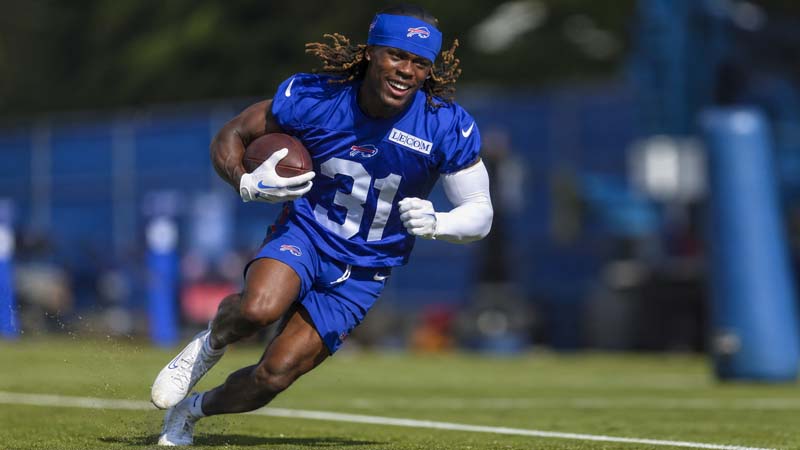
When the Buffalo Bills selected cornerback Maxwell Hairston out of Kentucky with the 30th overall pick in the first round of the 2025 NFL Draft, they secured a highly regarded defensive asset.
Under the terms of the Collective Bargaining Agreement (CBA), first-round draft picks represent structured investments with locked-in contract structures.
This analysis provides an in-depth breakdown of Hairston’s four-year, fully guaranteed rookie contract.
By examining the cash flow, yearly cap distributions, dead money risks, and performance-to-cost metrics, we can map out how this defensive asset impacts the team’s balance sheet through his projected unrestricted free agency in 2029.
The Master Contract Ledger (2025–2028)
Rookie contracts for first-round selections are highly rigid, but their yearly distribution of cap hits, base salaries, and roster bonuses heavily influences a team’s annual roster planning.
Hairston’s total contract value is $15,257,982, yielding an Average Annual Value (APY) of $3,814,496.
The following master ledger outlines the exact financial parameters of Hairston’s deal over its four-year duration:
| Year | Age | Base Salary | Prorated Signing Bonus | Roster Bonus | Total Cap Charge | Percent of Team Cap | Dead Money | Cash Paid |
|---|---|---|---|---|---|---|---|---|
| 2025 | 22 | $840,000 | $1,934,178 | $0 | $2,774,178 | 1.0% | $15,257,982 | $8,576,712 |
| 2026 | 23 | $1,005,000 | $1,934,178 | $528,545 | $3,467,723 | 1.15% (1.2%) | $12,483,804 | $1,533,545 |
| 2027 | 24 | $1,316,741 | $1,934,178 | $913,349 | $4,161,268 | 1.3% | $9,016,081 | $2,227,090 |
| 2028 | 25 | $2,920,635 | $1,934,178 | $0 | $4,854,813 | 1.4% | $4,854,813 | $2,920,635 |
| Total | — | $6,082,376 | $7,736,712 | $1,441,894 | $15,257,982 | — | — | $15,257,982 |
Financial Nuances in the Ledger:
- The Cap Percentage Curve: Hairston’s cap charge begins at a very modest 1.0% of the overall team cap in 2025 and rises gradually to 1.4% by 2028. This linear growth allows the front office to budget effectively without experiencing a sudden, unmanageable cap spike.
- Proration Consistency: The signing bonus allocation remains completely static at $1,934,178 per season across the entire four-year span. This is a direct result of dividing his total signing bonus of $7,736,712 equally across the four years of the contract.
- The Roster Bonus Phase-In: Roster bonuses are utilized in 2026 ($528,545) and 2027 ($913,349) to manage liquid cash allocations while maintaining structured salary cap hits.
The Signing Bonus and Cash-to-Cap Asymmetry
A defining characteristic of early-career NFL contracts is the disparity between cash flow (when the player actually receives the money) and cap allocation (how the money is recorded against the team’s cap space).
Signing bonuses are paid upfront to the player but are prorated evenly over the life of the contract (up to a five-year maximum).
The table below illustrates the cash-to-cap asymmetry of Hairston’s contract:
| Year | Annual Cash Due | Running Cash Total | Annual Cap Hit | Cash-to-Cap Ratio | Cumulative Unearned Value |
|---|---|---|---|---|---|
| 2025 | $8,576,712 | $8,576,712 | $2,774,178 | 3.09 | $5,802,534 |
| 2026 | $1,533,545 | $10,110,257 | $3,467,723 | 0.44 | $3,868,356 |
| 2027 | $2,227,090 | $12,337,347 | $4,161,268 | 0.54 | $1,934,178 |
| 2028 | $2,920,635 | $15,257,982 | $4,854,813 | 0.60 | $0 |
Understanding the Asymmetry:
In the first year of his deal, Hairston received $8,576,712 in liquid cash, primarily driven by his signing bonus, yet his cap charge was restricted to just $2,774,178. This means the team paid out 3.09 times more cash than the cap room it consumed in 2025.
Conversely, in 2026, the team pays out only $1,533,545 in real money while absorbing a much larger cap charge of $3,467,723 (a ratio of 0.44).
This mechanism allows the team to preserve immediate cap space during the initial years of the contract while fulfilling the guaranteed cash obligations demanded by a first-round draft selection.
Risk Assessment & Dead Cap Analysis
Because Hairston was selected in the first round, his rookie contract is 100% fully guaranteed. In professional football, “dead cap” refers to the cap space a team must account for if a player is traded, waived, or otherwise removed from the roster.
Under fully guaranteed contracts, the team remains entirely liable for all unpaid salary and prorated signing bonuses, leaving no path to immediate cap relief.
The table below highlights the team’s financial exposure and the lack of cap savings in the event of a roster modification:
| Year of Transaction | Cap Charge Before Move | Dead Cap Liability | Immediate Cap Savings / (Loss) |
|---|---|---|---|
| 2025 | $2,774,178 | $15,257,982 | ($12,483,804) |
| 2026 | $3,467,723 | $12,483,804 | ($9,016,081) |
| 2027 | $4,161,268 | $9,016,081 | ($4,854,813) |
| 2028 | $4,854,813 | $4,854,813 | $0 |
Risk Breakdown:
- No Exit Strategy: If the team decided to move on from Hairston in 2026, they would be hit with a dead cap charge of $12,483,804, creating a net cap loss of $9,016,081.
- Trading vs. Waiving: In trade scenarios, the prorated signing bonus portion ($1,934,178 per remaining year) would accelerate onto the team’s cap, while the acquiring team would assume the remaining base salaries. However, because the contract is fully guaranteed, waiving the player provides absolutely no financial relief, as the entire remaining balance remains locked onto the cap sheet.
- Locked-In Roster Security: This structure gives Hairston supreme job security. The front office is financially committed to his development through the end of the 2028 season, as any premature release would be highly damaging to the team’s overall budget.
Performance-to-Cost Valuation Analysis
To evaluate whether a rookie contract is yielding positive value, analysts compare the player’s actual cap charge and contract APY against their real-world on-field production.
Over The Cap (OTC) utilizes a proprietary valuation model that calculates a player’s on-field performance dollar value based on snaps, statistics, and playing efficiency compared to the veteran market.
The table below breaks down Hairston’s 2025 rookie season performance metrics and compares them to his contract’s financial baseline:
| Metric Category | Metric Detail | Financial Metric | Financial Value |
|---|---|---|---|
| Games Played | 11 Games | Contract APY | $3,814,496 |
| Games Inactive | 0 Games | 2025 Cap Charge | $2,774,178 |
| Defensive Snap % | 35.4% | OTC Regular Valuation (2025) | $2,179,000 |
| Tackles (Total) | 14 | OTC Injury Adjusted Valuation | $2,179,000 |
| Negative Plays | 4 | OTC Alternative Valuation | $2,237,000 |
| Special Teams Snap % | 5.1% | Rookie CB Contract Rank | 57th out of 344 |
Analyzing the Performance Gap:
During his rookie campaign in 2025, Hairston appeared in 11 games, recording 14 tackles and logging a 35.4% defensive snap share.
Because he operated in a rotational role rather than as an every-snap starter, his calculated market value for that season settled at $2,179,000 (with a slightly adjusted model placing it at $2,237,000).
When comparing his rookie-year valuation of $2,179,000 against his actual APY of $3,814,496, a negative value gap of roughly $1.63M emerges.
This indicates that during his introductory year, Hairston did not quite match the on-field efficiency of veteran cornerbacks earning similar average salaries.
However, this is highly common for rookie first-rounders. Rookie contracts are forward-looking investments; the team pays a premium in year one with the expectation that the player will develop into a high-value starter in years two, three, and four.
If Hairston’s defensive snap share rises above 70% in 2026, his on-field performance valuation could easily exceed $6,000,000, turning his contract into a highly efficient cap asset.
Positional Market Context & Cap Strategy
To understand how Hairston’s contract fits into the league-wide cornerback market, we must analyze where his compensation ranks among his peers.
The table below places Hairston’s contract in context with the broader NFL cornerback market:
| Bracket | Contract APY Range | Hairston’s Rank / Percentile | Strategic Cap Role |
|---|---|---|---|
| Elite Starters | $20,000,000+ | Top 1% to 5% | Franchise cornerstones; highly inflexible cap figures. |
| Mid-Tier Veterans | $8,000,000 – $15,000,000 | Top 10% to 25% | Quality starters; often require restructures. |
| Hairston’s Bracket | $3,814,496 | 57th of 344 CBs (Top 16%) | Highly guaranteed rookie asset with developmental upside. |
| Rotational Players | $1,500,000 – $3,500,000 | Top 25% to 50% | Budget-conscious role players and special teamers. |
| Minimum Salary | $840,000 – $1,200,000 | Bottom 50% | Roster depth, undrafted free agents, practice squad. |
The Advantage of the #30 Draft Position:
Drafting at the end of the first round provides a distinct cap advantage. While the player retains the highly coveted fifth-year option (exclusive to first-round draft picks), their contract value is significantly lower than those selected in the top ten.
At 57th overall in positional contract rankings, Hairston is compensated as a high-end reserve or lower-tier starting cornerback.
This financial flexibility allows the front office to allocate significant resources to high-priced veterans on the roster while securing a cost-controlled defensive back with first-round talent.
The Path to 2029 Unrestricted Free Agency
As Hairston enters the second year of his contract, his timeline toward a major veteran contract is already underway. Having accrued one full season at age 23, his career path follows a highly structured roadmap.
The table below outlines the milestones and decision-making points the Bills’ front office will face during the life of Hairston’s contract:
| Target Timeline | Player Age | Contract Phase | Franchise Decision Point |
|---|---|---|---|
| Spring 2026 | 23 | Year 2 of Rookie Contract | Evaluate rotational development; integrate into a primary starting role. |
| Spring 2027 | 24 | Year 3 of Rookie Contract | Assess full-time starter capability; prepare for contract negotiations. |
| May 2028 | 25 | Year 4 of Rookie Contract | Deadline to exercise the Fifth-Year Option (for the 2029 season). |
| Spring 2029 | 26 | Free Agency | Unrestricted Free Agency (UFA) if the fifth-year option or extension is not executed. |
Strategic Decisions for the Front Office:
- The Fifth-Year Option (May 2028): Following the 2027 season, the front office must decide whether to trigger Hairston’s fifth-year option. This option is fully guaranteed upon exercise and is calculated using a formula based on his playing time and Pro Bowl accolades over his first three seasons.
- Early Extension Window (2028): If Hairston emerges as a premier starting cornerback by his third year, the team will likely seek to sign him to an early extension during the final year of his rookie deal. This allows the team to lower his immediate cap impact while locking up a key defensive starter before he hits the open market.
- Unrestricted Free Agency (2029): If no extension or option is executed, Hairston will reach the open market in 2029 as an unrestricted free agent at just 26 years old, primed to secure a major veteran contract during the peak of his career.
Frequently Asked Capology Questions
To help clarify the complex mechanics of NFL rookie contracts, this section addresses common questions regarding Hairston’s financial layout.
Why is Hairston’s contract 100% fully guaranteed, while veteran contracts often are not?
Since the implementation of the 2011 CBA, rookie contracts have been governed by a strict wage scale. To simplify negotiations, late first-round draft selections receive fully guaranteed four-year deals. This removes individual negotiations over guarantee percentages, establishing a fixed framework based on draft slotting.
What happens to the prorated signing bonus if Hairston is traded?
If a trade occurs, the team would accelerate all remaining prorated signing bonus money ($1,934,178 per year) into their immediate cap as dead money.
For example, a trade prior to the 2026 season would result in the remaining $5,802,534 in signing bonus proration immediately hitting the Bills’ salary cap. The acquiring team would only assume responsibility for his remaining base salaries and roster bonuses.
What is the difference between Hairston’s cash flow and his cap number?
Cash flow represents real money paid out by the franchise to the player’s bank account. In 2025, Hairston received $8,576,712 in cash.
The cap number is a legal bookkeeping figure used to ensure teams do not exceed the annual NFL spending limit.
Because signing bonuses are prorated over four years, Hairston’s 2025 cap charge was held to $2,774,178, deferring the remaining cap impact to future seasons.
How does OTC calculate a player’s valuation?
Over The Cap evaluates on-field performance by analyzing snap counts, physical contributions, playing time, and statistical metrics.
This data is compared against veteran market contracts to determine what a player would earn if they were a free agent signing a contract based solely on their performance from the previous season.
Summary of Strategic Cap Value
Ultimately, Maxwell Hairston’s contract represents a highly structured, low-risk, high-reward investment for the Buffalo Bills.
By securing a first-round talent at the 30th overall pick, the team has locked in a cost-controlled defensive asset through the 2028 season.
As his salary cap charges scale moderately from $2,774,178 to $4,854,813, Hairston has a clear path to delivering immense surplus value.
If his defensive snap share climbs from his rookie rate of 35.4% into a full-time starting role, his on-field performance value will quickly outpace his capped salary, providing the Bills with the financial flexibility required to sustain a championship-caliber roster.