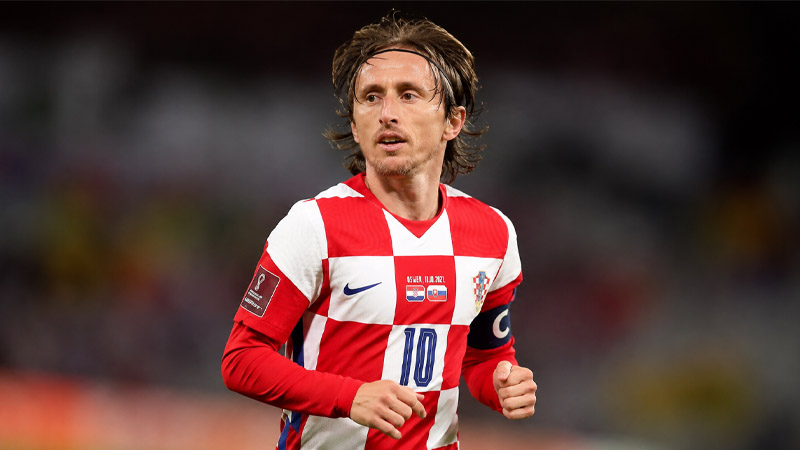
Luka Modrić is much more than a world-class midfielder; he is a symbol of national pride and a testament to the resilience of the human spirit.
Born in the coastal city of Zadar, his identity is deeply rooted in his Croatian heritage, a factor that has defined his illustrious career on the global stage.
As the captain of the Croatia National Football Team, he has led his country through its most successful sporting era, proving that talent from a small nation can dominate the world’s most popular sport.
His journey from Zadar to football’s highest peaks remains a masterclass in dedication.
The Foundations of a Croatian Icon: Zadar and Beyond
The identity of Luka Modrić is inextricably linked to his birthplace and the historical context of his upbringing. Understanding where he comes from is essential to appreciating the grit and technical elegance he displays on the pitch today.
Born in Zadar: A Historical Context
Luka Modrić was born on September 9, 1985, in Zadar, Croatia. At the time of his birth, the region was part of SFR Yugoslavia, a period of significant geopolitical complexity.
Growing up in Zadar during a time of transition provided Modrić with a unique perspective on perseverance.
His nationality is not just a legal status but a core part of his athletic persona, influencing his work ethic and his deep connection to the fans who have followed him from his earliest days in the local youth systems.
The Significance of Croatian Identity
For Modrić, being Croatian is a badge of honor that he carries into every match. He has become the face of a nation that gained independence in the 1990s, and his success has mirrored the rise of Croatia as a powerhouse in international football.
This section of his life highlights the importance of cultural roots in shaping professional excellence.
His ability to maintain a high level of play while carrying the hopes of a nation of roughly four million people is a feat of mental and physical strength that few others in the sport have achieved.
Leading the Vatreni: A Captain’s Legacy
The relationship between Luka Modrić and the Croatia National Football Team is one of the most successful partnerships in the history of international sports. His leadership has redefined expectations for the squad known as the “Vatreni.”
| Category | Details |
|---|---|
| National Team | Croatia National Football Team |
| Role | Captain |
| Major Achievement | 2018 World Cup Golden Ball |
| Status | Active Leader |
As the captain, Modrić serves as the tactical heartbeat of the team. He is responsible for orchestrating the play from the midfield, acting as the primary link between the defense and the attack.
His tenure as captain has been marked by a level of consistency and composure that has inspired a new generation of Croatian players.
Under his guidance, the national team has moved from being a “dark horse” in tournaments to a respected elite contender on the world stage.
The 2018 World Cup: A Turning Point
The 2018 World Cup in Russia served as the ultimate validation of Modrić’s talent and his importance to his nationality. He led Croatia to the final, a historic achievement that united his country and captured the imagination of football fans worldwide.
His individual performances were so dominant that he was awarded the World Cup Golden Ball, recognizing him as the best player of the tournament. This period solidified his status as a legendary figure in Croatian history, transcending the sport of football.
Professional Club Journey: Real Madrid and AC Milan
Modrić’s career at the club level has been equally prestigious, marked by tenures at some of the most famous organizations in Europe. His ability to adapt and excel in different leagues is a testament to his tactical intelligence.
Mastery at Real Madrid
Luka Modrić established himself as an elite midfielder during his extensive time with Real Madrid. In the Spanish capital, he became a central figure in a team that dominated the UEFA Champions League. His vision, passing range, and ability to control the tempo of a game made him indispensable.
Despite the high-pressure environment of the Bernabéu, Modrić’s calm demeanor and technical proficiency allowed him to thrive, winning numerous domestic and international titles while consistently being named among the best players in the world.
The Italian Chapter: AC Milan
In a move that surprised many but showcased his enduring quality, Modrić transitioned to the Italian club AC Milan. Competing in Serie A, a league known for its tactical rigor and defensive strength, Modrić continues to prove that his age is no barrier to excellence.
At AC Milan, he brings a wealth of experience and a winning mentality to a historic club looking to reclaim its place at the top of European football. His presence in the Milan midfield provides a perfect balance of creativity and stability.
Individual Accolades and the Ballon d’Or
The year 2018 will forever be remembered as the “Year of Modrić.” It was the year he broke a decade-long duopoly on football’s most prestigious individual award, proving that his impact on the game was undeniable.
- 2018 Ballon d’Or Winner: Modrić was named the best player in the world, an achievement that recognized his contributions to both club and country.
- World Cup Golden Ball: Awarded for being the most outstanding player during the 2018 FIFA World Cup.
- UEFA Men’s Player of the Year: Further proof of his dominance in European competition.
- FIFA World Player of the Year: A global acknowledgement of his skill and leadership.
These awards are significant because they highlight a player who does not rely on high goal-scoring statistics but rather on the intangible quality of making everyone around him better.
For a Croatian player to sweep these awards was a monumental moment for his nationality, showing that the highest individual honors in football are accessible to those with enough vision and drive, regardless of their country’s size.
Tactical Analysis: The “Architect” of the Midfield
To understand why Luka Modrić is considered one of the greatest midfielders of all time, one must look closely at the technical aspects of his game. His style is a blend of traditional playmaking and modern versatility.
Vision and Passing Accuracy
Modrić possesses a “360-degree” vision of the pitch. He can identify passing lanes that others don’t see, often using the outside of his boot—a signature move—to curl the ball around defenders.
His passing accuracy, whether over short distances to maintain possession or long cross-field balls to switch the point of attack, remains at an elite level.
This technical precision is what allows him to dictate the flow of the game, making him the “Architect” of his teams’ offensive strategies.
Defensive Contribution and Pressing
While often celebrated for his offensive creativity, Modrić’s defensive work rate is equally impressive. He is a master of the “tactical foul” and has an innate ability to intercept passes by reading the opponent’s intentions.
His stamina allows him to press high up the pitch or drop deep to help the defense, making him a complete box-to-box midfielder.
This balance of offensive and defensive duties is a key reason why he has remained relevant at the highest level for over two decades.
The Cultural Impact of Luka Modrić in Croatia
Beyond the trophies and the statistics, Modrić’s influence on Croatian culture is profound. He has become a role model for young athletes across the Balkans, proving that a path to global stardom is possible through hard work.
A Symbol of National Unity
During major tournaments, the sight of Modrić leading the national team in their iconic checkered jerseys brings the country together. He represents the “never say die” attitude that has characterized Croatia’s recent history.
His success has also boosted the profile of the Croatian First Football League and the youth academies in cities like Zadar, which now see an influx of talent hoping to emulate their hero.
Philanthropy and Giving Back
While he maintains a private personal life, Modrić is known for his support of various charitable causes within Croatia. Whether it is supporting local hospitals or youth sports programs, he remains connected to the community that raised him.
This commitment to his roots reinforces the bond between him and his fans, ensuring that his legacy will endure long after he decides to hang up his boots.
Frequently Asked Questions About Luka Modrić
What is Luka Modrić’s official nationality?
Luka Modrić is officially Croatian. He was born in Zadar, Croatia, and has represented the country at every international level, currently serving as the captain of the senior national team.
Which clubs has Luka Modrić played for?
Modrić has had a storied club career, most notably playing as an elite midfielder for Real Madrid. Currently, he brings his talents to the Italian side AC Milan. Earlier in his career, he also played for Dinamo Zagreb and Tottenham Hotspur.
What were his major achievements in 2018?
The year 2018 was a landmark for Modrić. He won the Ballon d’Or, the World Cup Golden Ball, and led Croatia to the World Cup final. These honors recognized him as the premier player in global football for that year.
Is Luka Modrić still playing professionally?
Yes, Luka Modrić remains an active professional footballer. He continues to lead the Croatia National Football Team and competes at the highest level of European club football with AC Milan.
The Future Legacy of a Midfield Maestro
As Luka Modrić enters the twilight of his career, the conversation has shifted from his current performance to his ultimate place in the pantheon of football greats.
His impact on the game is multi-dimensional, touching on tactical innovation, national identity, and professional longevity.
His ability to maintain his status as an elite midfielder at both Real Madrid and AC Milan demonstrates a level of professionalism that serves as a blueprint for younger players.
He has shown that technical skill, combined with an understanding of the game’s nuances, can compensate for the natural loss of pace that comes with age. Modrić’s career is a reminder that football is as much a game of the mind as it is of the feet.
For Croatia, he will always be the man who led them to the brink of world glory. His nationality is a core component of his story—a story of a boy from Zadar who became the best in the world.
Whether he is lifting a trophy for AC Milan or leading the Vatreni into one final tournament, Luka Modrić remains a shining example of what it means to be a true sporting legend.
His journey is a testament to the fact that excellence has no borders, and a player’s roots are the foundation upon which greatness is built.