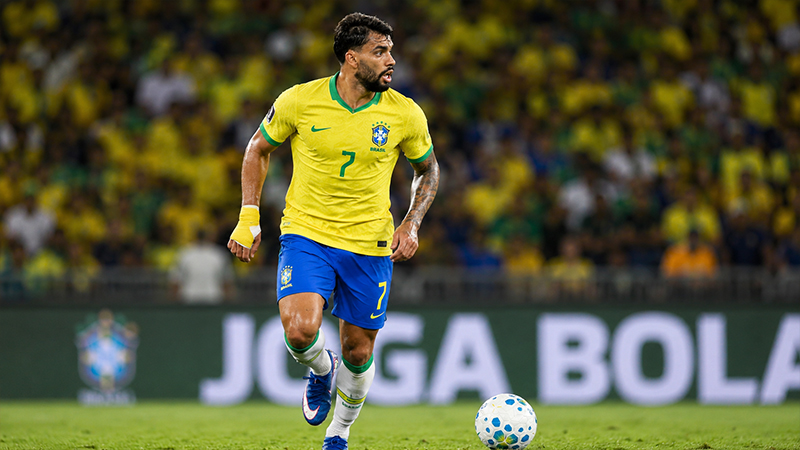
Lucas Tolentino Coelho de Lima, known globally as Lucas Paquetá, represents the modern face of Brazilian football—a blend of technical flair and deep cultural roots.
While fans recognize him for his creative playmaking at West Ham United and the Brazilian national team, his background offers a unique narrative of dual identity.
This article explores the specifics of the Lucas Paquetá ethnicity, his family heritage, and the geographical origins that shaped his professional journey.
By examining his Portuguese-Brazilian lineage and the strategic importance of his dual citizenship, we uncover how his personal history influenced his rise on the international stage.
Understanding the Lucas Paquetá Ethnicity
The ethnic background of Lucas Paquetá is characterized as Portuguese-Brazilian. Born on August 27, 1997, in Rio de Janeiro, he is fundamentally a product of Brazil’s diverse social fabric.
Brazil has a long-standing history of Portuguese influence, dating back centuries, which remains a cornerstone of the country’s national identity. For Paquetá, this connection is not just historical or cultural but deeply personal and legally significant.
His ethnicity is a reflection of the Luso-Brazilian relationship, where European ancestry meets South American upbringing.
This dual heritage has provided him with a unique worldview, allowing him to navigate the cultural nuances of both the Brazilian domestic league and the elite tiers of European football.
His identity is firmly rooted in his home country, yet his European connection has played a pivotal role in his career trajectory.
The Role of Dual Citizenship
Beyond his ethnic identity, Paquetá holds dual citizenship with Portugal. This legal status is more than a mere administrative detail; it is a direct result of his maternal lineage.
In the world of professional football, particularly in the European leagues, having a European Union (EU) passport is a high-value asset.
It allows players to be registered as domestic or EU players rather than filling restricted non-EU slots, which are often limited by league regulations. This strategic advantage was crucial during his high-profile move to Italy earlier in his career.
The Family Foundations: Maternal and Paternal Heritage
To fully grasp the origins of Lucas Paquetá, one must look at the specific influences of his parents. His upbringing was a balance of maternal European heritage and paternal Brazilian discipline.
Maternal Heritage: The Portuguese Connection
Lucas Paquetá’s mother, Cristiane, is the primary link to his Portuguese ancestry. It is through her side of the family that he derived his Portuguese lineage, which granted him the right to claim Portuguese nationality.
This connection proved to be a major professional milestone when he transferred from Flamengo to AC Milan in 2019.
Because he could be registered as an EU player, the transfer process was significantly streamlined, making him a more attractive prospect for the Italian giants.
Paternal Heritage: Brazilian Military Influence
While his mother provided the legal and ethnic bridge to Europe, his father, Marcelo, provided a foundation of discipline.
Marcelo served in the Brazilian military, an environment that likely instilled the work ethic and resilience required to succeed in the competitive world of professional sports.
This combination of military-grade discipline from his father and the cultural heritage from his mother created a well-rounded foundation for Lucas as he transitioned from a local talent to a global icon.
Family Background Overview
| Feature | Detail |
|---|---|
| Full Name | Lucas Tolentino Coelho de Lima |
| Father | Marcelo (Former Brazilian military) |
| Mother | Cristiane (Portuguese descent) |
| Nationality | Dual: Brazilian and Portuguese |
| Ethnic Group | Portuguese-Brazilian |
The Mystery of the Name “Paquetá”
One of the most common misconceptions about the midfielder is that “Paquetá” is his family name. In reality, it is a nickname that serves as a tribute to his geographic roots.
His legal surname, Tolentino Coelho de Lima, is rarely used in football media, as he chose to carry the identity of his childhood home onto the pitch.
Paquetá Island: A Unique Upbringing
The name is derived from Paquetá Island, a small and secluded island located in Rio de Janeiro’s Guanabara Bay.
Growing up on this island provided a starkly different experience compared to the mainland of Rio. Paquetá Island is famous for being a car-free zone, where transport is limited to bicycles and horse-drawn carriages.
This tranquil, community-focused environment is where Lucas honed his skills, often playing football in the streets and on the local beaches.
The Significance of the Nickname
In Brazilian football culture, nicknames are often used to signify a player’s origin or a specific physical trait. By adopting “Paquetá” as his professional name, Lucas ensures that his home remains a part of his global brand.
It acts as a constant reminder of the secluded island where his journey began, contrasting with the massive, noisy stadiums of the Premier League where he now competes.
Strategic Career Impact of His Heritage
The intersection of the Lucas Paquetá ethnicity and his legal citizenship status has been a driving force in his marketability. Football is as much a business as it is a sport, and the administrative benefits of his heritage cannot be overstated.
Transition to European Football
When AC Milan scouted Paquetá at Flamengo, his talent was undeniable. However, the presence of his Portuguese passport made the investment significantly less risky.
Many European leagues, including Serie A at the time, had strict quotas on how many non-EU players a club could sign in a single window. By holding Portuguese citizenship through his mother, Paquetá did not count against these quotas.
This allowed Milan to finalize his transfer with greater flexibility, setting the stage for his subsequent moves to Olympique Lyonnais and eventually West Ham United.
Cultural Adaptability
His Portuguese-Brazilian background also aided his cultural transition. While Brazil and Portugal share a language, the cultural nuances differ.
Having a family that understood both sides of the Atlantic likely made his move to Europe at a young age more manageable.
This adaptability is reflected in his performance; he has successfully integrated into three different major European leagues (Italy, France, and England), showcasing a versatility that is often bolstered by a diverse heritage.
Lucas Paquetá’s Identity in Modern Football
In the current landscape of the Premier League, Lucas Paquetá stands out not just for his flair but for his identity as a “Carioca”—a resident of Rio de Janeiro—with a global edge.
His story is a testament to how ethnicity and geographic roots can shape a player’s professional narrative.
- Global Recognition: He is recognized as a key player for the Seleção (Brazilian national team), carrying the hopes of a nation that values football as a core part of its identity.
- Heritage Pride: He frequently mentions his island roots, keeping the culture of Paquetá Island relevant in the international media.
- Dual Loyalty: While he represents Brazil internationally, his legal and ancestral ties to Portugal remain a significant part of his personal history.
Frequently Asked Questions
Is Paquetá his real last name?
No, “Paquetá” is a nickname based on the island in Rio de Janeiro where he grew up. His full legal name is Lucas Tolentino Coelho de Lima.
Does Lucas Paquetá speak Portuguese?
Yes, as a native of Brazil and a citizen of Portugal, Portuguese is his primary language.
What is the significance of his dual citizenship?
His dual citizenship with Portugal, inherited from his mother, allowed him to move to European clubs like AC Milan without being restricted by non-EU player quotas.
Where is Paquetá Island located?
Paquetá Island is located in Guanabara Bay, part of the city of Rio de Janeiro, Brazil. It is known for its peaceful environment and lack of motor vehicles.
Conclusion: A Legacy Rooted in Two Worlds
Lucas Paquetá’s journey from the car-free streets of a small island to the pinnacle of world football is a compelling story of talent, discipline, and heritage.
The Lucas Paquetá ethnicity—a blend of Portuguese and Brazilian roots—has provided him with both a rich cultural identity and a strategic advantage in his professional career.
Supported by a father with a military background and a mother who connected him to his European ancestry, Paquetá exemplifies the global nature of modern football.
His nickname remains a permanent tribute to the island that raised him, ensuring that no matter how far he travels or how many trophies he wins, he will always be connected to the “Island of His Roots”.
For fans and analysts alike, understanding this background is essential to appreciating the man behind the famous nickname.
As he continues to dazzle audiences in London and beyond, his dual heritage stands as a bridge between the tradition of Brazilian football and the structured world of European sport.