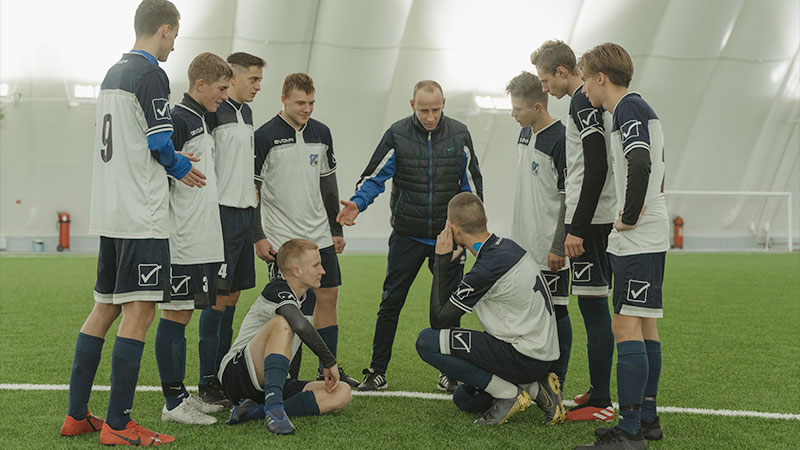
Soccer is arguably the most recognized athletic endeavor on the planet, yet a fundamental question often arises for those new to the pitch: is soccer a team sport? The answer is a definitive yes.
Formally categorized as a “collective sports goal game,” soccer is an intricate ballet of moving parts where individual success is inseparable from group achievement.
In this environment, the objective is shared, the strategy is communal, and the results are a direct reflection of how well eleven individuals can operate as a single, cohesive unit.
This article explores the deep-seated dynamics that make soccer the quintessential team-based competition.
Defining Soccer as a Collective Sports Goal Game
To understand the core of the sport, one must look at its official classification. Soccer is not merely a game of physical endurance; it is defined by its status as a collective sports goal game.
This means that the primary metric of success—scoring more goals than the opposition—cannot be achieved in isolation.
While a player might possess world-class dribbling skills or a powerful shot, those talents are rendered ineffective without a supporting structure.
The “collective” nature of the sport implies that every movement on the pitch influences the positioning and options of teammates.
Success depends heavily on the cooperation of multiple players working toward that shared objective. This interdependence is the bedrock of the professional game, separating it from individual sports like tennis or track and field.
The Structural Blueprint of a Professional Team
The organization of a soccer match is governed by strict structural rules that enforce a team-centric approach. From the number of participants to the specific roles they fill, every element is designed to facilitate group coordination.
The Standard Eleven-Player Framework
In every standard competitive match, the field is occupied by two teams of 11 players each competing against one another.
This number is not arbitrary; it is the optimal amount of personnel required to cover the expansive space of a professional pitch while maintaining tactical density.
With 11 players, a team can effectively defend their goal while simultaneously mounting an attack, a balance that requires constant communication and spatial awareness.
Specialized Positions and Responsibilities
Teams are typically organized into specific positions that require different skill sets, yet all must work in harmony. This specialization ensures that every area of the pitch is managed by an expert in that specific discipline.
| Position Category | Primary Responsibility | Key Interaction |
|---|---|---|
| Goalkeeper | The only player allowed to use their hands in the penalty area; primary shot-stopper. | Communicates defensive organization to the backline. |
| Defenders | Prevent the opposition from creating scoring opportunities and clear the ball from danger. | Must maintain a coordinated “line” to trap attackers offside. |
| Midfielders | Act as the engine room, transitioning the ball from defense to attack and controlling the tempo. | Bridge the gap between the defensive and offensive units. |
| Forwards | Primary goal-scorers tasked with breaking through the opponent’s final defensive line. | Depend on midfielders for precise passing and “service.” |
The Philosophy of Interdependence and Coordination
At the professional level, individual stardom is often highlighted in media headlines, yet the reality of the game is much more nuanced. Winning requires high levels of teamwork, coordination, and strategic communication.
This concept, known as interdependence, suggests that a player’s value is determined by how well they improve the performance of those around them.
Tactical Fluidity and Communication
Because the ball is in constant motion, players must constantly communicate—not just verbally, but through “body language” and movement patterns.
A striker making a diagonal run is a form of communication to a midfielder, signaling exactly where the ball needs to be delivered. If the midfielder fails to recognize this cue, the offensive opportunity vanishes.
This level of synchronization is why professional teams spend thousands of hours in training; they are not just practicing skills, they are building a collective intuition.
The Shared Objective Over Individual Glory
In a team-first environment, the objective is always the win, not the individual stat sheet. A defender who makes a last-second goal-line clearance is just as vital to the victory as the forward who scores the winning goal.
In fact, many of the sport’s most respected figures are “playmakers”—players whose primary role is to set up their teammates for success. This selfless approach is what defines the “team” in team sports.
The Strategic Role of the Modern Bench
The collective nature of soccer extends beyond the 11 players on the pitch. Modern professional standards have evolved to include the “bench” as a vital part of the team’s tactical toolkit.
Evolutionary Changes in Substitutions
Professional matches allow for additional players on a bench to be subbed in, providing fresh energy and new tactical options. In recent years, many top-tier leagues have increased the standard to allow up to five substitutes per match.
This change has fundamentally altered how coaches approach the game. It allows for more complex “in-game” adjustments, where a coach can swap out nearly half of the outfield team to change the formation or defensive intensity.
Maintaining Collective Intensity
The ability to use five substitutes ensures that the team’s collective performance does not drop as players fatigue. This reinforces the idea that the “team” is a larger entity than just the starting lineup.
A substitute who enters in the 80th minute to defend a lead is fulfilling a crucial role in the collective strategy, proving that every member of the roster is essential to the final outcome.
Global Governance and Professional Standards
The status of soccer as a premier team sport is reinforced by its global governance and the magnitude of its international competitions. This structured environment ensures that the principles of team play are upheld at every level of the game.
The Role of FIFA
The sport is regulated globally by FIFA (Fédération Internationale de Football Association), which establishes the “Laws of the Game”.
By standardizing rules across all continents, FIFA ensures that the team-based nature of soccer remains consistent, whether it is played in a local park or a professional stadium.
This consistency is what allows players from different nations to join international clubs and integrate into a team structure with relative ease.
The World Cup: The Ultimate Team Achievement
FIFA oversees the World Cup, which is recognized as the world’s most-watched team sporting event. Unlike individual championships, the World Cup represents the pinnacle of national collective effort.
To win, a nation must demonstrate not just talent, but the ability to build a cohesive team culture in a very short period. The prestige of the World Cup serves as a global testament to the power of the collective over the individual.
Comparing Team Synergy vs. Individual Brilliance
A common debate in the sporting world is whether a team of “superstars” can beat a well-drilled, cohesive unit of average players. In soccer, history frequently favors the latter.
The “Sum of Parts” Principle
In a truly collective sport, the total effectiveness of the team should be greater than the sum of its individual parts. This is often seen when smaller “underdog” teams defeat wealthy clubs with high-priced stars.
The underdog’s success is usually rooted in superior tactical discipline and a deeper commitment to the team’s defensive and offensive structures.
The Burden of Individualism
When a team relies too heavily on one star player, they become predictable. Opponents can “double-team” or isolate that individual, effectively neutralizing the entire team’s offense.
Conversely, a team with balanced interdependence is much harder to defend against because the threat can come from any position.
This reality forces coaches to prioritize “team fit” when scouting new talent, looking for players who will complement the existing collective dynamic.
Frequently Asked Questions About Soccer Dynamics
How many players are on a soccer team?
A standard competitive match features two teams of 11 players each on the field at one time. However, a full professional roster usually includes 20 to 25 players to account for injuries, suspensions, and the need for tactical substitutions.
Can a goalkeeper score a goal?
Yes, a goalkeeper is a full member of the team and can score, though their primary role is to defend the goal. While rare, goalkeepers sometimes move forward during the final minutes of a game to provide an extra target during corner kicks.
Why is teamwork so important in soccer?
Teamwork is essential because the pitch is too large for one person to control. Success depends on the cooperation of multiple players working toward a shared objective, requiring constant coordination and strategic communication to overcome the opposition.
What is the role of FIFA in team sports?
FIFA regulates the sport globally, ensuring that all professional matches follow the same collective rules and overseeing major events like the World Cup, the most-watched team sporting event in the world.
Conclusion: The Power of the Collective
Soccer is far more than a physical competition; it is a masterclass in organizational psychology and collective effort. As a “collective sports goal game,” it requires every participant to sacrifice personal ego for the benefit of the group.
Whether it is the goalkeeper’s specialized hand-use in the penalty area or the striker’s final touch, every action is a link in a chain that connects eleven players to a single goal.
In a world that often celebrates the individual, soccer remains a steadfast reminder that the greatest achievements are born from cooperation.
It is the ultimate team sport because it proves that when people work in harmony, they can achieve a level of excellence that is impossible to reach alone.
For players, coaches, and fans alike, the beauty of the game lies not in the brilliance of one, but in the unity of the many.