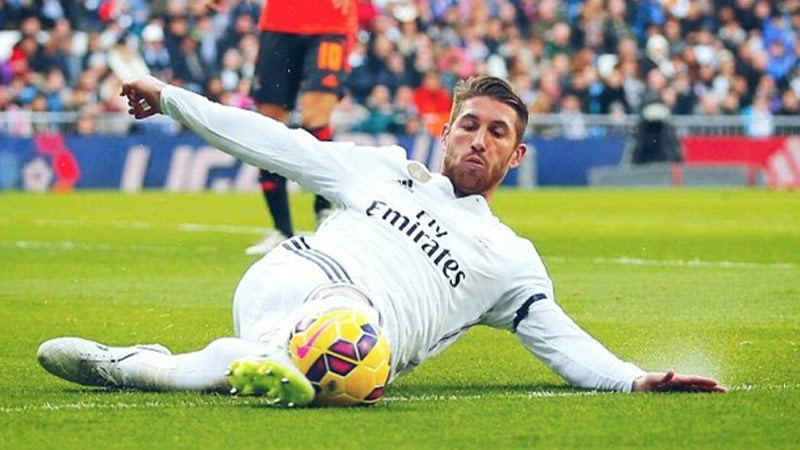
The slide tackle is one of the most iconic yet polarizing maneuvers in the world of soccer. To answer the fundamental question: yes, slide tackling is generally permitted in professional soccer under the IFAB Laws of the Game, provided the execution is safe and prioritizes ball contact.
However, the legality of this move is not absolute. It is a high-risk, high-reward defensive strategy that requires precision, timing, and strict adherence to safety standards.
While it remains a staple of the professional game, various restrictions exist across youth, indoor, and recreational levels to protect players from injury.
Understanding the Official Laws of the Professional Game
In the professional landscape, a slide tackle is a vital defensive tool used to dispossess an opponent or block a pass. However, the line between a brilliant defensive play and a red-card offense is razor-thin.
Referees are trained to evaluate the intent, force, and point of contact to determine if a challenge is within the bounds of the law.
The Requirement of Ball-First Contact
The most critical factor in a legal slide tackle is making clear contact with the ball before any contact is made with the opposing player. If a defender sweeps the legs of an attacker before touching the ball, it is an automatic foul.
Even if the ball is won, the tackle can still be penalized if the follow-through is deemed dangerous or if the initial contact with the ball was incidental to a reckless lunge.
Directional Safety and Approach
The direction from which a player initiates the slide significantly impacts its legality. Ideally, a tackle should be performed from the front or the side, where the opponent can see the challenge coming.
Tackling from behind is considered highly dangerous because the attacker cannot see the defender, making it nearly impossible to protect themselves from impact.
Consequently, challenges from behind frequently result in immediate fouls or disciplinary cards.
Proper Technique and Cleat Positioning
Technical execution is paramount for maintaining legality. A defender must keep their sliding leg down and ensure their studs (cleats) are not showing or pointed toward the opponent.
Leading with the studs, often referred to as a “studs-up” challenge, is one of the most common reasons a slide tackle is deemed illegal, as it poses a severe risk of causing puncture wounds or broken bones.
When a Legal Move Becomes a Foul
The transition from a tactical defensive play to a penalized offense depends on the referee’s assessment of the player’s control and force.
The Laws of the Game categorize illegal challenges into three distinct levels of severity, each carrying different consequences for the offending player.
The Three Levels of Disciplinary Action
| Category | Definition | Potential Sanction |
|---|---|---|
| Careless | A challenge showing a lack of attention or consideration. | Direct Free Kick |
| Reckless | Acting with complete disregard for the danger to an opponent. | Yellow Card |
| Excessive Force | A challenge that far exceeds necessary force and endangers safety. | Red Card |
The Danger of Two-Footed Lunges
One of the most strictly enforced rules in modern soccer is the prohibition of the two-footed lunge. Regardless of whether the player successfully wins the ball, leaving the ground with both feet is generally sanctioned as serious foul play.
This is because a two-footed tackle leaves the defender with zero control over their momentum and direction, turning their body into a dangerous projectile that can cause season-ending injuries.
Variations in Rules Across Different Leagues
While the professional game embraces the slide tackle, the rules change dramatically when looking at different age groups and environments. These variations are primarily driven by safety concerns and the physical development of the participants.
Youth Soccer Safety Standards
In many youth associations, including US Youth Soccer, slide tackling is strictly prohibited for younger age groups, typically those under 10 or 12 years old.
The rationale is that younger players lack the physical coordination and tactical awareness to execute a slide tackle safely.
By removing the option to slide, leagues focus on teaching fundamental standing defensive techniques and reducing the risk of accidental collisions.
Indoor and Recreational Restrictions
Indoor soccer and adult recreational leagues often implement a “no-sliding” policy. Due to the harder surfaces found in indoor facilities—such as turf or hard court—sliding can cause significant abrasions or “turf burn.”
Furthermore, in recreational leagues where skill levels vary widely, banning the slide tackle is a common measure to prevent hobbyist players from sustaining avoidable injuries.
Small-Sided Formats and Futsal
In 7v7 formats or Futsal, the rules regarding sliding are often much more stringent than in 11v11 soccer.
In many of these environments, sliding near an opponent is penalized with an automatic yellow card to maintain a fast-paced yet safe playing field.
This encourages players to stay on their feet and use their positioning rather than their physicality to defend.
The Strategic Evolution of Defensive Challenges
As soccer has evolved, the reliance on the slide tackle has shifted. Modern coaching often emphasizes “staying on your feet” as the gold standard of defending.
When a player slides, they are effectively removing themselves from the play for several seconds while they recover their footing. If the tackle fails, the defender is bypassed, leaving their team vulnerable.
The Risks of Going to Ground
Elite defenders like Paolo Maldini famously suggested that if they had to make a slide tackle, they had already made a mistake in positioning.
From a tactical standpoint, staying upright allows a defender to jockey the attacker, steer them toward the sidelines, and maintain the ability to react to a change in direction.
The slide tackle is increasingly viewed as a last-resort measure rather than a primary defensive strategy.
Psychological Impact on the Pitch
Despite the tactical risks, the slide tackle remains a powerful psychological tool. A clean, hard-hitting tackle can shift the momentum of a match, energize a home crowd, and intimidate an opposing attacker. It signals a level of commitment and intensity that can define a team’s defensive identity.
However, players must balance this intensity with the awareness that one mistimed lunge can result in a red card and leave their team at a numerical disadvantage.
Frequently Asked Questions About Slide Tackling
Can you slide tackle if you touch the ball first?
Yes, but with caveats. Touching the ball first is the primary requirement for a legal tackle, but it does not grant immunity. If the tackle is reckless or uses excessive force, the referee can still whistle for a foul and issue a card.
Is slide tackling allowed in Futsal?
In many Futsal and small-sided variations, sliding to dispossess an opponent is restricted or penalized with an automatic yellow card.
However, sliding to block a shot or save a ball from going out of bounds—where no opponent is in the immediate vicinity—is often permitted.
What happens if you slide tackle from behind?
Tackling from behind is almost always penalized because it is inherently dangerous. In most professional settings, a tackle from behind that makes contact with the player before the ball is an automatic yellow or red card, depending on the force used.
Why do youth leagues ban sliding?
Safety is the primary concern for youth organizations like US Youth Soccer. By banning the move for players under 12, leagues prevent injuries caused by poor technique and encourage the development of better standing defensive skills.
Conclusion: Mastering the Defensive Balance
Understanding whether slide tackling is allowed in soccer requires looking beyond a simple “yes” or “no.” While the IFAB Laws of the Game provide the framework for the professional sport, the reality on the ground varies by league, age, and environment.
For players, the key is to master the mechanics: prioritize the ball, keep the studs down, and only go to ground when absolutely necessary.
For coaches and parents, emphasizing safety and the “stay on your feet” philosophy ensures that the game remains enjoyable and competitive without unnecessary risk.
Whether you are a defender looking to sharpen your skills or a fan trying to understand a referee’s decision, recognizing the nuances of the slide tackle is essential to appreciating the complexity of the world’s most popular sport.