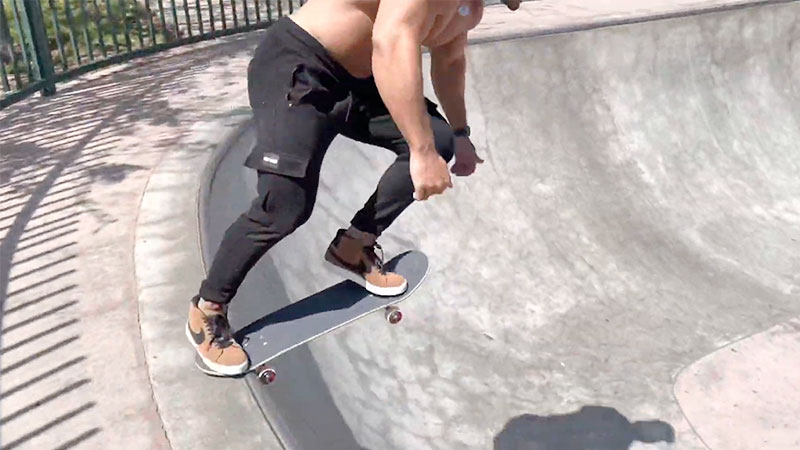
For decades, skateboarding has been viewed through the lens of counter-culture—a hobby for the rebellious or a fun pastime for kids at the local park.
However, as fitness science evolves, we are beginning to realize that the board under your feet is actually a sophisticated tool for cardiovascular health, full-body strength, and mental resilience.
If you have ever wondered, “is skateboarding a good cardio exercise?” the answer is a resounding yes—but with a few important caveats.
This guide dives deep into the data, the muscle groups involved, and the secret “skill gap” that determines whether your skate session is a light stroll or a vigorous training workout.
The Cardiovascular Breakdown: Is It Truly “Cardio”?
To understand if skateboarding counts as cardio, we have to look at heart rate zones. Cardiovascular training is defined by keeping the heart rate high enough for a sustained period to cause the heart and lungs to adapt.
The Science of the “Skate Heart”
According to exercise science experts, pushing a skateboard on flat ground can burn between eight and 12 calories per minute. This intensity level can boost the cardiovascular system significantly. Data from the Harvard Medical School provides a clear picture of the calorie-burning potential during a one-hour session:
- A 125-pound person burns approximately 300 calories.
- A 155-pound person burns approximately 372 calories.
- A 185-pound person burns approximately 444 calories.
For those who skate “aggressively”—incorporating hills, high speeds, or constant tricks—the burn can skyrocket to as much as 800 calories in a single hour.
Activity vs. Training: The HupSix Test
While skateboarding is undoubtedly “movement,” whether it qualifies as “training” depends on your intensity. In a heart-rate test using a Garmin chest strap, an experienced skater named Nick compared a 30-minute skate session to a structured fitness class.
- The Result: Skateboarding provided 16 vigorous minutes and 3 moderate minutes of cardio.
- The Verdict: While skating felt “harder” because of the skill required, the structured class delivered 31% more effective cardio because it eliminated “coasting”. To make skateboarding a true cardio workout, you must minimize standing around and maximize active pushing.
The Full-Body Strength Benefit: Muscles You Never Knew You Had
Skateboarding is often called a “super sport” because it engages virtually every muscle in the body. Unlike running, which is primarily linear, skateboarding requires multi-planar stability.
The Core and Lower Body Powerhouse
- The Core: To maintain balance on a moving, four-wheeled plank, your core is constantly engaged. This is especially true on uneven surfaces or when performing maneuvers.
- Hamstrings and Glutes: As you crouch to lower your center of gravity, you give your hamstrings a workout; standing back up engages the gluteus maximus.
- Quads: Performing “ollies” (jumping with the board) is considered an excellent exercise for the quadriceps.
- The “Burpee” Effect: Practicing flip tricks and jumps is essentially like performing squat jumps or burpees for 30 to 60 minutes straight.
The “Skill Gap”: Why Beginners Burn Fewer Calories
One of the most interesting findings in skate fitness is the “skill gap”. In a 2024 review of competitive skaters, elite athletes consistently hit their cardio goals, while recreational skaters often did not.
Why Skills Matter for Cardio
Beginners often spend the majority of their time balancing rather than pushing. Because they are focused on staying upright, their heart rate may rise due to “temperature stress” or adrenaline, but they aren’t necessarily performing sustained cardiovascular work.
In contrast, experienced skaters can navigate terrain with fluid, powerful movements that keep them in the “vigorous” heart rate zone for much longer.
As your skill increases, your ability to use the board as a high-intensity interval training (HIIT) tool also increases.
Mental Health and the “Meditative State”
The benefits of skateboarding extend far beyond the physical. Many skaters describe their sessions as a form of stress relief.
Focus and Clarity
When you are on a board, the level of focus required is so intense that you cannot dwell on daily worries or external pressures.
This creates a meditative state that provides a mental break from the “real world”. For many, the skateboard is a tool for mental health maintenance as much as it is for physical fitness.
Resilience and Patience
Learning a new trick can take hundreds, if not thousands, of failed attempts. This process builds perseverance and determination.
Skateboarders learn to “dust themselves off” and try again after a fall, fostering a high level of pain tolerance and mental resilience that carries over into their professional and personal lives.
Coordination and “Falling Safely”
If you’ve always felt a bit clumsy, skateboarding might be the cure. The sport requires your arms, legs, feet, and eyes to work in perfect unison.
Precision and Multitasking
Over time, skateboarding improves your precision and coordination. These gains aren’t just for the skatepark; they improve your multitasking abilities, driving skills, and performance in other sports like skiing or snowboarding.
The Art of the Fall
One of the most unique “hidden” benefits is learning how to fall safely. Skateboarders quickly learn how to roll out of a fall to prevent serious injury.
In a study of sporting injuries, skateboarding accounted for only two percent of recorded injuries, largely because skaters are trained to fall correctly. This skill can reduce the risk of fall-related injuries throughout a person’s entire life.
Practical Perks: Transportation and Affordability
Beyond health, skateboarding is a highly practical hobby that fits into a modern, eco-conscious lifestyle.
Green Transportation
A skateboard is a “green” alternative to driving that requires no fuel other than your own energy. It is significantly faster than walking or jogging and is less bulky than a bike, making it easy to stash under a desk at school or work.
Many people have reported losing significant weight—up to 50 pounds in a year—simply by switching their commute from driving to longboarding.
An Affordable Entry into Fitness
Compared to expensive gym memberships or high-end cycling gear, skateboarding is remarkably affordable.
- A quality beginner setup typically costs between $27 and $110.
- A single board can last between two and four years, offering incredible value for the money.
- Most “lessons” (learning tricks like the Ollie) are available for free through online guides or by simply asking other skaters at the park.
The Social Fabric: Community and Purpose
Skateboarding is inherently social. When you pick up a board, you join a global community that spans all ages and backgrounds.
A Diverse Community
Research from the University of Southern California highlights that skateboarding brings together people from all walks of life—from investment bankers to city council members.
For young people, it provides a sense of purpose and a positive way to fill time, which can even discourage antisocial behaviors.
Expert Tips: How to Turn Your Skate Session into a “Super Workout”
If your goal is maximum cardiovascular adaptation, you cannot just “cruise”. You need structure.
The 4×4 Interval Method
To remodel a “stiff heart” and improve cardiovascular function, experts suggest using structured intervals. You can apply the “Norwegian 4×4 method” to your skating:
- Pick a 4-minute song with a fast beat.
- Skate hard (vigorous pushing or bowl pumping) for the duration of the track.
- Rest or “roll easy” for 3 minutes.
- Repeat 4 times.
By doing this, you log 16 vigorous minutes, which often counts for “double credit” in weekly cardio goals. This structured approach turns a fun activity into a high-performance training session.
Conclusion: Why You Should Drop In
Is skateboarding a good cardio exercise? It is one of the best. It offers a unique combination of aerobic conditioning, full-body strength, and mental health benefits that few other sports can match.
Whether you are a 40-year-old looking for a new way to stay active or a “couch-to-5k warrior” looking for a more exciting alternative to the treadmill, skateboarding provides a path to fitness that is fun, social, and environmentally friendly.
While there is a learning curve, the rewards—a stronger heart, better coordination, and a clearer mind—are well worth the occasional scraped knee.