Evaluating whether a Major League Baseball pitcher is “good” requires looking far beyond superficial surface statistics.
In an era dominated by high-velocity strikeout specialists and short starter outings, traditional definitions of success often overemphasize top-of-the-rotation dominance while underestimating durability.
When assessing Kyle Gibson, the answer to whether he is good depends entirely on how an organization defines value within a 162-game season.
Kyle Gibson established himself as a reliable, durable No. 4 or No. 5 starting pitcher rather than a marquee star throughout a 13-year Major League Baseball career that concluded with his retirement in July 2025. Across more than a decade in the big leagues, Gibson served as the archetype of the dependable rotation anchor.
While he rarely matched the raw swing-and-miss efficiency of elite aces, his ability to take the ball every fifth day provided immense stability to every pitching staff he joined.
Statistical Baseline: Analyzing the Career Resume
To determine whether Kyle Gibson was a successful Major League starter, one must first examine his complete statistical footprint across 13 seasons.
Over his career, Gibson compiled a 112–111 win-loss record, a 4.60 ERA, 1,520 strikeouts, and a 14.5 Wins Above Replacement (WAR). These figures reflect a sustained level of big-league longevity that very few professional pitchers achieve.
Key Career Statistics & Summary Metrics:
- Career Win-Loss Record: 112 wins and 111 losses across his 13-year career.
- Earned Run Average (ERA): 4.60 career ERA over a massive workload.
- Total Strikeouts: 1,520 career strikeouts recorded.
- Wins Above Replacement (WAR): 14.5 cumulative career WAR.
- Total Appearances & Starts: 334 career appearances, including 328 starts.
- All-Star Honors: 1x Major League Baseball All-Star selection in 2021.
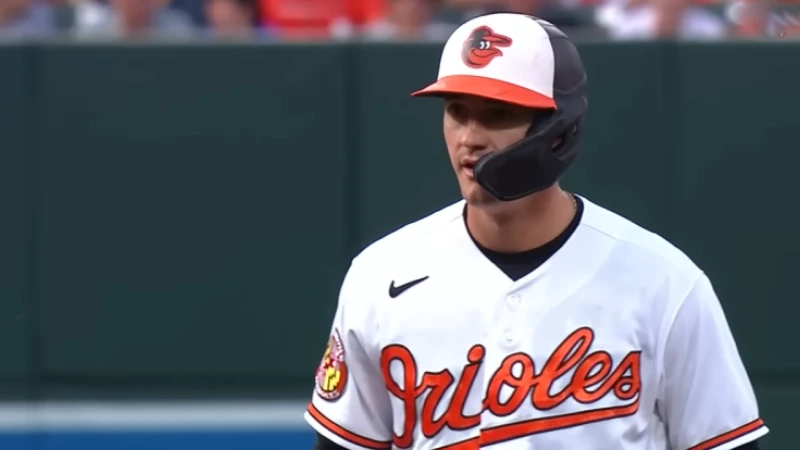
Throughout his 13-year tenure, Gibson showcased his capabilities across five different major league franchises: the Minnesota Twins, Texas Rangers, Philadelphia Phillies, Baltimore Orioles, and St. Louis Cardinals.
His career record of 112–111 demonstrates an ability to keep his teams competitive almost every time he stepped onto the mound.
Furthermore, accumulating 14.5 WAR across 328 starts confirms that he consistently provided above-replacement value over a massive workload.
His selection as an All-Star in 2021 highlighted his peak performance capabilities when his execution aligned perfectly with his pitching strategy.
The Primary Value Driver: Exceptional Durability and Innings Volume
In modern baseball analytics, innings volume is a crucial metric for evaluating rotation health. A primary strength that defined Gibson’s career was his exceptional durability and ability to handle a heavy innings volume.
Over extended stretches of his career, Gibson led the major leagues in games started, proving to be one of the most dependable starting options in professional baseball.
Key Indicators of Durability and Consistency:
- Major League Workload: Consistently led the major leagues in starts over extended periods.
- Double-Digit Win Campaigns: Won 10 or more games in eight different seasons.
- Career Start Rate: Started 328 out of his 334 total career appearances, demonstrating a dedicated starter role.
Winning 10 or more games in eight separate seasons underscores his consistency. In an era where pitch counts are strictly monitored, and starters often struggle to complete five innings, a starter who routinely takes the mound for 30 or more starts per season prevents bullpen fatigue.
By consistently absorbing innings as a back-of-the-rotation workhorse, Gibson protected high-leverage relief pitchers, directly contributing to his team’s overall win-loss performance across long campaigns.
Pitching Profile & Strategic Approach: Ground-Ball Generation
Kyle Gibson’s pitching profile was built around contact management rather than high-velocity strikeout pitching. To remain effective without elite strikeout rates, he relied on a refined four-pitch mix designed to generate weak contact and ground balls.
Deconstructing the Four-Pitch Arsenal:
- Sinking Fastball (Sinker): The primary weapon used to induce downward movement and low-angle ground balls.
- Sharp Slider: Utilized as a primary breaking pitch to generate soft contact and chase swings out of the zone.
- Changeup: Employed to disrupt hitter timing against opposite-handed batters.
- Curveball: Delivered with varied depth to reset hitter eye levels and offer a distinct look.
Rather than seeking high strikeout totals, Gibson strategically prioritized generating ground balls. By using his sinking fastball alongside a sharp slider, changeup, and curveball, he forced hitters into early-count contact.
This approach kept his pitch counts manageable, enabling him to pitch deep into ballgames and maintain his heavy innings volume throughout his 13-year career. For teams with solid infield defense, Gibson’s ground-ball profile was a highly efficient asset.
Intangible Assets: Veteran Leadership and Clubhouse Mentorship
Quantifying a pitcher’s impact extends beyond traditional pitching metrics. Throughout his stints with the Minnesota Twins, Texas Rangers, Philadelphia Phillies, Baltimore Orioles, and St. Louis Cardinals, Gibson was widely recognized for his intangible contributions.
Core Mentorship & Leadership Attributes:
- Clubhouse Presence: Served as a highly valued veteran leader in every clubhouse he entered.
- Staff Mentorship: Acted as a dedicated mentor to younger pitchers adapting to Major League demands.
- Professional Preparation: Demonstrated a daily work ethic and preparation routine for younger staff members to emulate.
In professional baseball, young pitching talents often require guidance from experienced veterans to navigate the pressures of a long season.
Gibson’s role as a mentor helped stabilize pitching staffs, helping younger teammates develop their approach to game planning and recovery.
This veteran leadership made him a sought-after addition for contender teams seeking balance and stability in their clubhouses.
Performance Realities and Career Limitations
A thorough evaluation of whether Kyle Gibson was “good” must also address his clear career limitations.
While his durability and ground-ball focus were major strengths, his per-inning statistics highlight why he was classified as a lower-rotation starter rather than a top-tier ace.
Evaluating Performance Boundaries:
- Elevated ERA Profile: Historically posted a mid-to-high fours ERA throughout his career, finishing with a 4.60 career ERA.
- Below-Average Strikeout Rates: Maintained below-average strikeout rates per inning compared to league-wide starter averages.
- Role Alignment: Best deployed as a back-of-the-rotation workhorse who eats innings rather than a top-of-the-rotation ace.
Because Gibson recorded a career ERA of 4.60 and below-average strikeout rates per inning, he frequently relied on fielders behind him to convert contact into outs. When defense faltered or when he lacked precise sinker command, he was vulnerable to multi-run innings.
Consequently, when teams deployed him as a No. 1 or No. 2 starter, his performance limitations became apparent. However, when utilized in his ideal role as a No. 4 or No. 5 starting pitcher, his overall contributions were well aligned with team needs.
Comparative Analysis: Top-of-the-Rotation Ace vs. Back-of-the-Rotation Workhorse
To fully appreciate Gibson’s standing in Major League Baseball, it is helpful to contrast his functional role with that of an elite rotation ace.
Top-of-the-Rotation Ace Characteristics:
- Focuses on dominant strikeout rates and swinging-strike percentages.
- Suppresses runs consistently to maintain an ERA in the low-to-mid threes or lower.
- Expected to win postseason matchups and dominate opposing lineups.
Back-of-the-Rotation Workhorse (Kyle Gibson Profile):
- Focuses on heavy innings volume, leading the major leagues in starts over extended stretches.
- Maintains a mid-to-high fours ERA while absorbing substantial innings per season.
- Induces ground balls using a four-pitch mix (sinker, slider, changeup, curveball).
- Wins 10 or more games consistently (achieved in eight different seasons).
- Provides veteran leadership and mentorship to stabilize young pitching staffs.
This comparison reinforces that Gibson fulfilled a crucial, distinct role in major league rotation construction. While he did not fit the mold of a high-strikeout ace, his specific skillset as an innings-eater provided vital baseline value across 13 seasons.
Conclusion
So, is Kyle Gibson good? The definitive verdict is yes—he was a solid, dependable, and valuable Major League starting pitcher throughout his 13-year career.
While fan expectations often prioritize high-strikeout aces, real-world rotation management depends heavily on pitchers who can start 30+ games, pitch deep into contests, and maintain a steady presence.
With 112 career wins, 14.5 WAR, eight seasons of 10+ wins, an All-Star nod in 2021, and mentorship provided across five franchises, Kyle Gibson proved that durability and ground-ball mastery are essential components of big-league success.
His career stands as a model of durability and functional efficiency for modern starting pitchers.