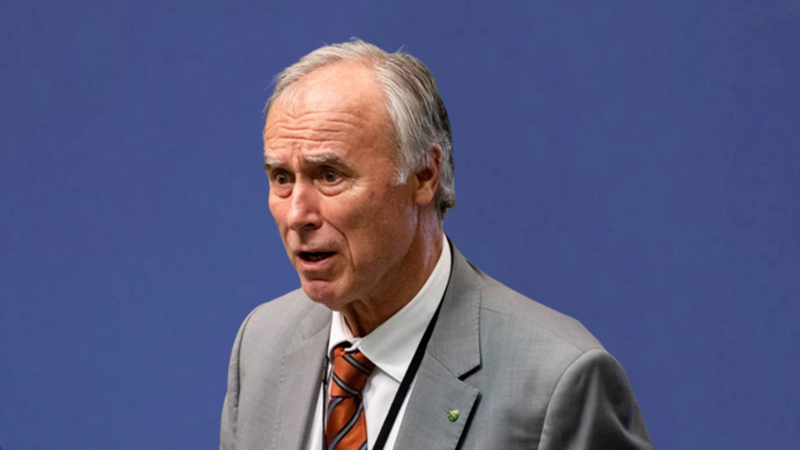
Yes, John Alexander was an exceptionally good tennis player who reached the elite pinnacle of the sport during the 1970s and 1980s.
Achieving a career-high singles ranking of World No. 8 and World No. 4 in doubles, he was a dominant force known for his ferocious serve-and-volley style.
With 36 total career titles and a historic 1975 Australian Open doubles win, Alexander’s technical mastery and competitive grit solidified his place in history.
Beyond individual accolades, his legendary Davis Cup contributions—including leading Australia to victory in 1977—demonstrate that he was truly world-class on every international stage.
How Good Was John Alexander as a Tennis Professional?
To accurately assess the skill level of John Alexander, one must look beyond simple wins and losses to evaluate his standing among the global elite.
Throughout the 1970s, the Australian star was a permanent fixture in the later rounds of major tournaments, proving he possessed the stamina and technical prowess required to compete with the very best in the world.
A World-Class Ranking Profile
Alexander reached his career-high singles ranking of World No. 8 in December 1975. In an era characterized by intense competition and legendary figures, maintaining a top-ten position is a definitive marker of being “good.”
His doubles performance was even more impressive, reaching a peak of World No. 4 in the same year. These rankings place him in the top 1% of all professional athletes who have ever played the game, reflecting a level of consistency and excellence that few ever achieve.
Longevity and Winning Percentages
With a career spanning from 1968 to 1983, Alexander showcased remarkable longevity. He finished his career with a highly respectable singles record of 591–434.
Winning nearly 600 professional matches requires not only physical skill but also a high degree of mental fortitude and strategic adaptability as the sport evolved through the early Open Era.
His 15-year stay near the top of international tennis is a testament to his enduring quality and professionalism.
Professional Career Statistics and Key Metrics
Understanding Alexander’s dominance is best achieved through a data-driven look at his career totals and financial success on the circuit.
| Metric | Statistics & Details |
|---|---|
| Highest Singles Ranking | World No. 8 (December 15, 1975) |
| Highest Doubles Ranking | World No. 4 (1975) |
| Career Singles Record | 591–434 |
| Total Career Titles | 35–36 (8 Singles, 28 Doubles) |
| Career Prize Money | $1,214,079 |
| Grand Slam Titles | 1975 Australian Open Doubles |
The Iconic Davis Cup Legend for Australia
While individual tournaments brought him fame, Alexander’s most profound impact arguably came through his representation of Australia in international team competition.
His “tenacious legacy” is perhaps most visible in the Davis Cup, where he became a national hero by delivering under extreme pressure.
Breaking Records at Seventeen
Alexander made history in 1968 by becoming the youngest player ever to represent Australia in a Davis Cup Challenge Round at just 17.5 years of age.
Being selected to represent a tennis powerhouse like Australia at such a young age is a clear indicator of his prodigious talent and the high regard in which he was held by coaching legends.
This early start paved the way for a career that would see him become one of the nation’s longest-serving players.
Dominating the 1977 Finals
The highlight of his international career was the 1977 Davis Cup Final against Italy. Alexander was the undisputed centerpiece of the Australian squad during this historic victory.
He managed to win both of his singles matches and teamed up to win the doubles match, effectively securing the trophy for his country.
Finishing his Davis Cup tenure with a 27–14 overall record (17–9 in singles), he proved he was a clutch performer on the biggest possible stage.
Analyzing the Technical Mastery of the Serve and Volley
Alexander’s success was built upon a specific, “classic” style of play that dominated the grass and fast-court era of the 1970s. His game was not just about power, but about the technical precision that would later make him a world-class commentator.
The Ferocious Serve Advantage
Armed with what historians describe as a “ferocious” and “big” serve, Alexander used his height and power to dictate points from the first hit.
In an era where serve-and-volley was the dominant strategy, having a reliable and heavy serve allowed him to put immediate pressure on opponents, forcing weak returns that he could easily put away at the net.
Precision and Net Performance
His excellence in volleys was the cornerstone of his 28 doubles titles. Alexander possessed the soft hands and quick reflexes required to dominate the forecourt.
This technical skill made him a preferred partner for other legends of the game, most notably Phil Dent, with whom he captured the 1975 Australian Open doubles crown.
His ability to cover the net and close out points with surgical precision was a hallmark of his “exceptionally good” game.
Overcoming Adversity and the 1981 Comeback
True greatness is often measured by how an athlete responds to setbacks. Alexander’s career was not without significant challenges, particularly a crippling injury that threatened to end his professional journey prematurely.
Battling Career-Threatening Injury
Around the turn of the decade, a severe back injury caused Alexander’s mobility to vanish and his ranking to plummet. At one point, he fell outside the top 100, a position that would lead many veterans to consider retirement.
However, his competitive nature and physical resilience allowed him to endure a grueling rehabilitation process.
Rising Through the Rankings Again
In 1981, having regained his mobility, Alexander staged a massive career comeback. He successfully climbed back into the upper echelons of the sport, proving that his earlier success was not just a product of youth, but of deep-seated skill and a refusal to be defeated by physical limitations.
This second phase of his career added another layer of respect to his legacy.
Notable Victories and Competitive Edge
To understand if a player was truly “good,” one must look at who they beat. Alexander’s resume includes victories over some of the most decorated names in the history of the sport.
- Victory Over Björn Borg (1979): In one of his most famous individual triumphs, Alexander upset the legendary Swedish icon Björn Borg at the 1979 WCT Milan indoor event. Beating Borg during his prime was a feat few could claim.
- Grand Slam Consistency: While he never won a singles major, he reached the semifinals of the Australian Open twice (1974 and 1977) and the quarterfinals multiple times in the late 70s.
- Winning Record Against the Field: Maintaining a 591–434 record across a decade and a half demonstrates that he was consistently superior to the vast majority of his contemporaries.
- Success in Major Tournaments: He amassed a 76–53 singles record in Grand Slam events, proving he could perform when the lights were brightest.
The Voice of Tennis: Success in Broadcasting
Following his retirement from the courts in 1985, Alexander transitioned into a second career where his deep understanding of tennis was shared with millions of viewers worldwide.
Expert Analysis on the Global Stage
He became one of the most recognizable voices in the sport, known specifically for his technical precision and ability to break down the mechanics of a point.
For over 20 years, he served as the primary play-by-play commentator for the Seven Network’s Australian Open coverage. His expertise was so highly regarded that he was also recruited by the BBC for their prestigious Wimbledon broadcasts.
Partnering with Modern Legends
Alexander frequently worked alongside other icons of the game, such as John McEnroe and Jim Courier.
His ability to hold his own and provide deep insight alongside multiple-time Grand Slam champions further reinforces his status as a “tennis titan” who understood the game at a level very few ever reach.
How Does He Compare to All-Time Legends?
While Alexander was an elite professional, it is helpful to view his career in the context of the absolute “Greatest of All Time” (GOAT) to see where he fits in the hierarchy of the sport.
- Novak Djokovic: Holds the record with 24 Grand Slam titles.
- Rafael Nadal: The “King of Clay” with 22 titles.
- Roger Federer: Known for effortless elegance and 20 titles.
- Serena Williams: Dominated with 23 Open Era titles.
- Steffi Graf: The only “Golden Slam” winner in history.
- Martina Navratilova: Most complete statistical resume with 167 singles titles.
- Pete Sampras: Dominated the 90s with a similar serve-and-volley style to Alexander.
- Rod Laver: The only player to win two calendar-year Grand Slams.
- Chris Evert: Reached 34 Grand Slam finals.
- Björn Borg: A global icon whom Alexander famously defeated in 1979.
While Alexander may not have the double-digit Grand Slam count of these ten, his ability to compete with and occasionally defeat these legends confirms his elite status.
Frequently Asked Questions About John Alexander
How many titles did John Alexander win?
John Alexander won a total of approximately 35 to 36 professional titles during his career. This includes 8 singles titles and 28 doubles titles, highlighting his incredible versatility and skill in both formats of the game.
What is his highest world ranking?
He reached a career-high ranking of World No. 8 in singles and World No. 4 in doubles in 1975. These rankings solidified his status as one of the premier players of the 1970s.
Is he still involved in the world of tennis?
After a long career in broadcasting that ended in 2010, Alexander shifted his focus to public service. He served as a federal Member of Parliament in Australia from 2010 until 2022, though he remains a legendary figure and an ambassador for the sport he once dominated.
Final Verdict: Assessing His Place in History
In conclusion, John Alexander was far more than just a “good” tennis player; he was an elite competitor who helped define a golden era of Australian tennis.
His journey from being the youngest Davis Cup representative to a top-ten world ranking and a successful transition into media and politics showcases a lifetime of excellence.
Whether it was his ferocious serve, his 1977 Davis Cup heroics, or his technical commentary, Alexander has left an indelible mark on the sport that continues to be respected by fans and historians alike.