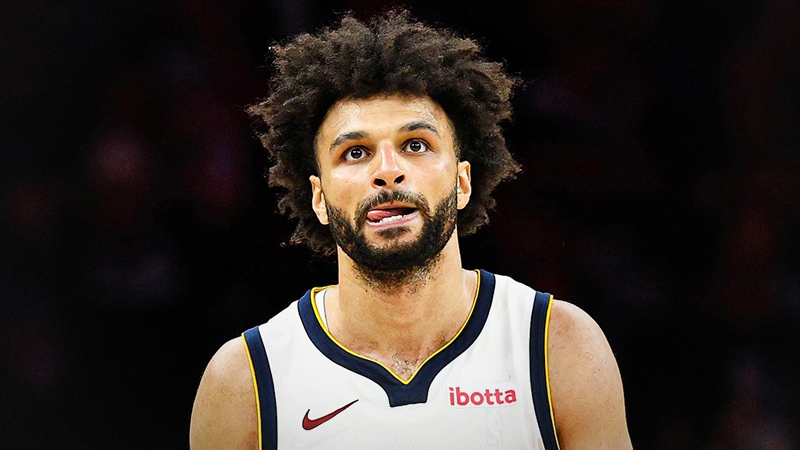
Jamal Murray is celebrated as one of the most explosive offensive engines in the modern game, yet his defensive capabilities often spark intense debate among analysts and fans.
While his “Blue Arrow” scoring bursts define his public persona, his work on the other end of the floor is a complex study of physical tools versus statistical output.
Evaluating whether Murray is a “good” defender requires moving beyond binary labels to examine how his size, strength, and competitive motor fluctuate throughout the season.
This analysis dissects his metrics, identifies his situational strengths, and determines his true impact within a championship-caliber system.
The Physical Foundation: Strength in the Backcourt
To understand Murray’s defensive floor, one must first look at his physical profile. Unlike many lead guards who are targeted due to their lack of size or slight frames, Murray possesses a sturdy build that acts as a natural deterrent.
Standing at 6’4″ and weighing 215 pounds, he is exceptionally strong for his position, which provides a unique advantage in a league that increasingly favors “positionless” basketball and hunting mismatches.
Neutralizing Post-Up Threats
Modern offensive strategies often involve larger wing players hunting smaller point guards in the low post to force a defensive collapse. Murray’s physical density makes this a difficult proposition for opponents.
His ability to hold his ground against larger players prevents the Denver Nuggets from having to send immediate double-teams, thereby maintaining the integrity of their perimeter defense.
Because opposing guards rarely find success bullying him in the post, he serves as a robust “point of attack” defender who can withstand the initial contact of a drive without being displaced.
Defensive Rebounding and Possession Security
Defense is not complete until the defensive team secures the basketball. Murray leverages his frame effectively to box out and contribute to the team’s rebounding efforts. During the 2025–26 regular season, he averaged 3.97 defensive rebounds per game.
This contribution is vital; it prevents second-chance opportunities for the opposition and allows the Nuggets to transition into their lethal fast-break offense more quickly.
By utilizing his strength to battle for positioning on the glass, Murray provides a functional defensive service that goes beyond individual man-to-man coverage.
Statistical Reality: Decoding the Defensive Metrics
When we shift from the “eye test” of his physical tools to the hard data, a more nuanced picture emerges. Statistically, Murray’s defensive impact is often viewed as neutral or slightly negative, particularly during the grueling stretches of the regular season.
This data suggests a player who performs within the expected range for a high-usage offensive star rather than an elite stopper.
| Metric Category | Statistical Value | Contextual Performance |
|---|---|---|
| Career Defensive Rating | 114.9 | Indicates a standard defensive floor over his career. |
| 2025–26 Regular Season DRtg | 119.3 | A spike that reflects regular-season energy conservation. |
| Career Playoff DRtg | 115.1 | Shows stability during high-intensity postseason series. |
| Career NBA Finals DRtg | 109.1 | Highlights his defensive ceiling during the highest stakes. |
| Steals Per Game (2025–26) | 0.88 | Reflects a low “event rate” in passing lanes. |
| Blocks Per Game (2025–26) | 0.39 | Suggests limited rim protection or vertical disruption. |
The data indicates that while Murray is not a disruptive force who generates high volumes of turnovers, he possesses the ability to sharpen his efficiency when the games matter most. The disparity between his regular-season rating and his Finals rating is a testament to his situational engagement.
The Consistency Challenge: Offensive Load and the Motor
The primary factor limiting Murray’s defensive consistency is the immense burden he carries on the offensive end. As a primary playmaker and secondary scoring option, the energy expenditure required to navigate the regular season is substantial.
This often leads to “energy conservation” on the defensive end, where his motor may not run at full capacity for 82 games.
The Marathon of the Regular Season
During the regular season, Murray can occasionally go through stretches where he is less engaged on the defensive side of the ball. This lack of consistent intensity can manifest as missed rotations or a failure to communicate during complex defensive sequences.
While his competitive drive is high, the physical reality of playing heavy minutes in a high-usage role necessitates these trade-offs. It is during these periods that his defensive rating tends to spike, reflecting a player who is doing “just enough” to get by until the postseason arrives.
Navigation of Screens and Defensive Rotations
One of the most difficult tasks for a guard in the modern NBA is navigating the endless barrage of high pick-and-rolls. Murray has shown the ability to handle screening actions well when he is “locked in,” but during the regular season, he can sometimes “die on a screen,” allowing the ball-handler to gain a step.
This is less a reflection of his skill and more a symptom of the energy-saving measures taken by many elite offensive players. When his motor is fully engaged, however, his lateral quickness and strength allow him to fight through contact and stay attached to his assignment.
The “Playoff Murray” Shift: Performance When It Matters
History has shown that Jamal Murray is a “rhythm” player who thrives under pressure. This translates directly to his defensive performance.
The “Playoff Murray” phenomenon is not limited to his scoring; it includes a significant uptick in defensive focus and physical intensity. When the stakes are at their highest, the defensive flaws seen in the regular season often diminish.
Elevating Lateral Quickness in High Stakes
During deep postseason runs, Murray displays a level of lateral quickness that is often absent in January or February. This improved movement allows him to stay in front of elite perimeter creators, making him a much more formidable individual defender.
His competitive drive takes over, and he becomes much more willing to engage in the “dirty work” required to win playoff games. This version of Murray is not easily exploited by offensive schemes, as he possesses the focus to execute game plans with precision.
The NBA Finals Defensive Ceiling
The most compelling evidence of Murray’s defensive potential is his 109.1 Defensive Rating in the NBA Finals. This number is elite for a guard with his offensive responsibilities. It proves that when the game plan is narrowed and the importance of every possession is magnified, Murray can function as a high-level defender.
He has shown he can handle the physical toll of high-level basketball while maintaining the focus necessary to prevent easy baskets for the opposition.
The Ecosystem: How Team Scheme Masks Limitations
It is important to acknowledge that Murray does not operate in a vacuum. The Denver Nuggets have built a defensive infrastructure designed to complement his strengths and mitigate his weaknesses.
By surrounding him with elite frontcourt defenders, the team ensures that Murray’s “average” defensive output does not become a liability that can be exploited by championship-level opponents.
The presence of players like Aaron Gordon is crucial in this regard. Gordon often takes on the most difficult defensive assignment on the perimeter, allowing Murray to guard “lesser” offensive threats where he can use his strength and rebounding to his advantage.
This strategic alignment means that Murray is rarely asked to carry the defense; instead, he is asked to be solid and dependable within a broader system that has built-in safety nets.
This synergy allows the team to maintain a top-tier defense while Murray focuses his primary energy on dismantling the opposition’s defense.
Addressing the Low Defensive Event Rate
One area where Murray objectively falls behind elite defensive guards is in his “event rate.” This refers to the frequency of steals, blocks, and deflections that disrupt the opponent’s rhythm.
With only 0.88 steals and 0.39 blocks per game in the 2025–26 season, Murray is not a disruptive force in the passing lanes or at the rim.
He is a positional defender rather than a gambling one. While some guards will risk leaving their man to jump a passing lane, Murray tends to stay home, prioritizing his position over the chance of a turnover.
While this approach leads to fewer highlight-reel defensive plays, it also means he is rarely out of position, which fits the Nuggets’ philosophy of disciplined, team-based defense.
However, for him to take the next step in his defensive evolution, increasing his activity in passing lanes could provide the Nuggets with more easy transition opportunities.
Comparative Analysis: Murray vs. Peer Point Guards
When comparing Murray to other elite guards in the league, he occupies a middle ground. He is not a defensive liability like some offensive specialists who are frequently targeted in late-game situations. Conversely, he is not a perennial All-Defensive candidate like Jrue Holiday or Marcus Smart.
Instead, Murray falls into the category of “functional superstars.” He is a player who provides enough defensive value to stay on the floor in any situation because his offensive contributions far outweigh his defensive neutralities.
Among his peers, his post defense and rebounding are clear outliers, making him more versatile in switching schemes than smaller, quicker guards who might have higher steal rates but less physical presence.
Final Verdict: The Reality of Murray’s Defensive Impact
Jamal Murray is a solid, average point guard defender who possesses the tools to be better when the situation demands it. He is a player who leverages his significant physical strength and size to ensure he is never a weak link that teams can easily exploit.
While his regular-season metrics may fluctuate due to his heavy offensive load, his “Playoff Murray” persona reveals a defender capable of high-level engagement and efficiency.
Ultimately, he is not a lockdown defender, but he is a championship-level contributor whose competitive drive and physical attributes make him a net positive for his team’s defensive identity.
For the Denver Nuggets, Murray’s ability to be “solid” while carrying a massive offensive burden is exactly what is required for their continued success at the highest level of the sport.
Frequently Asked Questions
Is Jamal Murray a liability on defense?
No. While he is not elite, he is rarely a liability that teams can easily exploit due to his strength (215 lbs) and size (6’4″).
What is Jamal Murray’s best defensive attribute?
His post defense and strength. He is exceptionally strong for a point guard, making it difficult for opposing guards to bully him or post him up effectively.
Why are his defensive stats lower in the regular season?
This is primarily due to his heavy offensive load. To maintain his scoring and playmaking throughout 82 games, he often conserves energy on the defensive end, which can lead to missed rotations.
Does Jamal Murray’s defense improve in the playoffs?
Yes. Murray typically elevates his engagement and lateral quickness during deep postseason runs, as evidenced by his 109.1 Defensive Rating in the NBA Finals.
How does his rebounding help the defense?
He averages nearly 4 defensive rebounds per game, using his frame to box out and secure possessions, which prevents second-chance points for the opposition.