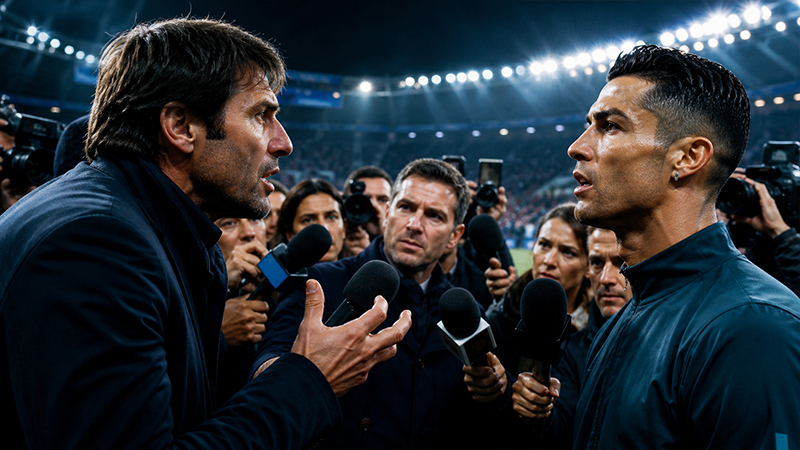
In the modern sporting landscape, the final whistle no longer signals the end of the competition. Instead, it marks the beginning of a different kind of contest: the post-match interview.
These interactions between elite football players and journalists have evolved from routine procedural duties into what superstar Kylian Mbappé describes as a “verbal boxing match”.
It is an arena where words are used as both shields and swords, and where the tension can often rival the intensity of the 90 minutes played on the pitch.
This shift reflects a broader change in sports media. No longer satisfied with simple tactical analysis, the modern media landscape demands viral moments, emotional transparency, and narrative-shifting revelations.
As a result, the relationship between the locker room and the press box has become increasingly complex, characterized by a delicate balance of professional duty and personal defense.
The Anatomy of the “Verbal Boxing Match”
The metaphor of a “boxing match” perfectly captures the current state of football journalism. In this exchange, the journalist often acts as the aggressor, looking for a “hook”—a specific phrase or admission that can lead a news cycle.
Conversely, the player must stay on the defensive, parrying leading questions and attempting to keep their true thoughts or frustrations behind a carefully constructed wall.
According to Mbappé, the core of this conflict lies in the journalist’s objective: to get players to say exactly what they don’t want to say.
This creates an inherent adversarial relationship. When a player enters the “mixed zone” or sits down for a press conference, they are often mentally prepared for a confrontation rather than a conversation.
Kylian Mbappé: Challenging the Off-Field Narrative
Kylian Mbappé has become a central figure in this evolving media dynamic. As one of the world’s most scrutinized athletes, his every word is dissected for clues about his future, his ego, or his relationships with teammates.
Recently, Mbappé demonstrated his “counter-punching” ability when questioned about off-field distractions. Rather than providing a standard PR-friendly response, he challenged the journalist’s premise directly.
By asking, “When you see my latest performances, do you see a successful boy?”, he effectively shifted the focus back to his professional output, forcing the interviewer to reconcile their narrative with the reality of his on-field success.
This move highlights a growing trend of players refusing to let the media dictate the terms of their personal and professional identity.
Erling Haaland and the Death of “Corporate Polish”
While some players use verbal sparring to protect their privacy, others use it to assert their authenticity. Manchester City’s Erling Haaland is a prime example of a player who rejects the “corporate polish” often expected in high-level sports.
In a notable exchange with a Sky Sports reporter, Haaland was asked about his use of “colourful language” while discussing a teammate’s performance.
His response was blunt and dismissive of traditional media etiquette: “Oh come on, we are always swearing in our lives”.
By refusing to apologize, Haaland signaled a shift toward a more raw, unfiltered form of communication.
This brand of honesty often endears players to fans, who are increasingly tired of rehearsed, cliché-ridden interviews, even if it puts them at odds with the broadcast standards journalists are expected to uphold.
Diego Simeone: The Disconnect Between Media and Results
It isn’t just players who feel the heat of the “boxing match”; managers are often the primary targets of journalistic pressure.
Diego Simeone, the long-standing manager of Atlético Madrid, has frequently clashed with the press over their desire for “messages” and narratives following a loss.
Simeone’s frustration stems from a fundamental disconnect: journalists want a story to tell the public, while the manager is focused solely on the pragmatic reality of the scoreboard.
He once sharply noted that it is difficult to “send messages” because, while journalists are desperate for soundbites, “what people need is to win”.
This highlights the friction between the media’s need for content and the professional’s need for results, suggesting that in the eyes of many sports figures, the media’s quest for “meaning” is often a distraction from the job at hand.
Cristiano Ronaldo: The Master of Narrative Control
Perhaps no player has mastered the art of the verbal boxing match more than Cristiano Ronaldo. Throughout his career, Ronaldo has moved beyond simply responding to questions, often taking proactive steps to disrupt the traditional media cycle.
The Independent Platform
In 2022, Ronaldo bypassed traditional club-sanctioned media outlets to sit down with Piers Morgan for a bombshell interview.
This allowed him to frame his departure from Manchester United on his own terms, demonstrating that global icons now have the power to choose their own “ring” for the boxing match.
Non-Verbal Power
Sometimes, the most powerful statement in a press conference isn’t a word at all. Ronaldo’s famous removal of Coca-Cola bottles during a Euro 2020 press conference was a viral moment that spoke volumes about his personal brand and health philosophy, causing a massive stir without a single sentence of match analysis.
Why the Tension is Growing: Search Intent and the Viral Cycle
The escalation of these confrontational interviews can be attributed to the changing nature of how fans consume sports news.
There is a significant gap between traditional sports reporting and modern audience demand. While fans may search for “match highlights,” the content that generates the most engagement is often the “post-match rant” or the “confrontational interview.”
Journalists, pressured by the need for clicks and social media engagement, are incentivized to ask the “tough” or “probing” questions that might spark a reaction.
Players, aware of how easily a single sentence can be taken out of context and turned into a viral meme, become more guarded or, conversely, more combative.
Conclusion: The Future of the Interview
The “verbal boxing match” is unlikely to end anytime soon. As long as the stakes of professional football remain high and the demand for “authentic” content grows, the tension between journalists and players will persist.
However, we are seeing a new generation of players, led by the likes of Mbappé and Haaland, who are no longer content to just play the game.
They are defining the rules of engagement, demanding respect for their professional performance while reclaiming their right to be authentic, even if that means a few “rounds” of verbal sparring in the press room.
In this environment, the “winner” of the interview isn’t necessarily the one who gets the last word, but the one who manages to stay true to their narrative amidst the chaos of the media storm.