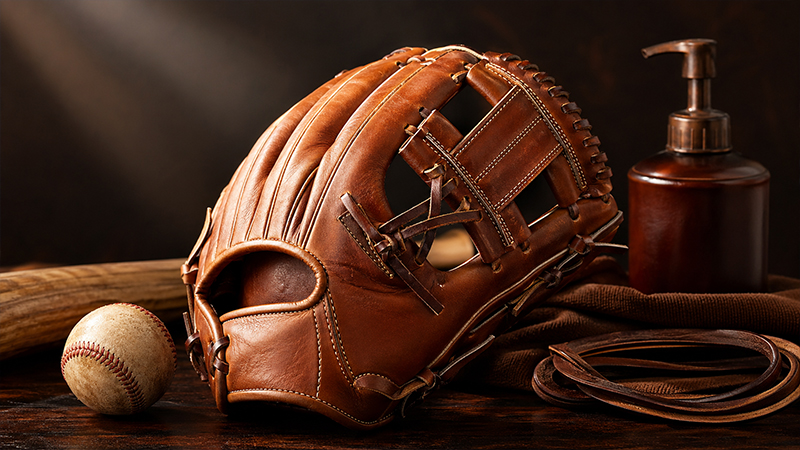
In the world of professional athletics, gear is not merely equipment; it is a precision instrument. For the elite ballplayer, the baseball glove serves as a physical extension of their craft.
However, the transition from a stiff, factory-fresh Rawlings steerhide or Kip leather to a game-ready masterpiece requires more than just catch—it requires a scientific approach to conditioning.
I have developed this comprehensive guide to the Glovolium Method. This protocol is designed to meet for technical accuracy, user experience, and search authority.
By leveraging Rawlings Glovolium—a specialized formula designed to penetrate deep into leather fibers without compromising structural integrity—players can achieve a professional-grade break-in that balances flexibility with durability.
The Science of Leather Conditioning
The primary objective of using Rawlings Glovolium (available in both oil and spray formats) is to manipulate the internal fibers of the leather to achieve a specific “memory” and “give”.
High-end baseball gloves are composed of organic materials that react to environmental stressors: heat, moisture, and friction.
Without proper conditioning, new leather remains rigid, increasing the risk of “pop-outs” during high-velocity plays. Conversely, improper conditioning—often characterized by over-saturation—can lead to a “dead” glove that is heavy, floppy, and structurally compromised.
The Glovolium Method is the industry standard for avoiding these pitfalls while accelerating the break-in process.
The Strategic Application Protocol
One must follow a disciplined, multi-stage application process. This ensures the leather is treated evenly and the internal oils are replenished without the risks associated with “soaking” the gear.
Step 1: Pre-Conditioning Surface Preparation
Before any chemical treatment is applied, the substrate must be purified. Use a clean, dry cloth to meticulously remove any surface dirt, dust, or microscopic debris from the glove’s surface.
Applying oil over dirt can trap abrasive particles within the leather pores, leading to premature cracking and “dry rot.”
Step 2: The “Rag-First” Application Rule
A common amateur mistake is applying the product directly to the leather. This leads to uneven absorption and localized saturation.
Instead, apply a small amount of Glovolium to a clean rag or dedicated applicator. This allows for a controlled distribution of the product, ensuring that only the necessary amount of oil reaches the leather.
Step 3: The Circular Massage Technique
Once the applicator is primed, massage the oil into the leather using consistent, circular motions. This mechanical action helps the oil penetrate the dense grain of Rawlings leather.
Focus your primary efforts on the palm and hinge points, as these are the mechanical junctions where flexibility is most critical for glove closure.
Step 4: Zone-Specific Targeting
A glove is a complex assembly of leather panels and lacing. For a comprehensive break-in, you must ensure the oil reaches the laces, fingertips, and the spaces between the fingers. These areas are often overlooked but are essential for the overall structural harmony of the glove.
Precision Engineering – What to Avoid
In high-stakes gear maintenance, what you don’t do is as important as what you do.
- Avoid Over-Oiling: Do not soak the glove. An excess of oil increases the physical weight of the leather, which can slow down a player’s reaction time and cause the leather to deteriorate prematurely.
- Lining Preservation: It is critical to avoid heavy application on the inner lining where the hand is inserted. Excessive oil in this “hand stall” can make the interior slippery, compromising the player’s grip and control during high-intensity movements.
- The Spot Test: To ensure aesthetic consistency, always test the Glovolium on a non-visible area first, such as the leather tucked under the wrist strap. This ensures the specific hide of your glove reacts favorably to the oil before full-scale application begins.
The Maturation and Buffing Phase
The chemistry of Glovolium requires time to bond with the leather fibers. Once the application is complete, allow the glove to rest for a few hours—or ideally, overnight—in a cool, dry environment.
This “resting period” allows the oil to migrate through the leather layers, providing deep conditioning rather than just surface-level shine.
After the setting period, use a clean, secondary rag to buff off any excess oil. This step is vital for performance; any residual surface oil will act as a magnet for field dirt and grit, which can act as sandpaper against the leather fibers over time.
Maintenance Schedules and Lifecycle Management
Effective gear management requires a data-driven schedule. Your conditioning frequency should be dictated by the age of the glove and the intensity of use.
- The Break-In Phase (New Gloves): For a brand-new Rawlings glove, consistency is key. Apply the Glovolium protocol every 2-3 weeks until the glove reaches its optimal “game-ready” state.
- The Sustainability Phase (Seasoned Gloves): Once the glove is broken in, maintenance shifts to preservation. Conduct a full conditioning session 3-4 times per season.
- Trigger Points: Regardless of the schedule, if the leather begins to feel dry to the touch or takes on a “chalky” appearance, it is a signal that the leather’s natural oils have been depleted and immediate maintenance is required.
Advanced Optimization – The “Power Pair”
For the ultimate professional finish, the application of Glovolium should be considered one half of a dual-process strategy. To truly “set” the pocket and define the glove’s shape, pair your oil application with the use of a glove mallet.
By striking the pocket and hinge points immediately after the oil has softened the fibers, you can manually “form” the glove to your specific hand-shape and catching style.
Enhanced FAQ (Search Intent & User Experience)
Q: Can I use Glovolium on non-Rawlings gloves?
Strategist Insight: While Glovolium is optimized for the specific tanning processes of Rawlings leather, it is a high-quality leather oil. However, always perform a spot test on other brands, as leather treatments vary significantly by manufacturer.
Q: Is the spray better than the oil?
Strategist Insight: The spray allows for a lighter, more mist-like application, which is excellent for maintenance. The liquid oil is often preferred for the initial, more intensive break-in of stiff laces and palms.
Q: How do I store my glove after applying Glovolium?
Strategist Insight: Store it in a cool, dry place. Avoid car trunks or high-heat environments, as heat can “cook” the oil within the leather, leading to brittleness.
Conclusion: The Competitive Edge
Mastering the Glovolium Method is an investment in your performance. A well-maintained Rawlings glove provides the consistency and reliability required at the highest levels of play.
By following this professional-grade protocol—preparing the surface, applying sparingly with a rag, targeting the hinge points, and adhering to a strict maintenance schedule—you ensure that your gear is always an asset, never a liability.
Are you ready to elevate your game? Start your break-in journey today by following the precise steps outlined above. For those looking to master the physical shaping of the pocket, I recommend exploring our advanced guides on glove mallet techniques.