In the world of competitive athletics, the margin between victory and defeat is often found in the smallest details.
While much attention is rightly paid to the weight of a bat or the break-in of a glove, the integrity of the uniform itself plays a critical role in a player’s focus and range of motion.
A primary component of this on-field “armor” is the baseball belt. It is more than a mere accessory; it is a functional tool that ensures a player’s jersey remains tucked and their pants remain secure during high-velocity movements, slides, and pivots.
Achieving a professional-grade fit requires an understanding of the engineering behind the gear. Most modern players utilize an elastic-webbing belt, which offers a unique blend of rigidity and flexibility.
However, many athletes, particularly those transitioning to higher levels of play, struggle with the specific mechanics of these belts.
This guide provides an exhaustive analysis of how to manage, adjust, and maintain your baseball belt to ensure peak performance.
The Engineering of the Elastic Baseball Belt
Before diving into the adjustment process, it is essential to understand the materials and components that make up a high-performance belt.
Unlike a traditional leather dress belt, the baseball variant is designed to withstand the rigors of dirt, sweat, and explosive lateral movement.
- The Elastic Webbing: The core of the belt is typically a heavy-duty elastic or nylon blend. This material is chosen because it expands and contracts with the player’s breathing and movement. When an infielder crouches into a ready position or a hitter rotates their torso during a swing, the belt must give slightly to prevent restriction.
- The Metal Slide Adjuster: This is the most misunderstood part of the belt. It is a rectangular metal bar that allows for “one-size-fits-most” versatility. It acts as a friction-based lock that determines the circumference of the loop.
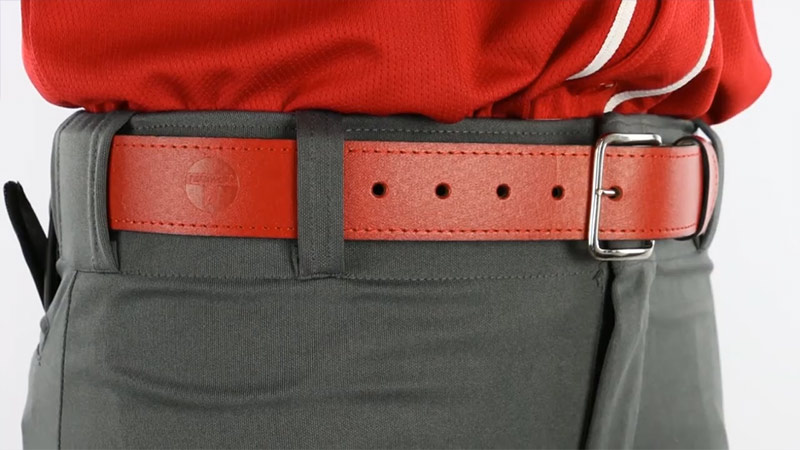
- The Leather End-Tabs: To provide a classic aesthetic and durable fastening point, the ends of the belt are usually reinforced with leather or high-grade synthetic material. These tabs contain the adjustment holes where the prong will eventually rest.
- The Buckle and Prong: The hardware at the front of the belt is designed for quick fastening. The metal prong must be robust enough to stay seated even during the impact of a slide into second base.
The Technical Process: How to Tighten for a Secure Fit
The goal of tightening a baseball belt is to find the equilibrium between security and comfort. If it is too loose, the pants will sag and the jersey will untuck; if it is too tight, it can hinder deep breathing and abdominal engagement.
1. Pre-Wear Loop Calibration
The most efficient way to tighten the belt is to adjust it before you step into your pants.
- Locate the Adjuster: Identify the metal slide buckle or clasp situated on the back or side of the elastic strap.
- Slide to Shorten: To reduce the size, you must move this metal hardware along the strap. This effectively shortens the loop by pulling the elastic webbing tighter through the clasp.
- The Tension Test: Pull the strap from both sides of the slide to ensure the friction is holding. If the webbing slides too easily, the buckle may be bent or the elastic may be worn out.
2. The Final Fastening
Once the loop is calibrated to your approximate waist size, thread the belt through the pant loops.
- Engage the Prong: Pull the leather end-tab across the front of your waist until the belt is snug. Push the metal prong through the appropriate leather-end hole.
- Check the Alignment: The buckle should be centered with your fly and jersey buttons. Proper alignment is a hallmark of a professional appearance on the diamond.
3. Managing Excess Material
A common frustration for players with smaller waists is the “tail” of the belt—the excess material that hangs past the buckle.
- The Keeper Loop: High-quality belts come with an elastic keeper loop designed specifically to hold this tail in place.
- The Tuck Method: If your belt does not have a keeper, or if the tail is exceptionally long, tuck the leftover strap neatly under the first or second pant loop. This prevents the material from flapping or becoming a distraction during play.
The Professional Aesthetic: Why Fit Equals Focus
In elite sports, “looking the part” is inextricably linked to the “aim small, miss small” philosophy. A sloppy uniform can lead to a sloppy mindset. When a player’s belt is properly tightened, several performance benefits occur:
- Uniform Continuity: A tight belt keeps the jersey from “billowing” out. This reduces the chance of a jersey being snagged by a glove or a sliding opponent.
- Lower Body Stability: While the belt doesn’t provide medical-grade support, a snug fit around the waist helps the player feel more “connected” to their lower half, aiding in the kinesthetic awareness required for complex athletic movements.
- Psychological Readiness: There is a ritualistic element to tightening the belt before a game. It signals to the brain that the transition from the clubhouse to the field is complete.
Troubleshooting and Maintenance
Even the highest-quality equipment requires care. Because baseball is played in diverse weather conditions—from the dry heat of summer ball to the dampness of early spring—the materials in your belt will face significant stress.
When the Elastic Fails
Over time, the fibers in the elastic webbing will begin to snap or lose their “memory.” You will notice this when the belt feels tight in the locker room but becomes loose after just a few innings of play. Once the elastic has lost its tension, the belt should be replaced. A belt that lacks snap is a liability on the field.
Hardware Issues
The metal slide adjuster can sometimes become “smooth,” losing the friction required to hold the webbing in place. If you find yourself constantly having to re-tighten the belt mid-game, check the slide buckle.
You may need to use a pair of pliers to slightly crimp the buckle for a tighter grip, or simply upgrade to a belt with a more aggressive clasp.
Cleaning for Longevity
Do not throw your belt in the washing machine with your uniform. The agitation can damage the leather tabs, and the heat of a dryer will destroy the elastic fibers.
Instead, use a damp cloth and mild soap to wipe down the webbing and leather. Air dry the belt away from direct sunlight to prevent the leather from cracking.
The Cultural Impact of the Baseball Uniform
The baseball uniform is steeped in history. From the pinstripes of the Bronx to the classic grays of the road team, every element is designed to evoke a sense of heritage and discipline.
The belt is the anchor of this ensemble. When we look at the icons of the game, their uniforms are always crisp, their belts are always centered, and their focus is unwavering.
For the aspiring athlete, mastering the adjustment of your gear is the first step toward mastery of the game itself.
Whether you are a Little League parent helping your child prepare for their first game or a high school player looking for that competitive edge, the technical details of your equipment matter.
Strategic Summary for the Modern Athlete
To summarize the essential steps for a perfect fit:
- Prioritize the Slide: Use the metal slide bar to set the foundational circumference of the belt.
- Ensure Prong Security: The metal prong must be firmly seated in the leather end-tab to prevent accidental loosening.
- Clean Lines: Use the keeper loop or pant loops to secure the tail of the belt.
- Regular Inspection: Check the health of your elastic fibers and the friction of your metal hardware before every season.
By following these professional standards, you ensure that your equipment works for you, not against you.
The diamond is a place of speed, power, and precision. Do not let a loose belt be the reason you miss a play. Tighten up, tuck in, and play with the confidence of a professional.
Final Thoughts on Equipment Integrity
As we look toward the future of athletic apparel, we see innovations in “smart” fabrics and ultra-lightweight alloys.
Yet, the fundamental design of the baseball belt has remained remarkably consistent over the decades. This longevity is a testament to the effectiveness of the simple mechanical slide and prong system. It works because it is reliable.
By dedicating the time to understand these mechanics, you are investing in your own performance. Discipline in the locker room translates to discipline on the field.
When your belt is secure, your jersey is tucked, and your pants are positioned correctly, you aren’t just wearing a uniform—you are wearing a statement of intent. You are ready for the first pitch.