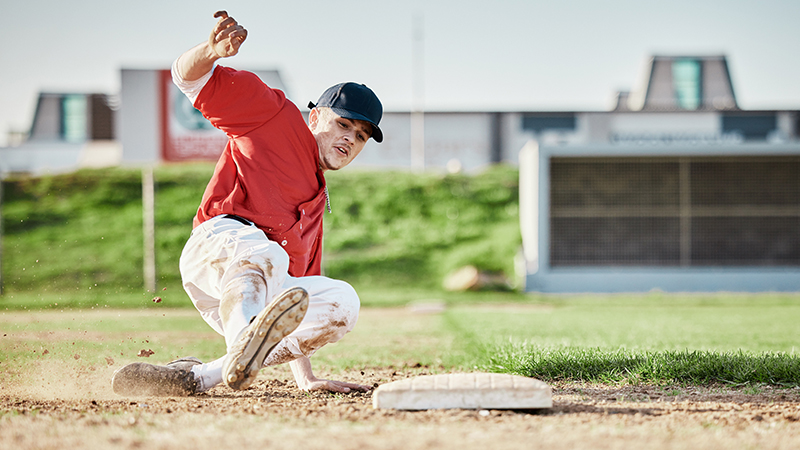
In the high-stakes environment of competitive baseball, games are often won or lost by a matter of inches.
Whether it is a lead-off hitter stretching a single into a double or a pinch-runner attempting to swipe second in the bottom of the ninth, the ability to slide effectively is a fundamental pillar of elite base running.
Yet, despite its importance, sliding is frequently an overlooked skill in player development. Many coaches assume players will simply “pick it up” over time, but without deliberate instruction, athletes risk both technical inefficiency and significant physical injury.
For a world-class athlete, sliding is more than a way to stop; it is a tactical maneuver designed to evade tags, maintain momentum, and ensure safety.
This comprehensive guide serves as the gold standard for mastering the art of the slide, combining traditional wisdom with modern safety protocols and professional-grade drills.
The Strategic Choice: Choosing Your Slide for the Situation
Not all slides are created equal. A player’s choice of technique should be dictated by the game situation, the position of the ball, and the movement of the fielder.
1. The Feet-First Slide: The Gold Standard
The feet-first slide is widely considered the “bread and butter” of base stealing. It allows the player to maintain high levels of control while significantly reducing the risk of injury to the upper extremities.
By leading with the legs, players can launch themselves toward the bag to secure a safe arrival without sacrificing the speed built up during their sprint. For most players, especially those in developmental stages, this should be the primary method of sliding.
2. The Head-First Slide: The High-Risk, High-Reward Dive
Reserved for the most daring players, the head-first slide is the epitome of aggression on the basepaths. Players dive headlong toward the base, hoping to beat the throw with sheer velocity.
While it can be a game-changer that turns heads, it is inherently riskier than feet-first methods. It exposes the fingers and hands to being jammed or stepped on by a fielder’s cleats.
It requires advanced coordination and should only be utilized when a player is fully committed to the risk to beat a high tag.
3. The Hook Slide: The Sneak Attack
The hook slide is the tactical “sneak attack” of the baseball world. Instead of approaching the base head-on, the runner approaches at an angle, hooking one leg around the bag while reaching out with a hand or the trailing foot to make contact.
This maneuver is designed to evade a tag by sliding past the reach of the defender while maintaining contact with the base, often leaving the middle infielder unable to make the play.
The Anatomy of a Perfect Feet-First Slide
To execute a slide like a professional, one must understand the mechanical breakdown of the “Figure-4” position. Coach Justin of Ultimate Baseball Training emphasizes that once this skill is learned, it becomes a permanent instinct, much like riding a bike.
The “Figure-4” Mechanics
The foundation of a safe feet-first slide is the body’s positioning upon impact.
- The Leg Configuration: Sit on the ground and extend your dominant leg forward (usually the right leg for right-handed players). Tuck the other foot underneath the straight leg to form the shape of a “4”.
- Toes Up: It is crucial to keep the toes of the lead foot pointed upward. This prevents the cleats from catching in the dirt, which is a leading cause of ankle and knee injuries.
- The Contact Point: You should slide on the “meat” or the bottom of your butt. Many amateur players make the mistake of sliding on their side, which leads to painful “raspberries” and deep bruising.
- The Hands: Always keep your hands slightly in the air. This serves a dual purpose: it prevents your hands from being scraped or stepped on by the fielder, and it acts as a visual distraction for middle infielders attempting to turn a double play.
Timing and Distance: The Science of the Takeoff
The most common error in sliding is poor timing. If a player slides too late, they risk colliding with a fixed base at high speed, which can lead to catastrophic injuries such as shattered ankles or broken legs.
The 5-7 Foot Rule
Generally, a player should initiate their slide approximately 5 to 7 feet from the base. However, this “happy medium” varies based on the player’s speed and the field conditions.
Surface Dynamics: Turf vs. Dirt
The playing surface drastically affects sliding physics.
- Turf Infields: These surfaces are significantly faster than natural dirt. On turf, the friction is lower, meaning a player will travel further during the slide. Consequently, you may need to start your slide slightly later to ensure you don’t stop short of the bag.
- Grass and Dirt: Traditional dirt provides more resistance. Players should practice on both surfaces to develop a feel for the different “glide” lengths.
Safety First: Transitioning from Practice to the Game
Safety is the most critical component of sliding instruction. High-level programs prioritize injury prevention through the use of proper equipment and safe training environments.
Avoid Fixed Bases During Training
Beginners should never practice sliding into real, fixed bases. If the timing is off, the impact of a foot hitting a stationary base can shatter an ankle. Instead, use “soft” markers like cones, gloves, or sliding mats to gauge distance safely during the learning phase.
Essential Protective Gear
To dominate the game, players must be equipped with the right gear.
- Sliding Mitts: Professional-grade sliding mitts protect the hands and fingers from being jammed or stepped on during head-first slides.
- Proper Footwear: Metal cleats provide the best traction on dirt, but turf shoes are essential for practicing on synthetic surfaces to prevent catching an edge.
- Sliding Pants and Compression: Utilizing padded sliding shorts under the uniform provides an extra layer of protection for the “meat” of the butt and thighs.
Professional Drills for Mastering the Motion
To move from a beginner to an elite base runner, players must engage in repetitive, high-quality drills that simulate game pressure.
The “Shoes-Off” Grass Drill
This is the most effective way to learn the “slip and slide” feel. Practice on wet grass in socks to remove the fear of catching a cleat. This allows the player to focus purely on the “Figure-4” body position and the “hands up” technique.
Slide and Stick Drill
On a soft surface, have players practice sliding into a designated area. The focus is on “sticking the landing”—maintaining balance and control so that the player is ready to stand up immediately if a ball gets away.
The Hook Slide Angle Drill
Set up cones to simulate the path toward the base at an angle. Players must approach the “bag,” hook their leg around it, and reach out to touch it while their momentum carries them safely past the fielder’s reach.
Reaction Drills
Coaches should simulate “balls in the dirt” or unexpected wild pitches. Players must react instantly, deciding whether to stay upright or transition into a slide based on the fielder’s positioning.
Video Analysis
Reviewing footage allows players to see their body positioning, timing, and hand placement, making it easier to identify and correct technical flaws.
Enhanced FAQ: Expert Insights for Peak Performance
Q: Is it better to slide right-footed or left-footed?
A: Most players have a natural preference. For example, many right-handed players prefer to lead with their right foot. The most important factor is comfort and consistency; once you find your “happy medium,” stick with it.
Q: How do I avoid “raspberries” when sliding?
A: Raspberries are usually caused by sliding on your side. Ensure you are sliding directly on the bottom of your butt and keep your weight centered rather than leaning too far to one side.
Q: When is the head-first slide appropriate?
A: While it is riskier, the head-first slide is effective when you need to maximize your reach to beat a high tag or a throw that is arriving at the same time as you. It should be practiced on soft surfaces like foam mats or crash pads before being attempted in a game.
Q: How do I know if I’m sliding too late?
A: If you are hitting the base with significant force or “jarring” your body upon impact, you are likely sliding too late. You should aim to be in the “Figure-4” position and already gliding across the surface before you make contact with the bag.
Conclusion: Commit to the Slide
Sliding is one of the most exciting aspects of baseball, representing the speed and aggression of the game. However, it is a skill that demands respect and proper technique.
By mastering the Figure-4 position, understanding the timing of the 5-7 foot rule, and utilizing professional-grade protective gear, you can transform yourself from a standard runner into a dominant force on the basepaths.
Remember: Practice makes permanent. Whether you are practicing in your socks at a local park or running drills on a turf infield, consistency is the key to making sliding an instinct. Don’t just play the game—dominate the game.