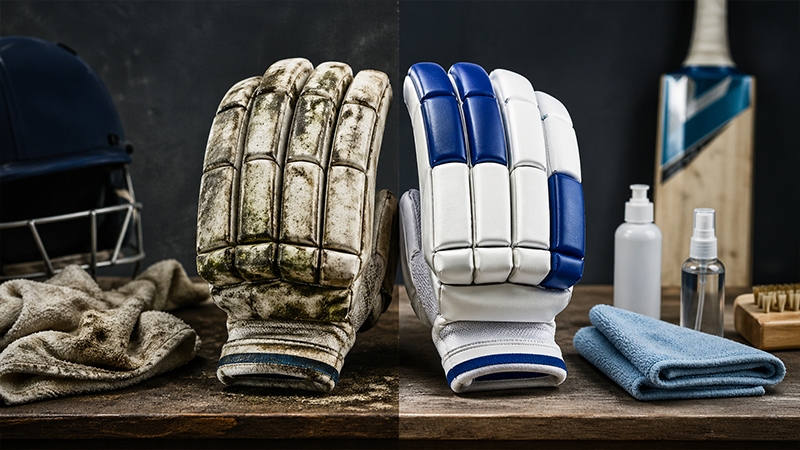
In the world of high-performance athletics, your equipment is an extension of your body. For cricketers and baseball players, few tools are as intimate as the batting glove.
However, a common and frustrating reality for athletes—from weekend warriors to those wielding professional-grade Kookaburra Kahuna or Bruce Bolt leather—is the rapid onset of a pungent, “cheesy” odor and the eventual degradation of the material.
We will explore the biological causes of equipment odor, the strategic implementation of preventative measures, and advanced restoration techniques to ensure your gear remains a performance asset rather than a locker room liability.
The Science of the “Stink”: Why Gloves Fail
To solve the problem of smelly gear, one must first understand the micro-environment of a batting glove. The human hand contains thousands of sweat glands.
During a high-intensity innings, these glands release moisture, salts, and oils directly into the glove’s lining.
The “cheesy” smell frequently reported by players is not merely the smell of sweat; it is the result of bacterial proliferation.
When damp gloves are placed in a dark, enclosed gear bag, they become a perfect incubator for bacteria that consume sweat and skin cells, releasing malodorous compounds as a byproduct.
Furthermore, improper cleaning—such as using harsh detergents or aggressive scrubbing with a toothbrush—can strip the leather of its natural oils, leading to a “crusty,” stiff, and brittle texture that ruins the glove’s tactile feedback.
The Immediate Post-Game Protocol: The Five-Minute Freshness Window
The most critical stage of glove maintenance occurs within five minutes of leaving the field. Consistency at this stage can extend the life of a pair of gloves by several seasons.
The Golden Rule: Never Leave Them in the Bag
The most common mistake is leaving damp gloves buried at the bottom of a kit bag. This traps moisture and accelerates bacterial growth. Instead, players should:
- Air them out immediately: Attach your gloves to the outside of your gear bag or hang them up as soon as the game concludes.
- The “Inside-Out” Manoeuvre: Turning the gloves inside out is a professional secret that exposes the sweat-soaked interior directly to the air, significantly speeding up the drying process.
- The Shade Requirement: While it is tempting to leave gear in the direct sun to “bleach” out bacteria, direct UV exposure can cause leather to crack and dry out. Always dry your gloves in semi-shade or a well-ventilated indoor area to maintain the structural integrity of the leather.
Preventative Strategies
Strategic prevention is always more cost-effective than restoration. By implementing these three layers of protection, you can prevent the “cheese” smell from ever taking root.
The Power of “Inners”
Wearing fingerless or thin liner gloves (commonly known as “inners”) is the single most effective way to protect your primary batting gloves.
- Moisture Absorption: Inners act as a sacrificial layer, absorbing the bulk of the sweat before it reaches the expensive leather of your Kookaburras.
- Ease of Maintenance: Unlike leather batting gloves, cotton or synthetic inners can be tossed into a standard washing machine after every game without risk of damage.
The Talcum Powder Tradition
A time-honored insight from veteran players involves the use of talcum or baby powder.
- Pre-Game Application: Applying a quick puff of powder inside the glove or on your hands before play helps absorb initial moisture and improves grip stability.
- Post-Game Desiccant: Sprinkling powder inside after a session helps draw out lingering moisture and neutralizes odors before they become permanent.
Micro-Moisturization
An unconventional but highly effective hack used by community experts is the application of a mild moisturizer to the hands before putting on gloves.
This surprisingly reduces overall perspiration and helps maintain the suppleness of the leather from the inside out.
Advanced Deodorizing: Beyond the Standard Wash
When a simple airing-out isn’t enough, professional athletes turn to targeted odor-neutralization techniques that don’t involve submerging the glove in water.
The Tea Bag Fragrance Hack
One of the most effective community-driven tips involves using flavored tea bags.
- The Method: Place a high-fragrance tea bag (such as mixed berry or mint) inside each glove and leave them overnight.
- The Result: The tea bag acts as a natural desiccant and replaces the bacterial odor with a fresh, pleasant scent.
The Desiccant Duo: Silica and Dryer Sheets
For players in high-humidity environments, placing silica pouches (often found in shoe boxes) or dryer sheets inside the gloves after use can effectively neutralize scents and keep the interior dry.
Specialized Anti-Microbial Sprays
If the odor is stubborn, utilize sprays specifically designed for high-contact sports gear, such as hockey or boxing equipment. These sprays are formulated to kill the specific bacteria found in athletic gear without damaging delicate materials.
The Deep Cleaning Protocol: Safely Restoring Your Gear
Eventually, every pair of gloves will require a deep clean. To avoid the “crusty” fate of many amateur attempts, follow this professional-grade restoration process.
The Gentle Surface Clean
- Preparation: Create a solution of warm water and a very mild, alcohol-free detergent.
- The Soft Scrub: Using a microfiber cloth or a soft-bristled toothbrush, gently wipe down both the interior and exterior of the glove.
- The Rinse: Use a second cloth dampened only with fresh water to remove any soap residue.
The Baking Soda Restoration (For Heavy Odor)
For gloves that have reached a critical level of odor, a baking soda soak is the ultimate remedy.
- The Mix: Dissolve approximately 1/4 cup of baking soda in a bucket of warm water.
- The Soak: Submerge the gloves for 20 to 40 minutes. Baking soda is a natural pH neutralizer that will break down the acidic compounds produced by bacteria.
- The Drying Phase: Rinse thoroughly and dry in the shade, ensuring the gloves are turned inside out halfway through the process to ensure the palms don’t remain damp.
The Professional Finish: Leather Conditioning
For premium leather gloves (like Bruce Bolt or top-tier Kookaburras), washing can strip away essential oils. Once the gloves are nearly dry, apply a specialized leather conditioner or cream.
This ensures the leather remains soft, tacky, and responsive, preventing the “crusty” texture that occurs when leather is stripped of its natural moisture.
Knowing When to Replace: The ROI of New Gear
Even with world-class maintenance, batting gloves are high-wear items. You should consider a replacement if you observe:
- Structural Failure: Rips in the palm or fraying of the finger seams that compromise protection.
- Permanent Rigidity: If the leather has become so stiff that it no longer offers a “second-skin” feel, even after conditioning.
- Biological Saturation: If the “cheese” smell returns immediately after a deep clean, the bacteria may have moved into the deep fibers of the padding, making the glove a hygiene risk.
Enhanced FAQ: Your Questions Answered
Q: Can I put my leather batting gloves in the washing machine?
A: It is highly discouraged. While synthetic gloves may survive a machine wash on a delicate cycle, the agitation and heat can permanently warp and dry out leather. Hand washing is the professional standard for longevity.
Q: How often should I apply talcum powder?
A: You can use a small amount before every session to manage sweat. Avoid over-applying, as it can occasionally create a “paste” if the glove is extremely wet.
Q: Why do my gloves get “crusty” after they dry?
A: This is usually caused by drying the leather too quickly (direct sun or heat) or by soap residue left in the fibers. Always rinse thoroughly and dry in a shaded, well-ventilated area.
Conclusion: The Competitive Advantage of Clean Gear
In high-stakes sports, marginal gains matter. Maintaining your batting gloves isn’t just about avoiding a bad smell; it’s about ensuring your grip is consistent, your hands are healthy, and your investment in premium gear like Kookaburra is protected.
By following this professional maintenance routine—airing out, using inners, and employing targeted cleaning hacks like baking soda and tea bags—you ensure that you step to the crease with confidence every single time.