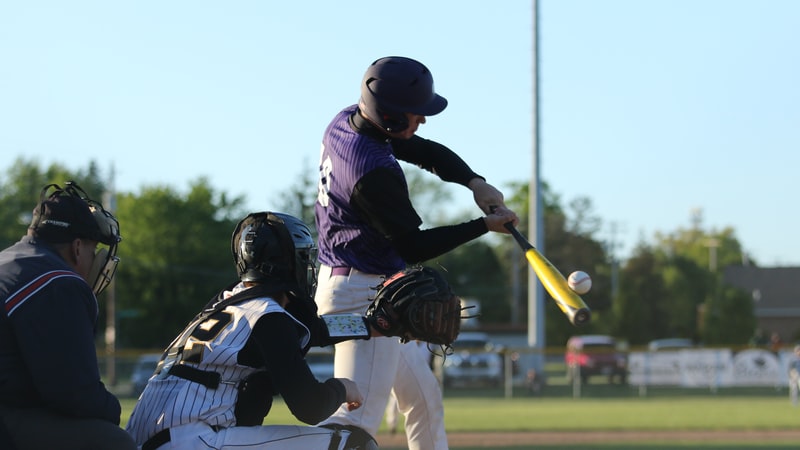
In the world of high-performance baseball, few mechanical terms spark as much debate as “the hitch.” For years, traditional coaching has treated the hitch like a terminal illness—a flaw to be purged at all costs.
But as we move into an era of data-driven player development and high-speed video analysis, the narrative is shifting. To dominate the diamond, you don’t necessarily need a “quiet” swing; you need an efficient one.
Whether you are a high school athlete looking to catch the eye of a D1 scout or a coach trying to refine a star player’s path to the ball, understanding the nuance of hand movement is the difference between a bench spot and a starting role.
This comprehensive guide breaks down the mechanics of the hitch, utilizing professional insights to help you decide when to keep it, when to kill it, and exactly how to fix it for good.
Deconstructing the Hitch – What Is Actually Happening?
Before you can fix a problem, you must define it with surgical precision. In a baseball context, a hitch is a specific movement where a hitter’s hands drop down as they begin their loading phase.
Typically, this movement follows a “down-and-back-up” pattern. As the hitter prepares to stride, the hands dip toward the waist or chest before returning to a higher launching position.
The Great Myth: “Hitches Are Career Killers”
For decades, the “short to the ball” mantra led coaches to believe that any extra movement in the hands was wasted time. The logic was simple: extra movement equals more time, and more time means you can’t catch up to a 95-mph fastball.
However, if you look at the pantheon of Greats, the “death to the hitch” rule falls apart. Elite hitters like David Ortiz and Barry Bonds were famous for having movement in their hands. Their hands would drop down and then come back up as part of their rhythm.
The lesson? Movement is not the enemy; inefficiency is.
The Diagnostic – When Does a Hitch Become a Liability?
If Hall of Famers use hitches, why is your coach yelling at you to stop? The answer lies in the recovery.
1. The “Low-Point” Failure
A hitch becomes a mechanical disaster if the hands drop down and stay down. If you attempt to attack the ball from a low hand position, you lose the ability to get the barrel behind the ball effectively. This often results in “fighting the hands,” where the hitter is forced into an extreme uphill swing path that cannot handle high-velocity strikes.
2. The Timing Gap
Coaches often worry that a hitch will prevent a hitter from catching up to fastballs at higher levels. While not always true, if the hitch is too large or out of sync with the lower body, it creates a “timing gap” that prevents the swing from initiating quickly enough to react to elite pitching.
3. The “Push” Swing
When the hands drop too low, hitters often compensate by “pushing” the bat through the zone. This causes the upper body to outrace the lower body, destroying the kinetic chain and sapping the swing of its professional-grade power.
The Elite Solution – The “Pullback” Mechanic
If you want to eliminate a problematic hitch, you shouldn’t just try to keep your hands still. A static swing is a weak swing. Instead, you need to replace the downward “drop” with a professional “pullback”.
What is the Pullback?
The pullback is the move that gets the upper body ready to launch. In a high-level swing, you want to feel the rear arm (the elbow) getting back behind the hands.
- Incorrect: Hands drop toward the ground (The “Bad” Hitch).
- Correct: The rear elbow moves back, engaging the large muscles of the back.
When the elbow gets behind the hands, it creates a position of tension and leverage. From this position, the hitter can “turn” the barrel behind the ball rather than pushing it toward the ball.
The Masterclass Drills – How to Re-Wire Your Load
Fixing a mechanical flaw requires more than just “thinking about it.” You need to create a new neurological pathway through specific, high-repetition drills. Here are the three gold-standard drills for fixing a hitch and mastering the pullback.
1. The Wall/Net Proximity Drill
This drill is designed to calibrate the depth of your load.
- Setup: Stand in your hitting stance just a few inches away from a wall or a hitting net (your back should be facing the wall).
- Action: Practice your load and coil. The goal is to feel your rear elbow barely tap the wall or net behind you.
- Why it works: This prevents a “big, huge move”. It forces the hitter to stay compact and move the hands back rather than down, ensuring the load is efficient and repeatable.
2. The J-Band Resistance Drill
Engagement is a feeling, and the J-band is the best tool to teach it.
- Setup: Attach a resistance band (like a J-Band) to a fence. Hold the other end in your hitting grip.
- Action: Have a coach or partner stand in front of you, applying slight pressure on the band. Work through your load.
- Why it works: The resistance forces you to use your back muscles to pull back. It makes it nearly impossible to “drop” your hands because the tension requires a direct, strong move into the launching position.
3. The Neck/Shoulder “Connection” Drill
This is often considered the “ultimate fix” for hitters who struggle with hand height and connection.
- Set up: Take your bat and place the handle/neck of the bat right where your neck and shoulder meet.
- Action: Perform your entire load, stride, and swing while keeping the bat in contact with that neck/shoulder point for as long as possible.
- Why it works:
- It forces the hands to stay higher.
- It prevents the hands from dropping and never coming back up.
- It ensures the upper body stays connected to the lower body, preventing the arms from “outracing” the turn.
Launching for Power – The Result of Correct Hand Path
Once you have eliminated the hitch or ensured your hands return to the correct height, you can focus on the “launch” phase.
Palm Up, Palm Down
As the swing begins, the hitter moves into a “palm up, palm down” position. In this move:
- The lead hand is palm down.
- The trail hand is palm up.
- The knob of the bat works up while the barrel goes back to get behind the ball.
If your hands are too low (due to an uncorrected hitch), your barrel will never get on this plane. You will either be too “uphill,” or your barrel won’t get behind the ball, leading to weak contact and swing-and-misses. By keeping the hands “relatively high” at launch, you allow the barrel to turn into the zone with maximum velocity.
FAQ
Q: My coach says my hitch is why I’m late on fastballs. Is he right?
A: Not necessarily. If your hands drop and come back up in time with your leg turn, you are likely doing okay. However, if your hands stay low or if you are struggling to produce results, it is worth using the “Neck Drill” to see if a higher hand path improves your timing.
Q: Should I completely stop all hand movement?
A: No. A completely static hand position can lead to a “stiff” swing that lacks rhythm. The goal is “no movement,” but rather productive movement. Focus on the “pullback” rather than the “drop”.
Q: How long does it take to fix a hitch?
A: With consistent work on the Neck/Shoulder Drill, many hitters see a change in their hand height almost immediately. To make it permanent, you should incorporate these drills into your daily tee work and front-toss sessions.
Conclusion
In the modern game, there is no room for mechanical “fluff.” Every inch of movement must serve a purpose: generating power, improving timing, or creating a better barrel path.
A hitch isn’t a “death sentence” for a hitter—some of the greatest to ever play used one. But for the vast majority of amateur players, a hitch is a leak in the system that leads to dropped hands, pushed swings, and missed opportunities.
By shifting your focus from a “drop” to a “pullback” and utilizing the Neck/Shoulder connection drill, you can ensure your hands stay in a high, powerful launch position. Stop fighting your hands and start engaging your back. That is how you turn a struggling swing into an elite one.
Ready to take your game to the next level? Don’t let a mechanical flaw hold you back from the scholarship or the starting lineup. Master the pullback, stay connected, and start driving the ball with professional-grade authority.