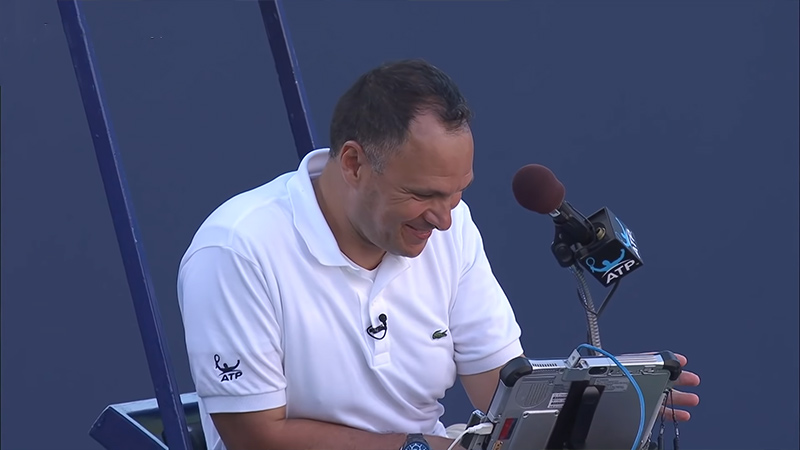
In the high-stakes environment of professional tennis, the spotlight naturally gravitates toward the athletes. However, the integrity and flow of every world-class match depend on a dedicated team of officials whose precision and authority ensure the game remains fair.
Behind every Grand Slam final is a cadre of officials who have spent years honing their skills, maintaining a level of concentration that can either enhance or diminish the quality of a classic encounter.
Becoming a tennis umpire is a journey of rigorous training, consistent evaluation, and global travel. For those with a passion for the sport, a calm demeanor, and an eye for detail, it offers a career path that can lead to the world’s most prestigious stadiums.
This guide details the exact steps required to transition from a tennis enthusiast to a professional chair umpire.
Understanding the Professional Landscape: Chair vs. Line Officiating
Before embarking on this career, it is essential to distinguish between the two primary roles on the court. Each requires a distinct skill set and level of certification.
The Chair Umpire: The Chief Arbiter
The chair umpire is the primary decision-maker during a match. This individual sits in an elevated chair at the center of the court and carries the ultimate responsibility for the match’s conduct.
According to the International Tennis Federation (ITF), a chair umpire manages 21 specific responsibilities. These include:
- Match Management: Ensuring strict adherence to all rules and guidelines, including timing regulations.
- Scoring: Keeping and announcing the score accurately to both players and the audience.
- Dispute Resolution: Arbitrating any disagreements between players and resolving rule-based conflicts.
- Quality Control: Directing ball-kids, ensuring ball quality, and verifying that the court surface is fit for professional play.
- Overruling: The authority to overturn calls made by line umpires if a clear error is detected.
The Line Umpire: The Foundation of Accuracy
Line umpires, also known as line judges, have a more singular but equally critical focus. They are responsible for determining whether a shot has landed within the boundaries of the specific line they are assigned to watch.
- Clarity of Communication: If a ball is “out,” the line umpire must shout the call quickly, loudly, and clearly.
- Physical Agility: They must move dynamically to maintain a clear line of sight while staying out of the players’ path of play.
- Review Systems: At major tournaments, their calls are subject to review by the chair umpire or the Hawk-Eye electronic system.
Foundational Requirements for Aspiring Umpires
While you do not need professional playing experience to become a tennis official, you must possess specific physical and mental attributes to succeed at the highest levels.
1. Vision and Focus
Precision is the hallmark of officiating. You must have 20/20 vision (either corrected or uncorrected) in each eye. This is typically verified by a medical professional as part of the certification process.
Beyond physical sight, the role requires intense concentration; officials must remain focused for hours, as a single lapse can alter the course of a match.
2. Age and Legal Standing
The minimum age to begin the certification process is typically 16 years old. Additionally, candidates must pass comprehensive safety and background checks, such as the Safe Play program in the United States, to ensure the integrity of the sporting environment.
3. Rule Proficiency
A thorough, encyclopedic knowledge of the Rules of Tennis and the codes of conduct is non-negotiable. You will be tested on your ability to apply these rules in real-time under pressure.
The Certification Path: A Step-by-Step Roadmap
The journey to the professional tours begins at the grassroots level. You must progress through a series of tiers, proving your competence at each stage before moving up.
Starting in the United States (USTA)
For those in the U.S., the United States Tennis Association (USTA) provides the primary framework for development:
- Provisional Umpire Status: Register as a “Provisional Umpire” on the USTA officiating platform. This requires USTA membership and an application signed by your sectional chairman.
- Entry-Level Testing: You must pass the Provisional Umpire’s Test, which covers basic rules and procedures.
- Classroom and On-Court Training: Enroll in an official training course, which typically spans one to three days. These courses cover basic hand signals, scoring, and court positioning.
- Logging Experience: Once certified as a provisional official, you will receive a data card to record your hours on court.
Starting in the United Kingdom (LTA)
In the UK, the Lawn Tennis Association (LTA) manages the officiating pathway:
- Candidates begin with a 3-day LTA Umpire course.
- The curriculum covers both line and chair officiating to provide a well-rounded foundation for new officials.
The USTA Level Progression
As you gain experience, you will climb the internal ranking system:
- Provisional Umpire: The entry point for all new officials.
- Sectional Umpire: Working at regional and sectional events.
- USTA Roving Umpire: Officials who manage multiple courts during junior or amateur tournaments.
- USTA Chair Umpire: Beginning to specialize in the chair for higher-level regional matches.
- National Chair Umpire: Officiating national-level tournaments.
- Professional Chair Umpire: Reaching the top tier of domestic officiating.
Advancing to the Professional Tours and the ITF Badge System
To work at the most prestigious global events, such as the ATP, WTA, or Grand Slams, you must enter the International Tennis Federation (ITF) badge system.
This system standardizes officiating quality worldwide and requires significant “chair time” and successful evaluations at Level 2 and Level 3 schools.
- White Badge: The first level of international certification.
- Bronze, Silver, and Gold Badges: These higher-tier badges are awarded based on performance, experience, and the difficulty of the matches officiated. A Gold Badge umpire is among the elite few authorized to chair the finals of Grand Slam tournaments.
The Financial Outlook: Earnings in Professional Officiating
The transition to a professional career in officiating has become more lucrative as the sport has embraced full-scale professionalism.
Elite Earnings
The most successful chair umpires—those working regularly at Grand Slams and traveling the world throughout the year—can earn up to $450,000 per year. However, these figures are reserved for the top tier of Gold Badge officials who have dedicated decades to the craft.
Entry-Level and Regional Pay
- Starting Professionals: A professional umpire just beginning their journey on the international tour can expect to earn between $60,000 and $70,000 per year, provided they remain active and travel frequently.
- Line Umpires: Often work as supplemental income earners, particularly at major tournaments in their home countries. They typically earn 30% to 40% of the match rate paid to a chair umpire.
The Reality of the Role: Skills for Success
While the prospect of traveling to glamorous locations and sitting courtside at major finals is enticing, the role demands high resilience.
- Handling Pressure: Modern officials have the benefit of Hawk-Eye technology, but the pressure remains intense. Unlike the era of “amateur” officiating, where players like John McEnroe famously clashed with umpires, today’s officials are expected to maintain a professional, calm environment regardless of player outbursts.
- Under-Appreciation: Officiating is often a thankless task. When an umpire is at their best, they are nearly invisible, allowing the players to be the focus.
- Commitment: The path is long. You will officiate at hundreds of local and regional events before being considered for a Grand Slam.
Frequently Asked Questions
Do I need to have played tennis to become an umpire?
No professional playing experience is required. However, a deep understanding of the game’s nuances is vital to making accurate judgments in real-time.
How long does the certification process take?
Initial certification can happen in a matter of days through entry-level courses. However, reaching the professional ranks is a multi-year process involving hundreds of logged hours and progressive exams.
What is the maximum age for a tennis umpire?
While the minimum age is 16, there is no strictly defined maximum age, provided the official maintains the required 20/20 vision and the mental stamina necessary for long matches.
Can I choose to only be a line umpire?
Yes. Many officials prefer the specific focus of line umpiring and work primarily at major events in their home region for supplemental income.
Conclusion: Starting Your Journey Today
The path to the umpire’s chair is one of dedication, precision, and a love for the game of tennis. It offers a unique vantage point on the sport and the opportunity to be an essential part of tennis history.
To begin, visit the official website of your national governing body—the USTA in the United States or the LTA in the United Kingdom—to register for your first introductory course.
By mastering the rules and demonstrating unwavering focus at the grassroots level, you can begin your ascent toward the professional tours.
Whether your goal is to support local community tournaments or to eventually officiate the final at Wimbledon, the journey starts with a single call. Stay calm, stay focused, and advance the game.