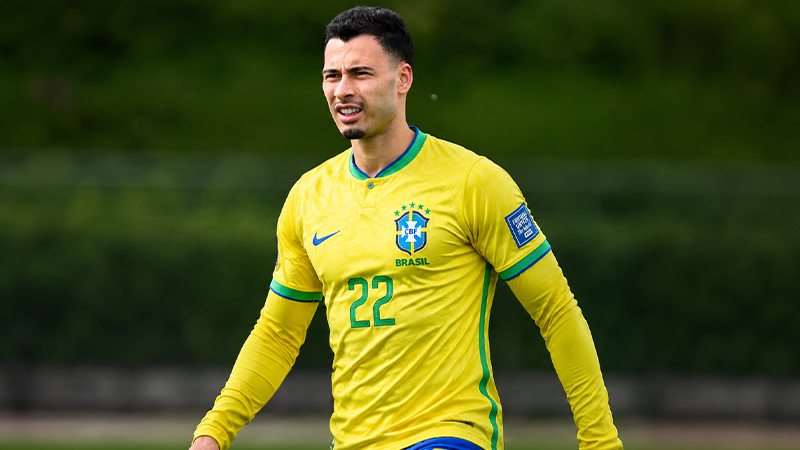
In the high-stakes landscape of the Premier League, the management of human capital is as critical as tactical execution on the pitch.
Arsenal Football Club has undergone a significant financial transformation, moving from a period of fiscal austerity to a sophisticated, performance-driven wage structure designed to retain world-class talent while maintaining long-term sustainability.
At the heart of this strategy is Gabriel Martinelli, whose recent contract extension serves as a benchmark for how the club values high-ceiling developmental assets.
This analysis examines the specific financial dimensions of Martinelli’s agreement, its position within the broader organizational hierarchy, and the strategic implications for Arsenal’s competitive trajectory through 2028.
The Financial Core: Gabriel Martinelli’s Contractual Framework
Securing Gabriel Martinelli’s future was a primary objective for the Arsenal executive team. The resulting agreement reflects both his current output and his projected value as a cornerstone of the attack.
Martinelli’s compensation is structured to provide a high guaranteed floor while offering significant upside through performance metrics.
Table 1: Primary Compensation Metrics for Gabriel Martinelli
| Component | Financial Detail |
|---|---|
| Weekly Base Salary | £180,000 |
| Annual Base Salary | £9.36 Million |
| Contract Duration | Through June 2028 |
| Total Guaranteed Value | ~£37.44 Million (remaining 4 years) |
| Incentive Structure | Performance-based bonuses included |
This £180,000 weekly figure represents a substantial commitment. For a player of his age profile, this salary places him in the upper echelon of global wingers, signaling that the club views him not merely as a prospect but as a finalized elite starter.
The inclusion of performance-based bonuses ensures that his interests remain aligned with the club’s success in domestic and European competitions.
Comparative Analysis: The Arsenal Wage Hierarchy
To understand the efficiency of Martinelli’s contract, one must view it in the context of the club’s total wage bill. Arsenal has moved toward a tiered system where salaries are commiserate with seniority, commercial impact, and “irreplaceability” on the pitch.
Table 2: Arsenal’s Top-Tier Wage Distribution (Weekly)
| Player | Weekly Salary | Annualized Total |
|---|---|---|
| Bukayo Saka | £300,000 | £15.6 Million |
| Kai Havertz | £280,000 | £14.56 Million |
| Gabriel Jesus | £265,000 | £13.78 Million |
| William Saliba | £250,000 | £13.0 Million |
| Martin Ødegaard | £240,000 | £12.48 Million |
| Declan Rice | £240,000 | £12.48 Million |
| Gabriel Martinelli | £180,000 | £9.36 Million |
Strategic Tiering
The data reveals that Martinelli currently sits at the threshold of the “Elite Tier”. While his £180,000 salary is significant, he earns approximately 40% less than Bukayo Saka, who occupies the “Franchise Player” tier.
This disparity is a calculated move by the club’s administration to maintain a healthy locker room culture where the highest earners are those with the highest levels of consistent output and leadership responsibilities.
Martinelli’s position below players like Kai Havertz and Gabriel Jesus reflects the premium the club pays for established international experience and versatility.
However, as Martinelli approaches the peak of his career (typically ages 24–28), his current contract through 2028 provides the club with immense cost-certainty for a player whose market value likely exceeds his wage growth.
Long-Term Implications of the 2028 Commitment
The decision to sign Martinelli through the 2027–2028 season is a masterclass in risk mitigation. By locking in a base salary of £9.36 million per year, Arsenal shields itself from the hyper-inflation of the transfer market.
Asset Protection and Amortization
From an accounting perspective, a long-term contract allows the club to spread the “book value” of the player over a longer period.
Furthermore, should a rival club attempt to lure Martinelli away, the length of his contract ensures that Arsenal maintains maximum leverage in negotiations, likely demanding a transfer fee in excess of £100 million.
The “Gap” in Compensation
One of the most notable insights from the current wage structure is the gap between the £240,000–£300,000 tier (Saka, Ødegaard, Rice, Saliba) and Martinelli’s £180,000.
This £60,000+ per week difference represents a “performance bridge” that Martinelli is expected to cross.
If his goal contributions and tactical discipline continue to evolve, his next negotiation—likely in 2026—will aim to close this gap and align him with the club’s highest earners.
Fiscal Sustainability and Competitive Advantage
Arsenal’s ability to pay £180,000 per week to a winger who is often the third or fourth most “heralded” player in the attack is a testament to the club’s improved commercial revenue streams.
Table 3: Economic Impact Summary
| Factor | Strategic Benefit |
|---|---|
| Wage-to-Turnover Ratio | Maintaining Martinelli at £180k keeps the overall ratio within UEFA sustainability limits. |
| Recruitment Leverage | A clear path from developmental wages to £180k+ attracts global youth talent. |
| Market Stability | Prevents “wage spiral” by anchoring a key starter below the £200k threshold. |
By keeping Martinelli at this level, Arsenal maintains the flexibility to offer higher wages to external targets (like Declan Rice or Kai Havertz) without causing immediate demands for parity from the rest of the squad.
Frequently Asked Questions Regarding Arsenal’s Payroll
How does Gabriel Martinelli’s salary compare to the Premier League average?
While the average Premier League salary is roughly £60,000–£75,000 per week, elite starters at top-six clubs typically earn over £150,000. Martinelli’s £180,000 puts him comfortably in the top 5% of earners in the league.
Are the bonuses in Martinelli’s contract guaranteed?
No. Bonuses are typically contingent on team-wide milestones (such as Champions League qualification or winning the Premier League) and individual milestones (goals, assists, and appearances).
Why does Bukayo Saka earn significantly more than Martinelli?
Saka is viewed as the club’s primary offensive engine and a global marketing icon. His £300,000 weekly wage reflects his status as one of the world’s premier talents and his indispensable role in the Arsenal system.
What happens if Martinelli’s performance exceeds his contract value?
It is common for clubs to offer “reward” extensions before a contract expires. If Martinelli becomes the league’s top scorer, Arsenal would likely initiate talks to increase his salary to the £250,000+ range to prevent him from being unsettled by interest from other European giants.
Conclusion: The Foundation of a Dynasty
Gabriel Martinelli’s £180,000-per-week contract is more than a paycheck; it is a statement of intent.
It demonstrates Arsenal’s willingness to reward internal development while maintaining the fiscal discipline necessary to compete at the highest levels.
With Martinelli secured through 2028, the club has established a core of young, elite talent that is not only talented on the pitch but also manageable on the balance sheet.
For fans and stakeholders, this stability is the ultimate indicator of a club that is no longer in transition, but is actively building a sustainable era of dominance.