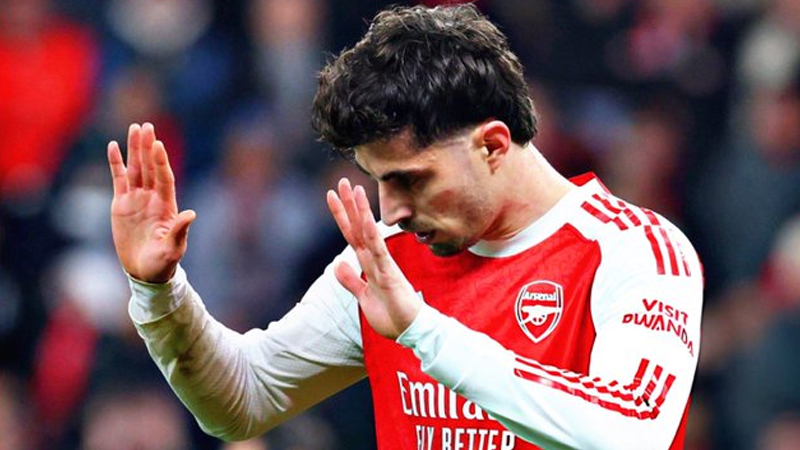
In the summer of 2020, Chelsea Football Club executed one of the most high-profile transfers in Premier League history, securing Kai Havertz from Bayer Leverkusen.
This acquisition was not merely a tactical move but a significant financial statement. As a cornerstone of a massive recruitment drive, the German international arrived with the weight of a “generational talent” label and a price tag to match.
Understanding the total expenditure requires looking beyond the initial headline figure, encompassing performance-related bonuses and a substantial multi-year salary commitment.
This analysis deconstructs the complete fiscal commitment made by the London club to facilitate this major transfer.
The Architecture of the 2020 Transfer Agreement
When evaluating the financial commitment made by Chelsea, it is essential to distinguish between the guaranteed sum and the variable components of the contract.
The negotiations with Bayer Leverkusen were notably protracted, reflecting the German club’s objective to extract maximum value for their prized academy graduate.
The eventual deal was structured as a tiered investment, providing Leverkusen with immediate liquidity while allowing Chelsea to stagger the remaining payments based on specific success metrics.
The initial base fee of €80 million represented the “guaranteed” outlay that Chelsea committed to regardless of future outcomes.
However, the total potential valuation reached the €100 million threshold, placing Havertz in an elite bracket of European football assets.
This structure is a standard practice for high-value acquisitions, allowing clubs to manage cash flow while aligning the final cost with the player’s actualized impact on the pitch.
| Component | Euro (€) Value | British Pound (£) Value |
|---|---|---|
| Initial Base Fee | €80 Million | £62 Million |
| Potential Performance Add-ons | Up to €20 Million | £13.8 Million |
| Maximum Potential Value | €100 Million | £75.8 Million |
The Triggering of Performance-Related Add-ons
The €20 million bonus package was not a monolithic sum but was divided into specific, achievable milestones that protected the interests of both organizations.
According to financial tracking and reports from reputable outlets, these bonuses were split into two distinct categories:
Team Consistency Milestones (€10 Million)
These payments were tied to fundamental performance indicators, such as Chelsea consistently qualifying for the UEFA Champions League and reaching the knockout stages. Given Chelsea’s historical standing, these were considered high-probability triggers.
Silverware Success (€10 Million)
This portion of the fee was tied directly to winning major trophies. Notably, a significant portion of these add-ons was activated when Kai Havertz scored the winning goal in the 2021 UEFA Champions League Final against Manchester City.
In a fiscal sense, that single goal significantly increased the final payment to Leverkusen while simultaneously delivering the highest level of sporting return for Chelsea.
Operational Costs: The Chelsea Salary Structure
While the transfer fee dominates public discourse, the “Total Cost of Ownership” for an elite athlete includes their gross salary.
Upon moving from the Bundesliga to the Premier League in September 2020, Havertz experienced a monumental increase in his earning power.
At Bayer Leverkusen, he was on a developing player’s wage, earning approximately €2 million annually by his final season. Chelsea transitioned him into a top-tier earner immediately.
Over his three-season tenure at Stamford Bridge, he earned a gross base salary of £250,000 per week.
| Financial Year | Club | Weekly Base Salary | Approximate Annual Gross |
|---|---|---|---|
| 2019 – 2020 | Bayer Leverkusen | €38,462 | €2.0 Million |
| 2020 – 2021 | Chelsea | £250,000 | £13.0 Million |
| 2021 – 2022 | Chelsea | £250,000 | £13.0 Million |
| 2022 – 2023 | Chelsea | £250,000 | £13.0 Million |
By the time he concluded his three-year stint in West London, Chelsea had paid approximately £39 million in gross wages.
When this is added to the nearly £76 million total transfer valuation (once milestones were reached), the gross investment in the player exceeded £115 million over the three-year period.
Accounting Perspective: Amortization and Book Value
From a corporate accounting standpoint, Chelsea did not record the full £75.8 million as a single loss in the 2020 fiscal year. Instead, they utilized amortization, spreading the cost of the transfer fee over the length of his initial five-year contract.
- Initial Amortization Schedule: ~£12.4 million per year (based on the £62 million base).
- Adjusted Amortization: As performance bonuses were triggered (such as the 2021 UCL win), the remaining “book value” was adjusted upward to account for the additional £13.8 million in add-ons.
This accounting methodology is crucial for compliance with Financial Fair Play (FFP) regulations.
By the time the club decided to facilitate his exit in 2023, his remaining book value had been significantly reduced, allowing the club to report a favorable position upon his sale to Arsenal.
The Exit Strategy: Recouping Capital via Arsenal
A critical component of this financial narrative is Chelsea’s ability to recoup capital. In the summer of 2023, as part of a broader squad restructuring, Chelsea negotiated a sale to Arsenal for a flat fee of £65 million (~€75 million).
This move was strategic for several reasons. First, it allowed Chelsea to recover a major portion of the initial investment after three years of service. Second, it removed a significant salary burden from the wage bill.
When comparing the “max outlay” to Leverkusen against the “income” from Arsenal, the net transfer cost for a player who delivered a Champions League trophy is remarkably efficient.
| Metric | Financial Result |
|---|---|
| Total Transfer Outlay (to Leverkusen) | ~£75.8 Million |
| Transfer Income (from Arsenal) | £65.0 Million |
| Net Transfer Loss/Cost | £10.8 Million |
The Growing Financial Profile: Current Arsenal Earnings
Since his move to North London, Havertz has seen his financial profile grow even further.
His current five-year agreement with Arsenal, which expires in June 2028, includes a significant salary bump from his Chelsea days. He now earns between £275,000 and £280,000 per week.
When performance bonuses are included, his total contract value at Arsenal is estimated at £90.5 million over five years.
This progression highlights his status as a premium asset whose market value has remained resilient despite the fluctuations of club performance.
Comprehensive Career Earnings and Fees
To understand the scale of the “Havertz Economy,” one must look at the cumulative figures. Across his senior career, the total transaction fees generated by his moves now exceed €175 million.
Furthermore, his total gross salary earnings have reached approximately £60 million.
| Category | Cumulative Career Totals |
|---|---|
| Total Transfer Fees Generated | > €175 Million |
| Estimated Gross Career Salary | ~ £60 Million |
| Current Market Value Bracket | £60M – £70M |
| Active Contract Expiration | June 30, 2028 |
Expert Analysis: Was it a Successful Investment?
From an analytical perspective, the financial lifecycle of Kai Havertz at Chelsea is a success story of asset management.
While the “how much did Chelsea pay for Havertz” question often focuses on the high initial cost, the internal rate of return must include the trophies won and the final resale value.
Chelsea essentially “rented” a world-class talent for a net transfer cost of roughly £10.8 million plus wages. In exchange, they secured the most prestigious trophy in club football.
The ability to sell the player for £65 million three years later is a testament to his enduring market appeal and the club’s negotiation strategy.
Enhanced FAQ: Financial Details
How much did Chelsea pay for Havertz in the initial deal?
Chelsea paid a base fee of €80 million (£62 million) in 2020. This was the guaranteed portion of the transfer to Bayer Leverkusen.
What triggered the additional €20 million in bonuses?
The bonuses were tied to team milestones, such as consistent Champions League qualification and winning major silverware. The 2021 Champions League title victory was a primary trigger for these payments.
What was his total cost including wages at Chelsea?
The total investment included approximately £75.8 million in transfer fees and roughly £39 million in gross salary over three years, bringing the total expenditure to approximately £115 million.
How much did Chelsea receive from Arsenal for his sale?
Arsenal paid a flat fee of £65 million in the summer of 2023 to keep the German international in London.
Does Havertz earn more at Arsenal than he did at Chelsea?
Yes. His weekly wage increased from £250,000 at Chelsea to a range of £275,000–£280,000 at Arsenal, with further bonuses potentially adding £3.9 million annually.
Conclusion
The financial journey of Kai Havertz highlights the complexities of modern football finance. While the headline figures are often simplified to a single “price tag,” the reality involves intricate bonus structures, amortization, and strategic exit planning.
Chelsea’s ability to leverage Havertz for on-field success while maintaining his market value for a significant resale demonstrates a high-level approach to squad management.
For stakeholders and fans alike, the data confirms that while the initial price was high, the net financial and sporting impact remained largely positive for the club.