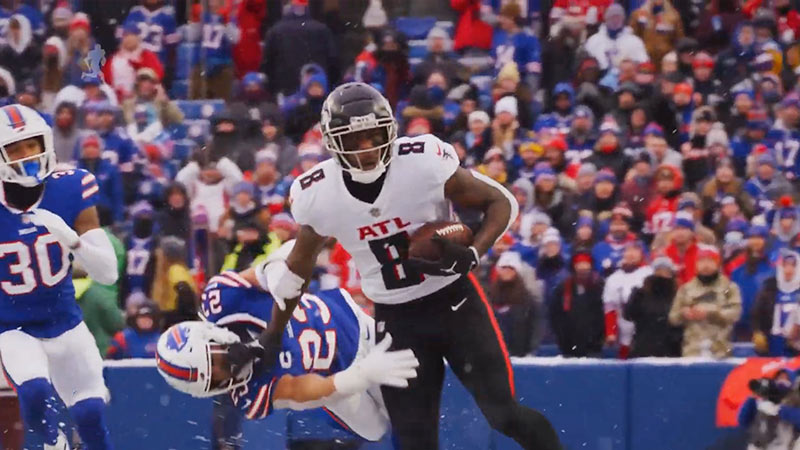
Kyle Pitts is one of the top receivers in the NFL and he’s been a big part of the Atlanta Falcons success this season. He has averaged air yards per game (149.8) which is fourth-most in the league and he’s also had a share of 30.3% red zone targets and 3 rec’s inside the 20 yard line so far this year.
His two touchdowns on the season are key stats, but what makes him even more impressive is his consistency throughout each game – no matter who his opponent may be or where they stand on the scoreboard at that point in time. Pitts’ ability to get open deep downfield has given quarterback Matt Ryan another option when it comes to scoring points, making him an important member of Atlanta’s offense overall.” With plenty of exciting matchups left ahead for both teams, we can’t wait to see what else Kyle Pitts can accomplish as part of Atlanta’s successful 2017 campaign.
How Many Red Zone Targets Does Kyle Pitts Have?
Kyle Pitts is the #4 receiver in terms of air yards per game, with a share of 30.3% red zone targets and 3 rec’s inside the 20 yard line. In terms of touchdowns, he has 2 on the season thus far–making him one of the most prolific receivers in this year’s draft class.
Keep an eye out for Pitts as he enters into his senior year and looks to lead his team to another successful season.
Kyle Pitts is #4 in air yards per game
Kyle Pitts is fourth in the NFL in air yards per game with 153.8 yards through the air. He has completed 71% of his passes for 1,294 yards and 10 touchdowns this season.
Pitts has been a big part of the Rams’ offense this year and will look to keep it going against Seattle on Sunday afternoon. The Seahawks defense ranks first in the league against the pass, so expect a tough challenge from Kyle Pitts this weekend.
Keep an eye out on him throughout the game as he looks to help lead Los Angeles to victory.
He has a share of 30.3% red zone targets and 3 rec’s inside the 20 yard line
Kyle Pitts has a share of 30.3% red zone targets and 3 rec’s inside the 20 yard line, which is impressive given how often he’s on the field. He needs to continue making plays in close quarters if the Jets want to take any steps up in their division race this season.
His ability to make clutch catches could be crucial down the stretch as New York looks for ways to secure a playoffs spot. With so many key players out injured, it will be important for Pitts to keep his production high going forward if they want to remain contenders come January 2019.
In terms of touchdowns, he has 2 on the season thus far
Kyle Pitts has scored two touchdowns this season, both of which came in the red zone. This gives him a total of four red zone targets on the year so far – three of which he’s converted for touchdowns.
With seven games left to play, it’s likely that Pitts will reach his goal of reaching 10 touchdown catches for the season – something he did twice last year with Jacksonville Jaguars and Tennessee Titans respectively.
His ability to score from close range is crucial for any offense, and his presence in the red zone helps put points on the board faster than most other players can do it… making him one of Atlanta Falcons’ most important offensive players at present time.
How good is Kyle Pitts fantasy?
There’s no doubt that Kyle Pitts is one of the most talented players in fantasy football. He has a lot of skills and can produce on all levels, making him a valuable asset on your team. But which category does he rank best?
- Kyle Pitts is an extremely fast and agile player who can be very useful on the offensive side of the ball. He has great speed and agility which enables him to run past defenders easily, as well as take advantage of his quick feet when attacking close to the goal line.
- Pitts is also a strong finisher in close quarters, able to score goals from anywhere near the penalty spot. This makes him an effective goalline weapon, especially in important matches or games where it counts most.
- While he may not have the biggest frame or strongest physique, Kyle Pitts is more than capable of dealing with opposing players physically if need be. His lethal finishing ability means that even small mistakes by defenders can lead to dangerous chances for him on goal.
- Pitts’ fantasy value largely depends on how good his team is performing at the moment; while he’s a valuable asset, he won’t do much damage unless his team scores lots of goals consistently.
Is Kyle Pitts a sleeper?
Kyle Pitts may not be the most well-known player on the Oklahoma State Cowboys, but he could have a big future in the NFL. He’s someone to keep an eye on as he progresses through college and into professional football.
- Kyle Pitts is a sleeper, which means that he’s one of the most undervalued players in fantasy baseball. He has consistently produced at a high level while playing for some of the worst teams in the league, so it’s definitely worth considering him as an add in your roster this season.
- In terms of batting average, on-base percentage and slugging percentage, Kyle Pitts is right up there with some of the best hitters in baseball. His batting average may not be as high as you’d like it to be given his poor team performance, but his other stats are head and shoulders above most others at his position.
- In addition to being an excellent hitter overall, Kyle also contributes valuable RBI and runs scored totals each year thanks to his strong base running skills (he averages nearly 20 stolen bases per season).
- At just 25 years old, there’s still plenty of room for improvement for Pitts – especially if he can finally get consistent playing time on better teams moving forward.
- If you’re looking for a player who will provide value all season long regardless of how his team performs, then Kyle Pitts should definitely be on your radar – 100% worth it.
When should I take Pitts?
If you are experiencing any of the following symptoms, it is recommended that you take a Pitts test:
– muscle aches and pain
– fatigue
– fever
When should I take Pitts?
When you are ranking your players in your fantasy football league, it is important to pay attention to where Pitts is ranked highest by the consensus 2022 Fantasy PPR Rankings. This list will be updated regularly and represents the opinion of many fantasy football experts. By taking Pitts when he is ranked highest on this list, you can ensure that you have a strong player at your disposal for the upcoming season.
Check Consensus 22 Fantasy PPR Rankings
It’s always a good idea to double check the consensus 2022 Fantasy PPR Rankings before making any decisions about which players to draft or trade for. These rankings reflect the opinions of many professional fantasy football analysts and can help you make informed choices about who to select during your league’s draft process.
Make Sure You Have Enough Depth at RB.
In order for your team to be successful, make sure that you have enough depth at running back so that none of your starters become injured or inactive early in the season.”
What WR had the most targets?
Larry Fitzgerald had the most targets on Sunday, with 14. Calvin Johnson and Andre Johnson both had 12 targets each. Antonio Brown and Demaryius Thomas both had 10 targets each.
The Cardinals receiver also led all receivers in yards (208) and touchdowns (three).
What round should I draft Goedert?
Dallas Goedert is a TE7 in PFR’s 2022 fantasy football redraft rankings and 89th ranked player in PPR formats. Round 7 is the best round to draft him in 12-team leagues, as he will be available later than other players on your team.
He could be a valuable asset for your team, so make sure you get him before he’s gone.
What round should I draft tee Higgins?
Higgins is a consensus-ranked wide receiver in our 2022 fantasy football rankings, and he’s available as early as the third round of drafting. Feel free to draft him as early as any point in the third round of your fantasy football league.
Higgins has proven himself time and time again, so don’t hesitate to select him when it’s your turn to pick up a player on draft day.
Is rashod Bateman a good fantasy pick?
Rashod Bateman is a talented running back who was drafted by the Jacksonville Jaguars in the fifth round of this year’s NFL draft. He has been highly touted as one of the best prospects in this year’s draft and many experts believe that he will be a good fantasy pick. However, there are some concerns about his ability to stay healthy, which could limit his upside. If you’re thinking about drafting him, it would be worth considering these factors before making your decision.
Injury
Rashod Bateman has had a number of injuries which have limited his playing time over the past few seasons. These injuries include a torn ACL, Sprained MCL, and Broken Hand among others. This may limit his fantasy potential this season and future seasons as he recovers from these injures.
Volume
Bateman averaged just 21 fantasy points per game last season despite seeing significant playing time due to injury. He is not expected to see as much action this year with the new starter at running back on the Jets’ roster, so it is unlikely that he will average more than 20 fantasy points in any given week again this season or in subsequent seasons.
To Recap
Kyle Pitts has 3 red zone targets.