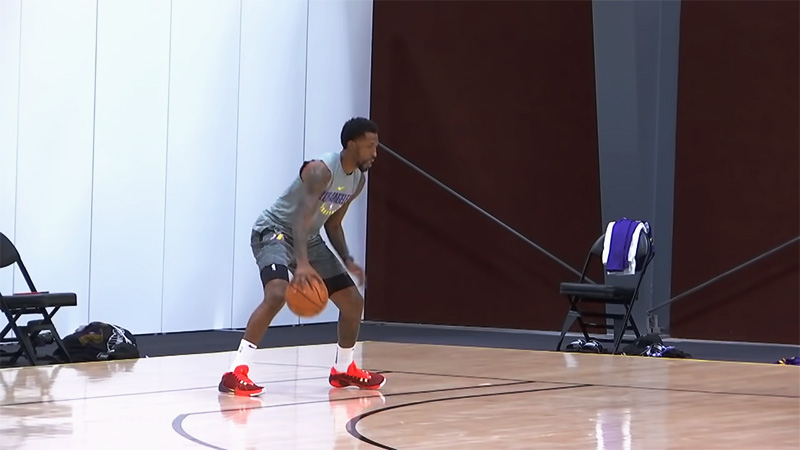
While specific daily schedules vary by team and time of year, big data analysis of professional and elite basketball training provides a clear picture of the time commitment required.
According to findings from Firstbeat’s database, there is a distinct inverse relationship between a player’s age and the amount of time they spend on the court each week.
The Weekly Time Commitment: 11 Hours vs. 8.5 Hours
One of the most striking findings from recent big data analysis is that younger basketball players spend significantly more time training than their more experienced professional counterparts.
For example, an 18-year-old basketball player averages nearly 11 hours of training per week. In contrast, a 25-year-old player—closer to the average age of an NBA or professional veteran—averages approximately 8.5 hours per week.
Note: While the sources provide these specific weekly averages for professional and elite athletes, individual NBA practice sessions typically last between 1.5 to 2.5 hours during the regular season, often supplemented by individual shootarounds and weight room sessions. This information is based on general professional basketball standards and not explicitly detailed in the provided sources.
Why Younger Players Train Longer
The increased volume for 18-year-olds (roughly 11 hours weekly) reflects a focus on skill acquisition and physiological adaptation. At this stage of development, coaches prioritize:
- Mastering Fundamentals: High-repetition drills to solidify shooting form and ball handling.
- Building Aerobic Base: Ensuring the player has the engine to compete at a professional level.
- Tactical Learning: Spending more time in walkthroughs and team sets to understand complex professional systems.
As players reach their mid-20s, the focus shifts toward maintenance and efficiency. The reduction to 8.5 hours weekly for a 25-year-old suggests that experienced players prioritize “quality over quantity,” focusing on high-intensity situational work rather than raw volume.
The Intensity Factor: Heart Rate Zones
Training duration is only half of the story; intensity is what defines the physical toll of a practice. The sources indicate that younger players don’t just train longer—they train harder from a cardiovascular perspective.
Data shows that younger players spend more time training in maximum heart rate zones than older players. By tracking these heart rate zones, performance coaches can tailor programs to ensure the intensity matches the physiological development of the athlete. For a professional team, this means:
- Tailored Endurance: Focusing on specific energy systems appropriate for the player’s age group.
- Physiological Alignment: Making sure the “on-court” work doesn’t exceed what the player’s body can safely recover from.
Professional Implementation: The RASTA Vechta Model
In professional leagues like the Basketball Bundesliga (BBL), teams such as RASTA Vechta use these data-driven insights to manage their rosters.
Performance coaches like Domenik Theodorou utilize real-time athlete monitoring and historical data analysis to identify trends in player fitness.
By looking at how a player’s body reacts over weeks and months, coaches can determine if the 8.5 to 11-hour weekly load is productive or if it is leading to overtraining. This transition from “real-time monitoring” to “long-term strategy” is a hallmark of modern professional basketball.
Load Management and Injury Prevention
The disparity in training hours highlights the critical need for careful load management. Because 18-year-olds are training for nearly 11 hours a week—often at maximum heart rate—the risk of burnout or overuse injuries is high.
Coaches use data to:
- Minimize Injury Risk: By aligning practice duration with the developmental needs of the player.
- Optimize Recovery: Ensuring that the 8.5 hours spent by veterans are high-impact and that they are given enough “off-feet” time to maintain longevity.
- Promote Long-Term Development: Ensuring that a player’s peak performance coincides with their physical prime rather than being wasted through early-career exhaustion.
Conclusion: The Shift to Data-Driven Practices
Ultimately, the length of a basketball practice is no longer determined by a coach’s “gut feeling.” Instead, it is a calculated decision based on age, physiological characteristics, and historical performance data. Whether it is an 11-hour week for a developing prospect or a lean 8.5-hour week for a seasoned pro, the goal remains the same: optimizing performance while ensuring long-term health.
By mastering data-driven decision-making, professional teams can ensure their players are training just long enough to stay elite without crossing the line into injury.