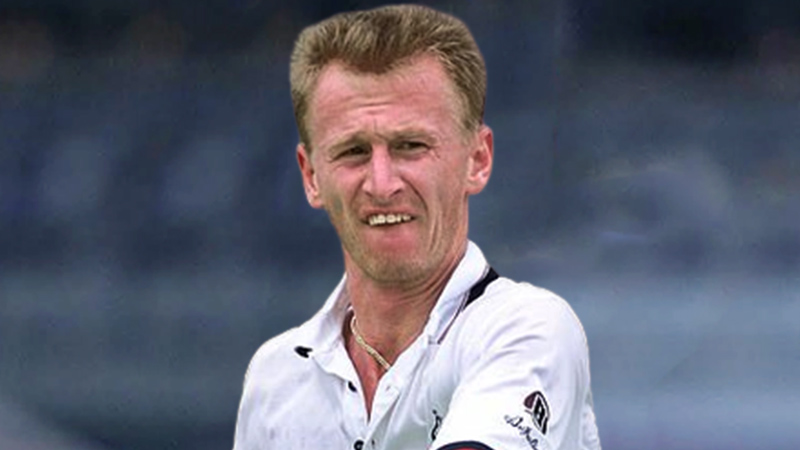
Petr Korda was a world-class elite professional who reached a career-high of World No. 2 and secured the 1998 Australian Open title. Known for his fluid left-handed game and “scissors kick” celebration, he was one of the most dangerous shot-makers of the 1990s.
His technical brilliance allowed him to outplay virtually anyone when his timing clicked, making him a “dual-threat” elite in both singles and doubles.
While his career ended under a doping shadow, his impact remains through his legendary sporting family, including ATP star Sebastian Korda and LPGA champion Nelly Korda.
Career Milestones: Is Petr Korda Ranked in Tennis?
Petr Korda is no longer ranked in professional tennis, having retired from the main ATP Tour in 1999. However, during his active years from 1987 to 1999, he was a fixture at the top of the sport, characterized by a unique blend of elegance and competitive grit.
His career was defined by a balance of singles excellence and doubles mastery, a rarity in the modern power-baseline era.
| Career Metric | Statistic/Achievement |
|---|---|
| Highest Singles Ranking | World No. 2 (February 2, 1998) |
| Highest Doubles Ranking | World No. 10 (June 1990) |
| Total Career Titles | 20 (10 Singles, 10 Doubles) |
| Grand Slam Singles | Winner: 1998 Australian Open; Runner-up: 1992 French Open |
| Grand Slam Doubles | Winner: 1996 Australian Open; Runner-up: 1990 French Open |
| Career Prize Money | $10,448,900 |
| Career Match Record | 410–248 (62.3% win rate) |
The 1998 Australian Open: A Grand Slam Breakthrough
The pinnacle of Korda’s career arrived in Melbourne, where he demonstrated exactly how dominant his “on the rise” game could be when firing on all cylinders. This victory was not merely a win; it was a masterclass in tactical precision and aggressive baseline rhythm.
Dismantling Marcelo Ríos in the Final
In the 1998 Australian Open final, Korda faced the highly talented Marcelo Ríos. Rather than a grueling baseline battle, Korda dismantled his opponent in straight sets, winning 6–2, 6–2, 6–2.
He utilized his sharp left-handed angles and flat groundstrokes to keep Ríos perpetually off-balance, effectively taking the racket out of his opponent’s hands.
Reaching the Absolute Pinnacle
This victory propelled Korda to his career-high ranking of World No. 2 on February 2, 1998. It served as the culmination of over a decade of professional growth and established him as the premier player in the world at that specific moment.
The win was also iconic for his trademark celebration, the airborne “scissors kick,” which became a symbol of his joy and unique character on court.
Technical Artistry: Why Was Petr Korda So Good?
To understand Korda’s effectiveness, one must look past raw physical power and examine his technical mastery. Standing 6’3″ but remaining notably slender, he did not rely on the brute force that began to dominate the game in the late 90s.
Instead, his greatness was rooted in the mechanics of ball-striking and superior court positioning.
The “Pure Strike” One-Handed Backhand
Purists often cite Korda’s one-handed backhand as one of the most aesthetically perfect strokes in the history of the modern era. It was a fluid, versatile weapon that allowed him to generate immense pace and pinpoint accuracy without excessive physical strain.
This shot was particularly effective at changing the direction of the ball, catching opponents by surprise.
Flawless Timing Over Raw Muscle
Korda’s game was a testament to the power of timing. He excelled at taking the ball exceptionally early, often hitting it “on the rise” to rob his opponents of recovery time.
By hitting the ball flat and penetrating, he could generate winners from anywhere on the court once he found his rhythm.
The Strategic Advantage of the Left-Handed Game
As a lefty, Korda possessed a natural advantage that he exploited with high intelligence. His serve and groundstrokes featured sweeping angles that naturally dragged right-handed players out of their comfort zones.
This “crafty” approach, combined with his aggressive baseline positioning, made him a nightmare matchup for even the most consistent players.
How Did Petr Korda Fare Against 90s Tennis Legends?
Korda’s “how good” metric is best viewed through his head-to-head records against the dominant figures of his era. He was widely respected as a “giant-killer” who could beat the world’s best on any given day when his timing was clicking.
- vs. Pete Sampras (5–12): While Sampras led the total series, Korda was one of the few who could legitimately challenge him on fast surfaces. He famously stunned the defending champion at the 1997 US Open and defeated him in a five-set thriller during his 1993 Grand Slam Cup run.
- vs. Michael Stich: During the 1993 Grand Slam Cup, Korda secured consecutive five-set victories over both Sampras and Michael Stich—the World No. 1 and No. 2 at the time—to claim the title.
- vs. Andre Agassi (1–7): This was Korda’s most difficult matchup. Agassi’s legendary return of serve and pinpoint accuracy often neutralized Korda’s angles and timing, preventing him from establishing his preferred rhythm.
- vs. Boris Becker (0–3): Korda struggled against the immense power and “boom-boom” service game of Becker, notably losing a tight final in Basel in 1992.
- vs. Marcelo Ríos (7–5): Korda held a winning record against the Chilean star, highlighted by his dominant performance in the 1998 Melbourne final.
Double Trouble: Mastery in the Doubles Discipline
Korda was a rare “dual-threat” elite, reaching the absolute pinnacle of the sport in both singles and doubles disciplines. This versatility showcased his exceptional touch at the net and his deep understanding of court geometry.
The 1996 Australian Open Victory
Two years before his singles triumph, Korda captured the 1996 Australian Open doubles title alongside Swedish legend Stefan Edberg. This partnership of two of the game’s most elegant players was a highlight for fans of technical tennis.
This victory solidified his status as a world-class competitor who could adapt his game to any format.
Versatility Across Major Surfaces
Korda’s doubles success was not limited to hard courts. He reached the finals of the 1990 French Open with Goran Ivanišević, demonstrating that his fluid style translated effectively to the slow red clay of Roland Garros.
His ability to reach major finals in both disciplines remains an exclusive achievement in tennis history.
What is the Truth Behind the Petr Korda Controversy?
The narrative of Korda’s career is incomplete without discussing the events that followed his greatest achievement. While his technical brilliance is undeniable, his legacy is often viewed through the lens of a “complex asterisk” due to a doping incident.
The 1998 Nandrolone Positive
Just months after his crowning victory in Australia, Korda tested positive for the banned substance nandrolone at Wimbledon in 1998. The tennis world was shocked, as Korda had long been seen as a player who relied on skill rather than physical enhancement.
Though he maintained his innocence, the finding cast a long shadow over his 1998 season.
The End of an Elite Career
Initially escaping an immediate ban, Korda was later handed a one-year suspension. This forced hiatus effectively ended his career on the main ATP Tour.
He retired in 1999, leaving fans and analysts to wonder how much more he could have achieved had his career not been cut short by this controversy.
The Korda Dynasty: Raising World-Class Athletes
Today, the Korda name is perhaps more famous for the achievements of Petr’s children than for his own tennis titles.
Alongside his wife, former professional player Regina Rajchrtová, Petr has served as the patriarch and coach for one of the most successful sporting families in history.
Sebastian Korda’s ATP Ascent
Sebastian Korda has followed directly in his father’s footsteps, becoming a top-tier professional on the ATP Tour. Sebastian has reached a career-high ranking of World No. 15 (as of late 2024) and shares much of his father’s fluid technique and composure.
Petr has been a vital part of his development, passing on the “giant-killer” mentality that defined his own career.
Nelly and Jessica Korda’s Golf Dominance
The Korda sporting excellence extends beyond the tennis court into the world of professional golf.
- Nelly Korda: An LPGA megastar, Nelly has achieved World No. 1 status, won multiple Major championships, and secured an Olympic gold medal.
- Jessica Korda: Also a highly successful golfer, Jessica has multiple LPGA tour wins to her name. The family’s collective success is a testament to the discipline and athletic excellence fostered by Petr and Regina.
Frequently Asked Questions About Petr Korda
Did Petr Korda ever win a Grand Slam?
Yes, he won two Grand Slams: the 1998 Australian Open in singles and the 1996 Australian Open in doubles.
What was Petr Korda’s highest ranking?
He reached World No. 2 in singles on February 2, 1998, and World No. 10 in doubles in June 1990.
Why did Petr Korda retire?
His career effectively ended following a one-year suspension for a positive nandrolone test in 1998. He retired in 1999.
Who are Petr Korda’s children?
He has three children who are all world-class athletes: ATP tennis player Sebastian Korda and LPGA golfers Nelly and Jessica Korda.
Conclusion: A Legacy of Pure Artistry
Petr Korda remains one of the most intriguing figures in tennis history. He was a player who proved that timing, technique, and artistry could still defeat raw power and physical intimidation.
While the doping controversy remains a permanent part of his story, it does not erase the technical brilliance of his one-handed backhand or the joy of his “scissors kick”.
Today, his legacy is revitalized through his children, ensuring that the Korda name remains synonymous with elite sporting achievement for years to come.