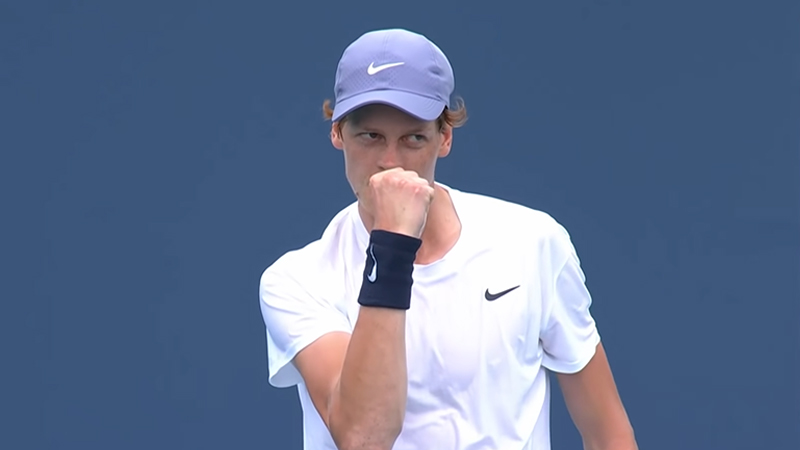
The professional landscape of men’s tennis has undergone a definitive transformation. For nearly two decades, the conversation was dominated by a specific trio of icons, but the arrival of Jannik Sinner has signaled the start of a new epoch.
To answer the most pressing question for analysts and fans alike: Yes, Jannik Sinner has officially secured five Grand Slam singles titles.
His ascent is not merely a collection of trophies but a masterclass in technical refinement and mental fortitude.
By claiming five majors across two of the three primary playing surfaces, Sinner has established a level of consistency that mirrors the elite standards of historical legends.
The Championship Inventory: A Statistical Overview
Before diving into the tactical nuances of his game, it is essential to review the concrete data regarding his major victories.
| Tournament | Championship Years | Total Titles |
|---|---|---|
| Australian Open | 2024, 2025 | 2 |
| Wimbledon | 2025, 2026 | 2 |
| US Open | 2024 | 1 |
| French Open | Pending | 0 |
| Grand Total | 2024–2026 | 5 |
As illustrated, Sinner has demonstrated a particular affinity for the hard courts of Melbourne and New York, as well as the hallowed grass of London. However, the French Open (Roland-Garros) remains the only major title currently absent from his trophy cabinet.
The 2024 Breakthrough: Redefining the Hard Court Standard
2024 will be remembered as the year the Italian star transitioned from a “contender” to a “champion.” His journey began in Melbourne, where the 2024 Australian Open marked his first major title.
Success Drivers in Melbourne and New York
- Linear Power: Sinner’s ability to generate immense pace from both the forehand and backhand wings allows him to dictate points from the baseline.
- Service Reliability: A significant increase in first-serve percentage and location precision transformed his service games into efficient holds.
- Mental Resilience: Winning a first major requires overcoming the psychological barrier of the “big stage,” a feat he accomplished with clinical composure in 2024.
Following his success in Australia, Sinner carried that momentum to the US Open in 2024. Hard courts require a specific blend of lateral movement and explosive power.
Sinner’s background as a champion skier in his youth has often been cited as the foundation for his unique footwork, allowing him to slide on hard courts with the grace typically reserved for clay.
Mastery of the Grass: The Wimbledon Double
While many expected Sinner to dominate on hard courts, his rapid adaptation to grass was perhaps the most intimidating development for his rivals. Sinner secured back-to-back Wimbledon titles in 2025 and 2026.
Winning at SW19 requires more than just power; it demands a low center of gravity and the ability to shorten points. Sinner’s evolution on grass can be attributed to:
- Improved Net Play: While primarily a baseliner, his 2025 and 2026 campaigns saw a marked increase in successful serve-and-volley points.
- Slice Integration: Mastering the backhand slice allowed him to change the rhythm of rallies, a necessity on the low-bouncing grass of London.
- Movement Efficiency: Reducing the number of steps taken to reach wide balls, ensuring he remained balanced during the strike.
By winning his second Wimbledon title in 2026, Sinner joined a very exclusive group of players who have successfully defended a title on the grass of the All England Club.
Defending the Crown: The 2025 Australian Open
A champion is often judged not by their first win, but by their ability to defend it. In 2025, Sinner returned to the Australian Open and successfully retained his title. This victory was significant for several reasons:
- Pressure Management: Entering a tournament as the defending champion brings a unique weight of expectation.
- Tactical Adaptability: By 2025, the rest of the tour had extensive data on Sinner’s game. His ability to evolve and counter the adjustments made by his opponents was the hallmark of this second title in Melbourne.
- Physical Conditioning: The grueling heat of the Australian summer often rewards the fittest athlete. Sinner’s investment in his physical frame—moving from a lean teenager to a robust professional—paid dividends here.
The Roland-Garros Puzzle: The Final Frontier
Despite his five major titles, the French Open (Roland-Garros) remains elusive. Clay is a surface that rewards patience, heavy topspin, and the ability to construct points over longer durations.
Challenges on the Clay
- Surface Speed: The slower bounce of clay negates some of the “flat” power that Sinner uses to pierce through opponents on hard courts.
- Slide Mechanics: While he is an excellent mover, the specific sliding technique required on clay is different from the “hard-court slide.”
- Endurance Requirements: Best-of-five matches on clay are notoriously the most physically taxing in the sport.
As he continues his career, the focus of the tennis world will undoubtedly shift toward Paris. Completing the Career Grand Slam would elevate Sinner into the highest tier of the sport’s history, a feat that only a handful of men have ever achieved.
Why the Sinner System Works?
To understand how a player wins five majors in a three-year span, one must look at the technical “Sinner System.”
The Backhand Wing
Arguably the best two-handed backhand in the modern game, Sinner uses this shot not just for defense, but as an offensive weapon. He strikes the ball early, taking time away from his opponents and forcing them into defensive positions.
The Return of Serve
Sinner’s return stats have consistently placed him at the top of the ATP rankings. By standing close to the baseline, he aggressively punishes second serves, immediately shifting the momentum of the point in his favor.
The “Ice Man” Temperament
Often compared to Björn Borg, Sinner rarely shows negative emotion on the court. This “poker face” makes it difficult for opponents to sense any physical or mental fatigue, providing a significant psychological advantage during five-set matches.
The Global Impact: Beyond the Trophies
Sinner’s success has had a profound impact on the sport’s popularity, particularly in Europe. His professional conduct and commitment to excellence serve as a blueprint for the next generation of athletes.
- Commercial Growth: His five titles have made him one of the most marketable athletes in the world, attracting partnerships with premier global brands.
- National Inspiration: The “Sinner Effect” in Italy has led to a massive surge in tennis participation and viewership.
- Standard Setting: He has forced his contemporaries to raise their level, leading to a higher quality of competition across the ATP Tour.
Conclusion: A Legacy in Progress
Jannik Sinner’s record of five Grand Slam titles—comprising the 2024 and 2025 Australian Opens, the 2024 US Open, and the 2025 and 2026 Wimbledon championships—paints a picture of a player who is currently at the zenith of his powers.
While the French Open remains the final piece of the puzzle, his current trajectory suggests that it is a matter of “when,” not “if,” he will challenge for that title.
For now, the tennis world must simply watch in awe as the young Italian continues to rewrite the record books, one major at a time.
The era of Sinner is not just beginning; it is already firmly established. With five trophies in hand and many years of elite play ahead, the conversation is no longer about whether he will win—it is about how many more he can win.