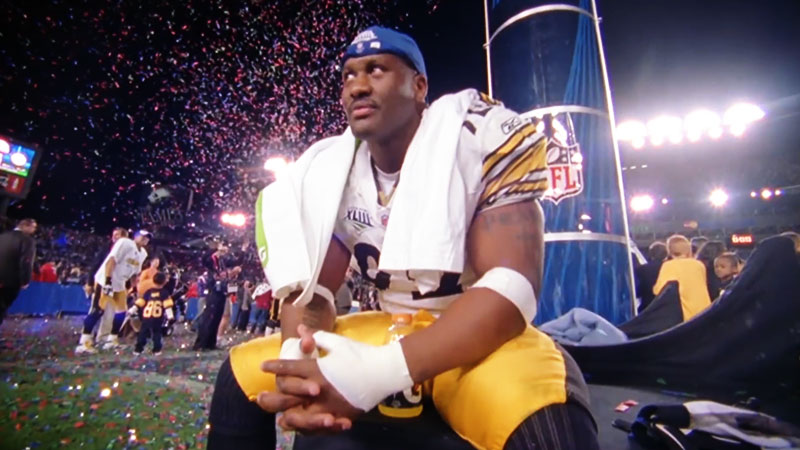
The career of James Harrison stands as a masterclass in professional resilience and defensive excellence. For those analyzing the history of the National Football League through the lens of championship impact, few names carry as much weight as the man nicknamed “Silverback.”
To answer the foundational question: James Harrison has won two Super Bowl championships, both as a cornerstone of the Pittsburgh Steelers’ defense.
His journey from an undrafted free agent to a multi-time champion is not merely a sports story; it is a case study in maximizing performance under the highest stakes.
The Foundation of a Championship Career
In the landscape of professional sports, the leap from a practice squad player to a franchise icon is rare. Harrison’s trajectory was defined by his tenure with the Pittsburgh Steelers, where he redefined the outside linebacker position.
His success was not immediate, but it was absolute. By the time he reached the pinnacle of the sport, he had become the personification of the “Steel Curtain” identity.
Super Bowl XL: The First Ring
The initial validation of Harrison’s championship caliber occurred in February 2006. In a highly physical contest held in Detroit, the Pittsburgh Steelers defeated the Seattle Seahawks to claim the franchise’s fifth title.
During this era, the Pittsburgh defense was transforming into one of the most feared units in modern history.
While Harrison was still ascending within the roster hierarchy during this specific run, being part of a championship-winning culture provided the blueprint for his later individual dominance.
This victory ended a long title drought for the city of Pittsburgh and established the defensive standard that would define Harrison’s career for the next decade.
Super Bowl XLIII: Defining Greatness
While the first ring established him as a champion, the victory in February 2009 established him as a legend. Facing the Arizona Cardinals in Tampa Bay, the Steelers were tasked with stopping one of the most prolific passing offenses of that season.
This game served as the ultimate stage for Harrison. He entered the contest as the reigning Defensive Player of the Year, a testament to his unmatched ability to disrupt offensive schemes.
The victory over Arizona was more than just a win; it was a demonstration of how elite individual performance can pivot the momentum of an entire organization.
The 100-Yard Return: An Analytical Breakdown
To understand why James Harrison’s name is etched into the record books, one must examine the final moments of the first half of Super Bowl XLIII. This single play is often cited by analysts as the greatest defensive feat in championship history.
The Arizona Cardinals, led by quarterback Kurt Warner, had driven deep into Pittsburgh territory.
With only seconds remaining on the clock and the Cardinals poised to take the lead at the goal line, Harrison executed a maneuver that defied traditional defensive expectations.
- The Interception: Instead of rushing the passer as he usually did, Harrison dropped into coverage. He read Warner’s eyes and intercepted the pass at the goal line.
- The Return: What followed was a grueling 100-yard return for a touchdown.
- The Record: At the time, this set a record for the longest play in Super Bowl history.
This play was mathematically and strategically devastating for the opposition. It represented a 14-point swing—taking points off the board for Arizona and adding them for Pittsburgh—as the clock hit zero for halftime.
The physical endurance required to sprint the entire length of the field after a full half of elite-level defensive play remains a benchmark for athletic performance.
The Strategic Impact of No. 92
Beyond the two rings, Harrison’s value to a championship organization was rooted in his versatility. He was a master of the “strip-sack,” a technical skill that required a combination of explosive speed and precise hand-eye coordination.
His presence on the field forced opposing coaches to alter their entire protection scheme, often dedicating two blockers to account for his location.
This “gravity” on the field allowed other members of the defense to operate with more freedom, creating a cumulative effect that made the Pittsburgh defensive units of 2005–2011 nearly impossible to solve.
The Legacy of a Two-Time Champion
James Harrison’s career serves as a reminder that championship windows are often defined by a few key individuals who can perform when the margin for error is zero.
His two Super Bowl titles are the result of a relentless pursuit of excellence and an uncanny ability to deliver in high-pressure environments.
From the victory against Seattle in 2006 to the historic night in Tampa against Arizona in 2009, Harrison proved that he was not just a part of the Steelers’ success—he was often the catalyst for it.
His 100-yard return remains a permanent fixture in NFL highlight reels, a “century” of effort that perfectly encapsulates the grit and determination of a two-time world champion.
For those tracking the all-time greats of the linebacker position, the data is clear: James Harrison’s impact on the game and his two championship rings secure his place among the most influential defenders to ever play the sport.