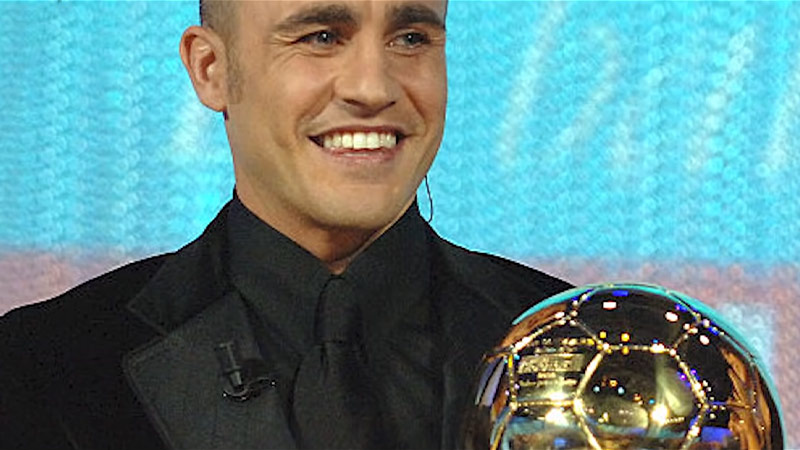
In the glamorous world of international football, the Ballon d’Or stands as the ultimate individual prize. Established by France Football, it is designed to recognize the best player on the planet over a given season.
However, any casual observer of the beautiful game will notice a recurring pattern: the trophy cabinet is overwhelmingly occupied by strikers, wingers, and creative playmakers. This “attacking bias” has led many fans to wonder: has a defender ever actually won the Ballon d’Or?
The short answer is yes, but it is a feat so rare that it has only occurred a handful of times in nearly seven decades of footballing history.
In a sport where goals are the primary currency, these defensive victories represent historic moments where the tactical brilliance of the backline finally eclipsed the star power of the frontmen.
The Exclusive Club: Only Three Men in History
While hundreds of world-class defenders have graced the pitch since the award’s inception in 1956, only three individual defenders have ever managed to take home the Golden Ball.
These men didn’t just defend; they redefined their positions and led their nations to continental or global glory.
The three legends who broke the mold are:
- Franz Beckenbauer (1972, 1976)
- Matthias Sammer (1996)
- Fabio Cannavaro (2006)
Each of these victories was tied to a monumental performance on the international stage, proving that for a defender to be recognized, they often must reach a level of perfection that is undeniable even to the most attack-minded critics.
Franz Beckenbauer: The “Kaiser” Who Redefined Defending
When discussing defensive excellence, the conversation begins and ends with Franz Beckenbauer. Not only was he the first defender to win the award, but he remains the only defender in history to win it twice.
The 1972 Triumph: The Birth of the Libero
Beckenbauer’s first win in 1972 came during an era when he was fundamentally changing how football was played. Operating as a German sweeper, or “Libero,” Beckenbauer wasn’t content with just stopping attacks; he started them.
His ability to carry the ball out of defense and dictate the tempo of the game from deep positions was revolutionary. In 1972, he led West Germany to a European Championship title, a feat that cemented his status as the best player in the world.
The 1976 Encore: Sustained Excellence
Winning a second Ballon d’Or in 1976, Beckenbauer proved that his first victory was no fluke. By this time, he had mastered the art of defensive leadership.
His dual wins remain the gold standard for any defender, as he is the only player from the backline to have been honored as the world’s best on two separate occasions.
Matthias Sammer: The 1996 European Masterclass
Two decades passed after Beckenbauer’s second win before another defender would grace the podium. In 1996, Matthias Sammer achieved what many thought was impossible in the modern, faster-paced era of football.
The Legacy of the German Sweeper
Like Beckenbauer before him, Sammer operated as a German sweeper. His victory was almost entirely fueled by his impressive Euro 1996 performance.
During that tournament, Sammer was the heartbeat of the German national team. He provided a perfect blend of tactical discipline and offensive transition, guiding Germany to the trophy.
Sammer’s win was a significant moment for the sport because it reminded the world that a defender could be the most influential player in a major tournament, even without being the primary goalscorer.
Fabio Cannavaro: The Last Wall of Berlin
The most recent defender to win the award—and the only one to do so in the 21st century—is Fabio Cannavaro. His 2006 victory is perhaps the most famous example of a “pure” defender being recognized for his grit and leadership.
The 2006 World Cup Heroics
Cannavaro’s win was a direct result of his stellar performance in the 2006 World Cup, where he captained Italy to their fourth world title.
Throughout that tournament, Cannavaro was nearly impassable. Despite his relatively short stature for a center-back, his reading of the game, his aerial ability, and his timing in the tackle were flawless.
A Shift in Position
Unlike Beckenbauer and Sammer, who played the more expansive “sweeper” role, Cannavaro won the award as a traditional Italian center-back.
He didn’t win by scoring goals or providing assists; he won by ensuring the opposition didn’t score. Since his victory in 2006, no other defender has won the award, making his win a closing chapter in a very short book.
Why Is It So Hard for Defenders to Win?
The rarity of these wins highlights a clear bias toward attacking players in the Ballon d’Or voting process. There are several reasons why the “Great Wall” of a team often gets overlooked in favor of the “Sharpshooters.”
1. The Visibility of Goals
Goals are the most dramatic and easily quantifiable moments in football. When a striker scores a last-minute winner, it creates a lasting highlight.
Conversely, a defender making a goal-saving tackle or maintaining a perfect offside trap is often a “quiet” contribution that requires a deeper tactical understanding to appreciate.
2. The Statistical Gap
In the age of “big data,” attackers have goals, assists, and “key passes” to bolster their resumes.
While defenders have tackles, interceptions, and clean sheets, these metrics are often seen as secondary to the statistics that directly change the scoreboard.
3. The Requirement of International Glory
As seen with Beckenbauer, Sammer, and Cannavaro, a defender usually needs to win a major international tournament (the World Cup or the Euros) to even be considered.
Without the platform of a trophy-winning international run, defenders rarely gather enough votes to compete with the high-scoring forwards of the world’s biggest clubs.
Conclusion: A Historic and Rare Achievement
The history of the Ballon d’Or serves as a reminder that football is a game of two halves: the thrill of the attack and the discipline of the defense.
While the award typically favors the “glamour” of the front line, the victories of Franz Beckenbauer, Matthias Sammer, and Fabio Cannavaro stand as historic moments for defensive play.
These three men proved that a defender can be just as influential, just as talented, and just as legendary as any striker.
However, with nearly 20 years having passed since Cannavaro’s 2006 triumph, the footballing world continues to wait for the next “Wall” to rise and claim the Golden Ball.