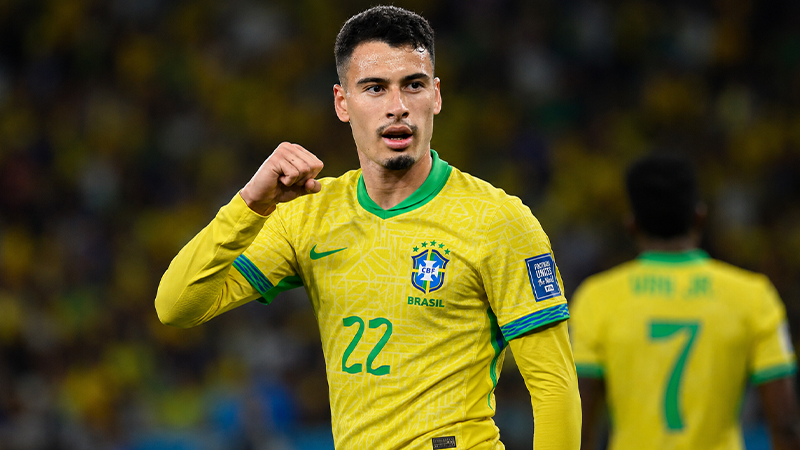
Gabriel Martinelli’s meteoric rise at Arsenal is often viewed through the lens of individual brilliance, yet his journey is deeply rooted in a complex support system.
Behind the goals and high-intensity sprints lies a story of two families: the biological one that sacrificed everything in Brazil and the sporting one that embraced him in London.
While fans often scour the internet for details on Gabriel Martinelli’s siblings, the reality is a blend of private family ties and professional brotherhoods that define one of the Premier League’s most exciting talents. Here is the definitive look at his kinship.
The Biological Siblings: Life Away from the Limelight
Despite being a global superstar, Martinelli has managed to keep his immediate family life remarkably shielded from the prying eyes of the media. This privacy is a deliberate choice, ensuring that his loved ones can lead normal lives back in South America.
The Sisters He Left Behind in Brazil
It is a confirmed fact that Gabriel Martinelli has sisters. While their names and exact number remain a closely guarded secret, Gabriel has opened up about the emotional difficulty of his move to Europe.
When he signed for Arsenal and moved to London, his sisters chose to remain in Brazil rather than relocate with him and their parents.
Specifically, at least one of his younger sisters still resides in Itu, the city where Gabriel spent his formative teenage years playing for Ituano. This separation highlights the personal cost of the “Plan A” that Gabriel and his father so rigorously pursued.
The Emotional Weight of Family Separation
Moving to London at 18 was not just a professional jump; it was a total lifestyle overhaul. Gabriel has admitted that he struggles with solitude, a trait likely linked to the close-knit nature of his upbringing in a house where he originally shared a single bedroom with his parents.
The fact that his sisters stayed in Brazil added to this sense of isolation during his early days in England, leading to a profound fear of being alone in his house. He even recounted nights spent on the phone with his girlfriend just to feel comfortable enough to fall asleep.
The Matheus Martinelli Myth: Clearing the Confusion
In the digital age, a shared surname often leads to immediate assumptions of kinship. This has been particularly true for Gabriel and another rising star in the Brazilian football scene.
Is Matheus Martinelli Gabriel’s Brother?
A common search query among football fans is whether Gabriel is related to Matheus Martinelli, a professional midfielder who plays for Fluminense.
The two share several striking similarities: they are roughly the same age, both are Brazilian, both have reached a high level of professional success, and they even share a resemblance in their facial features.
However, despite these coincidences, they are not biologically related. Matheus is a talented peer, not a sibling.
Why the Confusion Persists
The confusion is fueled by the “Martinelli” name, which, while common, carries a certain weight in Brazilian sports circles. Fans frequently tag both players in social media posts assuming a brotherly connection.
Gabriel has had to navigate several such misconceptions throughout his career, often having to clarify that his true biological siblings are not the famous names fans might expect.
The Architects of Success: João and Elizabete Martinelli
To understand the support system that replaced his siblings in his daily life, one must look at his parents, João and Elizabete. They were the primary drivers of his career, functioning as coaches, scouts, and emotional anchors.
João Martinelli’s “Plan A” Vision
Gabriel’s father, João, was intensely invested in his son’s career from the age of six. He had dreams of turning professional himself, and when that didn’t work out, he channeled that energy into Gabriel. This wasn’t just a casual interest; it was a rigorous training regimen.
| Training Aspect | Detail |
|---|---|
| Start Age | 6 years old |
| Focus Area | Intensive left-foot training |
| Volume | Thousands of shots on a netless court in Guarulhos |
| Schedule | Up to three games in a single day |
The Role of Elizabete Martinelli
While João handled the technical and tactical critiques, his mother, Elizabete, provided the emotional fuel and, occasionally, her own blunt sporting advice. Gabriel recalls his mother telling him his shooting “had no power” and that he needed to hit the ball harder.
She was also the one who helped him decide on his iconic crossed-arms goal celebration, which he debuted at Stamford Bridge. Her presence in London during his first year was vital for his mental stability.
The Arsenal “Second Family”: Brotherhood on the Pitch
When Gabriel speaks of his “two families,” he is referring to the biological one in Brazil and the collective unit at Arsenal. In the absence of his sisters and extended relatives, his teammates have stepped in to fill that void.
The Gabriel Trio and the Brazilian Bond
At Arsenal, Gabriel has found a “brotherly bond” with Gabriel Magalhães and Gabriel Jesus. This trio is inseparable, providing a familiar cultural and linguistic pocket within the North London club.
This sense of belonging is essential for a player who notoriously dislikes being alone. They aren’t just teammates; they are the surrogate siblings that help him navigate the pressures of elite football.
Mentors and Guardians: Emi Martínez and David Luiz
During his first years in London, senior players took on a parental or big-brother role. Emi Martínez, who lived only ten minutes away, essentially acted as Gabriel’s driver for two years because Gabriel couldn’t speak enough English to get a license.
Martínez would pick him up for training and even invited him to spend New Year’s Eve with his family. Similarly, David Luiz provided essential guidance, helping the teenager adapt to the intensity of the Premier League.
Life in London: The Invisible Support Network
Beyond the football pitch, Gabriel’s personal life involves a small, dedicated circle that ensures he remains focused and happy.
The Role of His Girlfriend
Gabriel’s girlfriend has been a cornerstone of his adaptation to English life. She acts as a constant companion, helping him combat his fear of solitude. More importantly, she has been his unofficial English tutor.
She insists on watching movies in English to help him learn the language, despite his preference for Portuguese dubbing. This personal support has been just as critical as his tactical training under Mikel Arteta.
Overcoming Injury Through Community
When Gabriel suffered a severe knee injury in 2020, the Arsenal “family” became his primary support system.
Working with the club’s physio, Jordan, he not only recovered physically but also used the time to master English verbs, as there was “no dubbing option” during their long sessions together.
This period of hardship matured him, transforming him from a “crazy kid” into a resilient professional.
The 60,000 Strong: Fans as the Ultimate Extended Family
Martinelli’s connection with the Arsenal supporters goes beyond the typical player-fan relationship. He views the 60,000 people at the Emirates as a massive extension of his family.
The Energy Boost of the Emirates
Gabriel credits the fans for giving him the “energy boost” needed to keep sprinting when he feels “dead tired”.
He points to moments like William Saliba’s own goal against Leicester as proof of the family atmosphere at the club. Instead of booing, the fans roared their support, a gesture that Gabriel believes defines the current spirit of Arsenal.
A Shared Mission for Titles
For Gabriel, being part of the Arsenal family means sharing the fans’ high expectations. He is clear that the club is not about “getting a point” or simply finishing in the top four; it is about winning the Premier League and the Champions League.
This alignment of goals creates a deep, emotional bond between him and the North London faithful.
FAQ: Understanding the Martinelli Family Dynamics
Does Gabriel Martinelli have a brother?
No, Gabriel Martinelli does not have a brother. While he is often linked to Matheus Martinelli of Fluminense due to their shared surname, they are not related. He does, however, have sisters who live in Brazil.
Why did Martinelli’s sisters stay in Brazil?
When Gabriel and his parents moved to London following his transfer to Arsenal, his sisters chose to remain in their home country. At least one of his younger sisters still lives in Itu, the city where Gabriel played before moving to Europe.
Who are the “Two Families” Martinelli refers to?
Gabriel famously dedicated a piece in The Players’ Tribune to his “Two Families”. The first is his biological family—his parents João and Elizabete, and his sisters. The second is Arsenal FC, including his teammates, staff, and the supporters.
Is Gabriel Martinelli close to his parents?
Extremely close. His father, João, was his primary trainer from childhood, and his mother, Elizabete, has been a constant source of emotional support and practical advice throughout his career. They moved to London with him to help him transition to life in the Premier League.
Conclusion: The Power of Kinship in Professional Sports
Gabriel Martinelli’s story is a testament to the fact that no athlete is an island. While his sisters remain in Brazil and his biological family is kept private, the support they provided during the “Plan A” years in Guarulhos and Itu laid the foundation for his success.
Today, that foundation is bolstered by a “second family” at Arsenal—a collection of teammates like the “Gabriel Trio” and a fanbase that provides the emotional fuel for his relentless style of play.
Whether it is training his left foot on a netless court or learning English verbs with a club physio, Martinelli has always been surrounded by people who believe in his potential.
For fans, understanding the depth of these bonds—both the ones he was born into and the ones he chose in London—offers a clearer picture of the man wearing the number 11 shirt for the Gunners.
As he continues to chase titles and represent Brazil on the world stage, he does so not just for himself, but for the two families that made it all possible.