The Project X EvenFlow line has long been a favorite among golfers seeking a unique combination of a smooth, “even” feel and high-performance stability.
However, one of the most persistent questions in equipment forums and fitting studios revolves around the distinction between the Handcrafted version and the Standard (Non-Handcrafted) version of the EvenFlow Black.
While both shafts share the same name and general profile, they represent two different approaches to manufacturing and branding.
This guide dives deep into the technical specifications, aesthetic differences, and performance realities to help you decide which version deserves a spot in your driver.
The Core Identity: What is EvenFlow Black?
Before examining the manufacturing differences, it is essential to understand the design intent of the EvenFlow Black profile. Regardless of where it is produced, the EvenFlow Black is engineered as a low-launch, low-spin shaft.
In the world of golf shafts, “low/low” profiles are typically reserved for stronger swingers who need to keep the ball flight penetrating and prevent excessive backspin from robbing them of distance.
What sets the EvenFlow line apart from other stout, low-launch shafts is its “even” bend profile, which is designed to provide a stable, smooth feel throughout the transition and impact, rather than the harsh or “boardy” sensation often associated with low-spin equipment.
Manufacturing Origins: San Diego vs. China
The primary differentiator between these two versions is their place of birth. This distinction is more than just a label; it dictates the production scale and the marketing narrative surrounding the product.
The Handcrafted Heritage
The EvenFlow Black Handcrafted shafts are produced in a specialized facility in San Diego, California. This US-based manufacturing process is positioned as a boutique, high-oversight operation.
By keeping production in San Diego, Project X can market these shafts as premium, small-batch components that undergo rigorous quality checks.
The Standard Production
Conversely, the non-handcrafted (often referred to as “stock”) versions are typically manufactured in China.
These are produced at a much higher volume to satisfy the demands of major Original Equipment Manufacturers (OEMs) who include the EvenFlow Black as a standard option in their off-the-shelf drivers.
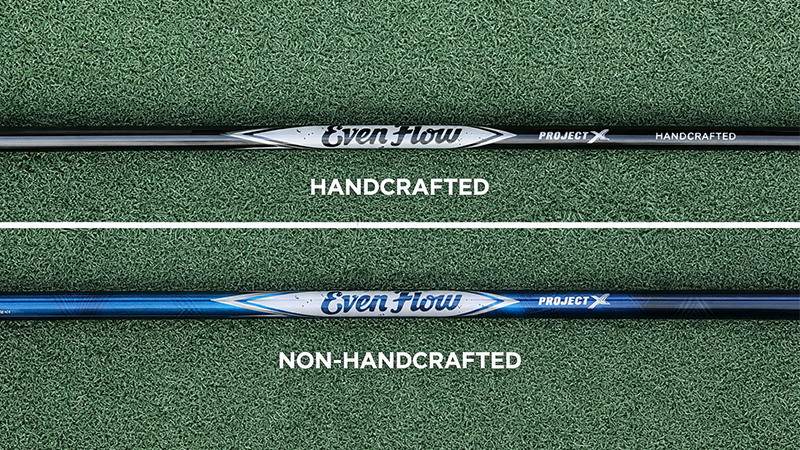
The Aesthetics: Premium Branding and the “Hand-Painted” Look
For many golfers, the appeal of the Handcrafted version lies in its visual identity and “bag appeal.” There are clear aesthetic markers that separate the premium US-made version from its mass-produced counterpart.
Hand-Painted Details
The Handcrafted models typically feature a specific “hand-painted” look. This finish is designed to look more artisanal and refined than a standard factory paint job. It serves as a visual cue to other golfers and fitters that the shaft is a premium component.
Distinct Branding
In addition to the finish, the US-made version carries explicit “Handcrafted” branding on the graphic layout.
The standard versions, while still maintaining a high-quality finish, generally lack these specific markings and the artisanal aesthetic of the San Diego-born models.
Performance Deep-Dive: Are They Actually Different?
This is the area where most golfers find themselves conflicted. Does the “Handcrafted” label translate to more fairways hit or more yards off the tee?
Materials and Profiles
The Handcrafted and non-handcrafted versions share similar or even identical materials. Because they are built to the same design specifications, they maintain the same low-launch and low-spin performance profiles.
The “Tighter Tolerances” Claim
The Handcrafted models are frequently marketed as having tighter tolerances. In shaft manufacturing, “tolerances” refer to how closely the finished product matches the intended specifications for weight, torque, and frequency.
While the San Diego facility is marketed as having these stricter standards, the performance benefits between the two are remarkably similar.
Consistency and Feel
Both versions are designed to deliver a stable, smooth feel. For the vast majority of golfers, even those with high swing speeds, the tactile experience of swinging the Handcrafted version versus the standard version will be nearly indistinguishable because the underlying geometry and material stiffness remain constant.
The Cost Factor: Is the Premium Justified?
There is a significant price delta between these two shafts. The Handcrafted models often come at a higher price point.
This increased cost is attributed to the specialized, US-based manufacturing process in San Diego, which inherently carries higher operational costs than mass production in China.
When deciding if the premium is worth it, golfers must weigh two factors:
- Objective Performance: If you are looking strictly for the launch and spin numbers of the EvenFlow Black profile, the standard version provides the same profile at a lower cost.
- Subjective Value: If you value US-made craftsmanship, premium aesthetics, and the peace of mind that comes with “tighter tolerances,” the Handcrafted version represents a more refined product.
Who Should Choose the Handcrafted Version?
The Handcrafted EvenFlow Black is best suited for:
- The Enthusiast: Golfers who appreciate the story behind their equipment and want a premium, boutique component in their bag.
- The “Tights Specs” Player: Golfers who want the absolute highest level of quality control and are willing to pay a premium for the San Diego manufacturing oversight.
- Aesthetic Seekers: Those who prefer the “hand-painted” look and the prestige of the Handcrafted logo.
Who Should Choose the Standard (Non-Handcrafted) Version?
The standard EvenFlow Black is the logical choice for:
- The Value-Conscious Performer: Golfers who want the low-launch, low-spin performance of the EvenFlow Black without the “Made in the USA” price tag.
- OEM Buyers: Those purchasing a new driver where the EvenFlow Black is offered as a stock, no-upcharge option.
- Pragmatists: Players who recognize that because materials and profiles are identical, the on-course results will likely be the same.
Conclusion: Choosing Your Path
Ultimately, the choice between the Handcrafted and non-handcrafted EvenFlow Black often comes down to a preference for a slightly more refined, US-made product.
If your primary goal is to optimize your launch monitor numbers, both shafts are designed to deliver a stable, smooth feel for stronger swingers seeking low launch and spin. The materials are largely identical, and the performance profiles are the same.
However, if you find confidence in the artisanal nature of a San Diego-produced shaft with a premium finish, the Handcrafted version remains one of the most iconic “upcharge” options in the industry.
Regardless of which you choose, the EvenFlow Black remains a premier choice for those who need high-performance stability without sacrificing the smooth feel that Project X has mastered.