In the world of professional sports, the leap from brand ambassador to business mogul is a path many attempt, but few master.
While most high-profile athletes are content with multimillion-dollar endorsement contracts, LeBron James shifted the paradigm in 2012.
He walked away from a guaranteed payout to secure a piece of a burgeoning “fast-casual” concept. Today, the question isn’t just about whether he likes the food but a more complex inquiry into corporate structure: Does LeBron James own Blaze Pizza?
To understand the magnitude of this partnership, one must look beyond the basketball court and into the mechanics of equity, franchising, and the evolution of the modern athlete-entrepreneur.
The Reality of Ownership: Stakeholder vs. Sole Owner
There is a common misconception that because a celebrity is the face of a brand, they hold the keys to the entire corporation.
Regarding Blaze Pizza, the reality is more nuanced but no less impressive. LeBron James does not own the entire Blaze Pizza company, but he remains one of its most influential figures.
His role is multifaceted. He is a major investor and a strategic partner who helped put the California-based chain on the global map.
By trading a traditional endorsement deal with a fast-food giant like McDonald’s for a stake in a startup, James signaled a shift in how athletes view their personal brands. He wasn’t looking for a paycheck; he was looking for a seat at the table.
The $1 Million Gamble That Paid Off
The timeline of this investment is a masterclass in timing and market intuition. In 2012, Blaze Pizza was a relatively new player in the “fast-casual” dining space—a sector defined by higher-quality ingredients and faster service than traditional sit-down restaurants.
James and his business partners at LRMR Ventures recognized the potential of the “build-your-own” pizza model. He famously invested less than $1 million for a 10% stake in the chain during its infancy.
At the time, walking away from a massive contract with established brands seemed risky to many analysts. However, that 10% stake has since ballooned in value as Blaze Pizza became one of the fastest-growing restaurant chains in U.S. history.
This move effectively turned a seven-figure investment into a nine-figure asset, proving that ownership provides a level of wealth generation that salary and endorsements alone cannot match.
LeBron James: The Franchisee and Brand Architect
Beyond his 10% corporate stake, James is deeply involved in the operational side of the business. He isn’t just an investor in the parent company; he is also a franchisee.
A franchisee is someone who owns and operates individual locations under the brand’s banner. James directly owns several individual franchise locations, particularly in major markets like Chicago and South Florida.
This dual-level involvement means he benefits twice: once from the overall growth and valuation of the Blaze Pizza brand, and again from the daily revenue generated by the stores he personally owns.
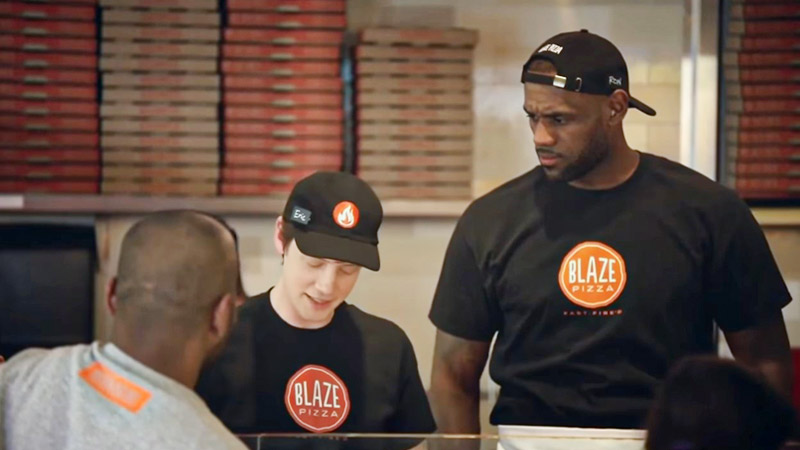
His involvement as a franchisee allows him to implement the brand’s vision on the ground. Whether he is “undercover” as a store employee in viral marketing clips or hosting community events at his locations, he uses his massive cultural capital to drive foot traffic and brand loyalty in a way few other investors could.
Why This Deal Redefined Sports Business
Before this partnership, the standard “athlete deal” was simple: the athlete appears in a commercial, says a tagline, and receives a flat fee. The Blaze Pizza deal changed the internal logic of sports marketing for several reasons:
- Alignment of Interests: When an athlete owns a piece of the company, their “fame” is directly tied to the company’s “success.” If the brand grows, the athlete’s net worth grows.
- Long-Term Vision: Equity lasts much longer than a three-year endorsement contract. Even after James retires from the NBA, his 10% stake in Blaze Pizza will continue to generate value.
- The Blueprint for Others: This deal paved the way for other superstars—like Kevin Durant with Postmates or Patrick Mahomes with Whataburger—to demand equity and franchise rights rather than just cash.
Frequently Asked Questions
Did LeBron James start Blaze Pizza?
No. Blaze Pizza was founded by Rick and Elise Wetzel (of Wetzel’s Pretzels) in 2011. LeBron James joined as an early investor and spokesperson in 2012, shortly after the first locations opened.
How much of Blaze Pizza does LeBron James own?
Public records and reports indicate that James secured a 10% stake in the company for his initial investment.
How much did he invest initially?
His initial investment in 2012 was less than $1 million. This is widely cited as one of the most successful “early-stage” investments by a professional athlete.
Can I visit a Blaze Pizza owned by LeBron?
While he owns a 10% stake in the entire company, he specifically owns several individual franchise locations in cities like Chicago and Miami. While you might not see him behind the counter, those specific stores are part of his personal business portfolio.
Conclusion: The New Gold Standard for Athlete Investments
The partnership between LeBron James and Blaze Pizza is more than just a successful business deal; it is a cultural landmark in the history of sports and finance.
By choosing equity over endorsements, James demonstrated that the most valuable asset an athlete possesses is their influence—and that influence is best used to build long-term wealth through ownership.
With a 10% stake and a growing list of franchise locations, James remains the most visible and influential partner in the Blaze Pizza story. It serves as a reminder to investors and fans alike: sometimes, the best move isn’t to take the guaranteed money, but to bet on yourself and own the pie.