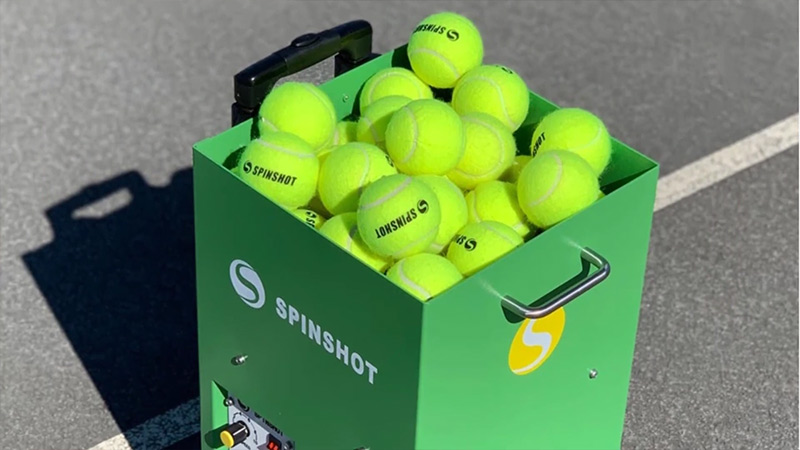
The journey from a recreational player to a high-performance athlete is often defined by the quality and quantity of repetitions.
In the modern era of athletics, technology has become the ultimate equalizer, and in the world of tennis, the ball machine stands as the most influential tool for individual development.
While some purists argue that nothing replaces a human hitting partner, the data suggests that a structured, purposeful approach to machine training can accelerate a player’s progress at a rate that traditional hitting sessions simply cannot match.
The Architecture of Improvement: Why Repetition Rules
At the heart of athletic excellence lies the concept of muscle memory. When you step onto a court, your brain is processing thousands of data points—the incoming ball’s speed, its height, the wind, and your own physical positioning.
For a beginner or intermediate player, this cognitive load can be overwhelming. The primary advantage of a tennis ball machine is its ability to facilitate high-volume repetition, which effectively offloads these processes from the conscious mind to the subconscious.
By hitting hundreds of balls in a single session without the natural interruptions of a human partner—such as errors, ball collection, or varying feed quality—a player can build a foundation of stroke mechanics that remains stable even under pressure. This volume is the bedrock of consistency.
In a standard hour of match play, a player might hit 60 to 80 active shots. With a machine, that number can easily climb to 400 or 500, essentially condensing a week’s worth of technical work into a single afternoon.
Mastering the Mechanics: Precision Over Power
The most common mistake players make is trying to hit “match-speed” balls before their technique is solidified. To truly improve your game, you must treat the machine as a diagnostic tool rather than just a workout partner.
Isolating the Stroke: The material suggests starting with a slow, consistent feed. This controlled environment is critical for technical mastery. By removing the stress of tracking an unpredictable ball, you gain the mental bandwidth to focus on specific technical pillars:
- The Grip: Ensuring the hand transition between forehand and backhand is seamless.
- The Swing Path: Visualizing the “low to high” arc required for modern topspin.
- The Follow-Through: Guaranteeing a full finish that ensures depth and safety over the net.
When these movements become natural and fluid at a slow pace, they are far more likely to hold up when the tempo of the game increases. This “bottom-up” approach to training ensures that there are no cracks in the foundation of your game.
The Kinetic Chain: Footwork and Recovery
Tennis is often described as a sport of the feet, played with the hands. A beautiful stroke is useless if you are not in the correct position to execute it.
This is where the advanced features of modern machinery, such as horizontal and vertical oscillation, become indispensable.
Dynamic Movement Patterns: Oscillation allows the machine to randomize the landing spot of the ball, forcing the player to engage in the full movement cycle of a real point:
- The Split Step: Reacting to the machine’s launch.
- The Sprint/Adjustment Steps: Moving to the ball with precision.
- The Set: Establishing a firm base before contact.
- The Recovery: Immediately returning to the “home” position or the center of the court after the shot.
This cycle is what builds the physical endurance and “court sense” needed for long matches. By practicing the recovery as much as the shot itself, you train your body to never be “done” with a point until the ball has bounced twice, a habit that separates elite competitors from club-level enthusiasts.
The Simulation Environment: Preparing for the Unpredictable
As a player advances, the need for variety becomes paramount. The game of tennis is not played in a vacuum; it is a chaotic exchange of spins, trajectories, and speeds.
Advanced units like the Spinfire Pro2 or newer AI-integrated models allow for a high degree of customization.
Handling Variety: To truly elevate your level, you must program the machine to challenge your weaknesses. This includes:
- Heavy Topspin: Learning to take the ball on the rise or move back to accommodate a high-bouncing shot.
- Low Backspin Slices: Developing the leg strength to stay low and the “feel” to dig out a skidding ball.
- Varying Trajectories: Switching between high defensive lobs and low, driving passing shots.
By simulating these match-specific situations, you desensitize yourself to the “tricks” an opponent might use to disrupt your rhythm. You are no longer reacting to a surprise; you are executing a pre-programmed response developed through hours of specific practice.
Critical Analysis: The Human Element and Tactical Gaps
While the benefits are immense, it is vital to acknowledge the limitations of machine training to avoid developing a “robotic” game. The primary drawback is the lack of tactical unpredictability.
A machine, no matter how advanced, cannot look you in the eye. It cannot show “tells” in its body language that a seasoned player uses to anticipate a cross-court shot versus a down-the-line winner.
Because the launch point of a machine is static, players may find their “anticipation” skills stagnating.
In a real match, you read the opponent’s toss, their shoulder turn, and their racket face. A machine provides a consistent launch, which can lead to a false sense of security regarding your reaction time.
Furthermore, the machine does not provide feedback on shot selection. It won’t tell you that hitting a high-risk winner on a defensive ball was a poor tactical choice. It simply feeds the next ball.
The Hybrid Training Blueprint
To achieve a world-class level of play, the ball machine should be one component of a broader, three-pronged developmental strategy.
- Technical Foundation (The Machine): Use this for 40% of your training time. Focus on high-volume repetition, footwork drills, and conditioning. This is your “lab” where you build and refine your tools.
- Instructional Oversight (The Professional): Regular lessons with a tennis professional are essential. A coach ensures that you are not using those 500 repetitions to reinforce a bad habit. They provide the “why” behind the “how.”
- Real-World Application (Match Play): This is where you test your tools. Actual match play is the only way to develop anticipation, mental toughness, and the ability to read a human opponent.
Comprehensive FAQ: Maximizing Your Investment
How often should I use a ball machine to see results?
Consistency is key. Two to three 60-minute sessions per week, focused on specific goals (e.g., “Tuesday is backhand day”), will yield significant improvements in muscle memory and conditioning within a month.
Can a ball machine help with my serve?
Generally, no. The serve is the only shot in tennis where you have total control over the start of the point. While you don’t need a machine to feed you a ball for a serve, you can use the machine to practice the return of serve, which is one of the most under-practiced shots in the game.
Is it better to buy a machine or rent one at a club?
If you are a dedicated player (3+ times a week), owning a machine provides the flexibility to practice during “off-peak” hours. However, many high-end clubs offer machines with advanced programming that might be more sophisticated than entry-level portable units.
How do I prevent “machine fatigue” or boredom?
Gamify your sessions. Set up targets (cones or towels) and keep score. For example, “I must hit 10 consecutive cross-court forehands into the target zone before I can move to the next drill.”
Final Perspective: The Competitive Edge
In conclusion, do tennis ball machines improve your game? The answer is a definitive yes, provided they are used as a specialized instrument within a comprehensive training regimen.
They are the ultimate tool for “perfecting the craft,” allowing you to isolate variables and build a level of physical and technical consistency that is difficult to achieve through match play alone.
By mastering your mechanics at a slow pace, engaging your full kinetic chain through oscillation, and simulating the heavy spins of modern tennis, you transform yourself into a more formidable, durable, and confident player.
The machine builds the athlete; the match builds the player. When you combine the two, your potential on the court becomes limitless.