As the clouds darken and the first few drops hit the windshield, the same question echoes through every soccer carpool: is the game still on? Soccer is famous for its “play on” mentality, often seeing athletes battle through driving rain and muddy pitches.
However, there is a fine line between a challenging match and an unsafe environment. While rain alone rarely stops the clock, factors like lightning, field saturation, and player safety are major game-changers.
This guide explores the complex protocols that determine whether you’ll be lacing up your boots or heading back home for a dry afternoon.
The “Play On” Culture: Why Soccer Embraces the Rain
Soccer is globally recognized as an all-weather sport. Unlike baseball or tennis, where a light drizzle can halt play, soccer players are expected to perform in varied climates. This tradition is rooted in the sport’s history and the physical nature of the game.
Matches generally proceed through light rain and even heavy downpours without a second thought from the officiating crew.
The Resilience of the Pitch
One reason soccer continues in the rain is the design of modern playing surfaces. Professional pitches are engineered with advanced drainage systems that can whisk away thousands of gallons of water in minutes.
Because the game does not rely on a dry ball or a dirt infield, the fundamental mechanics of soccer—dribbling, passing, and tackling—remain functional even when the grass is slick.
Mental Toughness and Competitive Advantage
In the competitive landscape, rain is often viewed as an equalizer. It tests a team’s technical ball control and mental fortitude.
Coaches often use rainy conditions to teach players about adapting their playstyles, such as taking more long-distance shots or avoiding risky short passes in high-traffic areas.
This “toughing it out” philosophy is a core component of the sport’s identity from youth leagues to the World Cup.
Critical Triggers: When the Whistle Finally Blows
While the rain itself is rarely the cause for a cancellation, its secondary effects can force a referee’s hand. There are specific safety and technical thresholds that, once crossed, make continuing the match impossible or irresponsible.
| Factor | Threshold for Cancellation | Decision Maker |
|---|---|---|
| Field Conditions | Standing water that stops the ball from rolling or causes unsafe footing. | Referee |
| Lightning/Thunder | Any lightning strike or thunder within a specific radius (30-30 rule). | Referee/Match Manager |
| Visibility | Rain so heavy that officials or players cannot see the full length of the pitch. | Referee |
| Field Integrity | Risk of permanent damage to the turf (common in youth/amateur leagues). | Club/League Admin |
Evaluating Unsafe Field Conditions
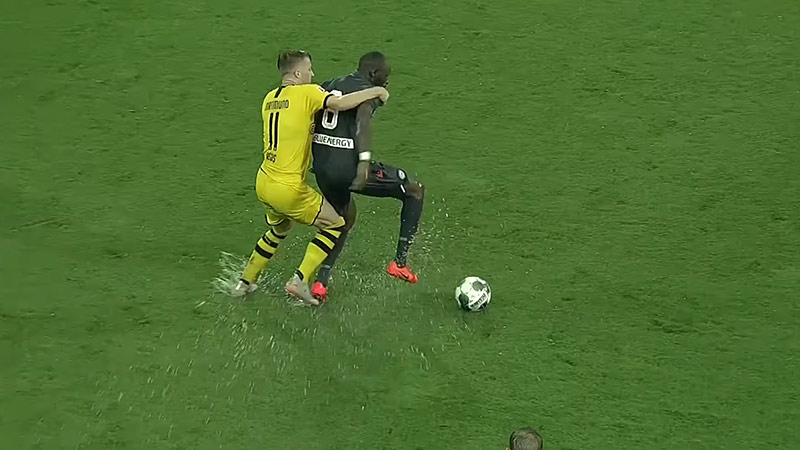
The most common reason a rain-soaked game is cancelled is waterlogging. A referee may call off a game if the pitch is severely waterlogged, making the ball unable to roll or creating a significant safety risk for players.
If a ball hits a puddle and stops dead, it disrupts the “spectacle” of the match and can lead to unpredictable player collisions.
Furthermore, “standing water” can hide divots or holes in the grass, significantly increasing the risk of ankle and knee injuries.
The Non-Negotiable: Lightning and Thunder Protocols
If rain is the annoyance, lightning is the absolute dealbreaker. There is no room for debate when it comes to electrical storms. Most leagues follow a strict “30-30 rule” to ensure the safety of players, coaches, and spectators alike.
Understanding the 30-30 Rule
According to this protocol, play is suspended for at least 30 minutes after the last sound of thunder or the last visible flash of lightning. The clock resets every time a new strike is recorded.
This ensures that the storm has moved a safe distance away before anyone returns to the open field. Players are typically required to leave the pitch and seek shelter in hard-topped vehicles or permanent buildings—sideline tents and trees are never considered safe.
Termination Thresholds for Extended Delays
Referees and league officials do not have an infinite window of time to wait for a storm to pass. If lightning continues and the delay exceeds a specific timeframe, which is often 45 to 60 minutes depending on the league, the match may be terminated entirely.
Factors such as stadium lighting schedules, travel requirements for the visiting team, and subsequent games scheduled on the same field all play into the decision to cancel rather than continue waiting.
Professional vs. Youth Leagues: Different Priorities
The decision to cancel a game often depends on who owns the field and what the long-term goals of the organization are. A professional match and a Saturday morning U-10 game operate under very different sets of rules when the clouds open up.
Professional Standards and Spectacle
In professional leagues like the Premier League or MLS, referees and match managers consider whether conditions compromise the “match as a spectacle”.
Because these games involve high-stakes broadcasting rights and thousands of paying fans, every effort is made to play. Professional referees generally only suspend matches for standing water that prevents play or for lightning.
They have the luxury of professional groundcrews who can work during halftime to fork the pitch and improve drainage.
Youth and Amateur Logistics
For youth and amateur levels, the priorities shift toward player safety and asset protection. In these tiers, games are often cancelled if the fields are closed by the club or league administration to prevent long-term damage.
Playing a single game on a saturated amateur field can “chew up” the turf so badly that the pitch becomes unplayable for the remainder of the season.
Consequently, administrators are much quicker to pull the plug on a rainy day than a professional match manager would be.
Post-Cancellation: Is the Game Official or a Replay?
If the weather wins and the game is stopped, the next question is whether the current score stands or if the match must be replayed from scratch. This is governed by specific “completion rules” that vary by league.
The Halftime Benchmark
A match is often considered “complete” or official if it is stopped after a certain point in time. Common benchmarks include reaching halftime or completing two-thirds of the total scheduled duration.
If the referee blows the whistle for weather after these milestones, the score at the time of suspension is typically recorded as the final result.
Rescheduling and FIFA Regulations
If a game is stopped earlier than the official benchmark, it is typically rescheduled. However, the logistics of a reschedule can be complex. FIFA rules state that if a match is delayed for more than 4 hours, the entire match may be replayed at a later date.
In some tournament settings, if a game is suspended, it might be resumed the following day from the exact minute and with the same scoreline, though this is more common in high-level professional play than in local leagues.
Expert Tips for Rainy Match Days
Navigating a rainy soccer season requires more than just a raincoat. Being prepared for the “maybe” of a cancellation can save time and frustration for everyone involved.
Communication Channels
Always check the official league website or dedicated “weather hotline” before leaving the house. In youth sports, field closures are often decided by 7:00 AM for morning games and by 3:00 PM for evening games.
Many modern clubs use app-based notifications to alert parents and players the moment a decision is reached by the club administrators.
Packing for the Elements
If the game is still on, preparation is key to performance and comfort.
- For Players: Bring a change of dry clothes and a second pair of socks for after the game. Extra towels are essential for drying off before getting back into the car.
- For Parents: Large golf umbrellas and waterproof stadium seats are better than standard chairs.
- For Coaches: Ensure you have a clear plan for where players will go if a lightning delay is called. Having a designated meeting spot in the parking lot avoids chaos during a sudden storm.
FAQ: Navigating Weather Uncertainty
What is the difference between a suspended match and a cancelled match?
A suspended match is a temporary halt in play with the intention of resuming once conditions improve (common during lightning delays). A cancelled or terminated match is ended permanently for that day.
Will we get a refund if the game is cancelled?
In professional sports, tickets are usually valid for the rescheduled date. In youth sports, fees are rarely refunded for individual weather cancellations, though some leagues may offer credits if a significant portion of the season is lost.
Can a game be cancelled for cold weather?
While rain is the focus here, extreme cold or wind chill can also trigger cancellations, especially in youth leagues, to prevent hypovensilation or frostbite. However, like rain, soccer is generally played in very cold temperatures unless the ground is frozen solid and unsafe.
Who has the final word on game day?
Once the teams are on the pitch, the referee has the ultimate authority to suspend or terminate the game based on their assessment of safety and playability. Prior to the start of the match, league administrators or facility owners usually make the call.
Conclusion: Safety Over Scorelines
At the end of the day, soccer’s beauty lies in its ability to adapt to the elements. While the grit required to play through a downpour is part of the sport’s charm, it should never come at the expense of player safety.
Whether it is a waterlogged pitch that threatens a player’s ACL or a lightning strike that threatens lives, the protocols in place are there for a reason.
Understanding the 30-30 rule, the benchmarks for an official game, and the difference between professional and youth requirements allows you to approach a rainy game day with confidence.
Next time you see the clouds gathering, you’ll know exactly what to look for before the referee reaches for the whistle. Stay safe, stay dry, and remember: if the ball can’t roll, the game can’t go on.