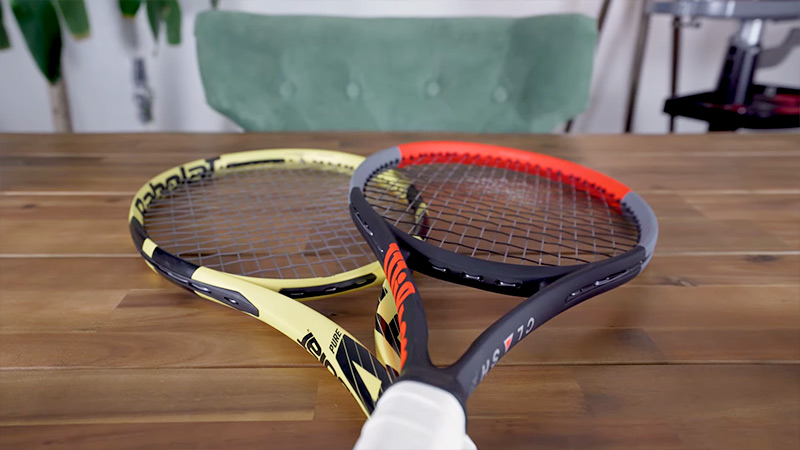
In the modern era of competitive athletics, the margin between victory and defeat is often measured in millimeters and grams.
For the dedicated tennis player, a racket is far more than a simple implement of play; it is a sophisticated piece of engineered equipment that must align perfectly with the player’s biomechanics, skill level, and strategic intent.
Whether one is an executive athlete engaging in weekend club matches or a high-performance competitor climbing the rankings, understanding the technical specifications of a racket is paramount to achieving peak performance.
The fundamental question often asked by players at all levels is whether the physical dimensions of a racket truly influence the outcome of a match. The empirical answer is an unequivocal yes.
The weight, head size, and length of a tennis racket are the primary drivers of power, maneuverability, and long-term physical health on the court.
The Dual Nature of Racket Weight: Static vs. Swing
When evaluating a racket, weight is the most immediate factor a player notices. However, in professional performance circles, weight is categorized into two distinct metrics: static weight and swing weight. Each plays a unique role in how the racket interacts with the ball and the player’s arm.
Static Weight: The Foundation of Stability
Static weight refers to the total mass of the racket as measured on a scale. This figure serves as the baseline for the racket’s potential energy and its ability to withstand the force of an incoming ball.
- Light Rackets (250g – 285g): These frames are engineered primarily for maneuverability and ease of use. For the entry-level player or those with a slower swing speed, a lighter racket allows for rapid positioning and reduces the immediate physical strain of moving the frame through the air. However, there is a significant trade-off: lighter rackets possess less mass to counteract the ball’s momentum. This often results in a higher degree of shock being transferred directly to the player’s arm upon impact, which can lead to fatigue or joint strain over time.
- Heavy Rackets (300g and above): In the hands of an advanced player, a heavier racket acts as a “heavy hammer”. The increased mass does the mechanical work of the stroke, providing inherent power and exceptional stability. Perhaps most importantly for the high-volume player, a heavy racket is superior at absorbing the shock of the ball, protecting the arm from the jarring vibrations of high-velocity play. The challenge of the heavy frame is the metabolic cost; it requires significant strength and conditioning to swing effectively throughout a multi-set match.
Swing Weight: The Dynamic Feel
While static weight tells you how heavy the racket is, swing weight describes how heavy it feels during the actual stroke. This is a function of weight distribution.
A racket with a “head-heavy” balance will feel significantly more substantial during a swing than one where the weight is concentrated in the handle.
Mastering the balance between static and swing weight is the key to finding a racket that feels like a natural extension of the arm rather than a cumbersome weight.
Head Size and the Geometry of the Sweet Spot
The surface area of the racket face, or head size, is the primary variable in the relationship between power and control. It determines the “sweet spot”—the central area of the strings that provides the most efficient energy transfer and the least amount of torque on the handle.
Oversize Frames (105 – 115 sq. in)
For those in the developmental stages of their tennis journey, oversized rackets are the gold standard. The expansive surface area provides a much larger sweet spot, which increases the probability of a “clean” hit even when the player’s timing or footwork is not yet perfected.
This forgiveness makes the game more accessible and enjoyable for new players, allowing them to maintain rallies and build confidence.
Midplus Frames (95 – 105 sq. in)
The midplus category is the most utilized segment in the industry, serving the vast majority of intermediate and advanced-intermediate players.
This size provides a sophisticated compromise, offering enough power to end points while maintaining the directional control required for strategic placement.
It is the versatile choice for the “all-court” player who needs a racket capable of performing at the net and the baseline.
Midsize Frames (85 – 95 sq. in)
Reserved for the elite professional and the advanced specialist, midsize rackets offer a “tiny” sweet spot. While this may seem like a disadvantage, it provides the player with unparalleled control.
At this level of play, the athlete provides the power through their own physical strength and technique; they require a racket that will place the ball with surgical precision. A midsize frame rewards perfect technique with total command over the ball’s trajectory.
Length and Leverage: The Physics of the Serve
While weight and head size are often the primary focus, the length of the racket is a critical factor in a player’s reach and leverage.
- Standard Length (27 inches): This is the industry benchmark and the optimal size for most players. It provides a balanced experience, offering enough reach for baseline play while remaining maneuverable enough for quick volleys at the net.
- Extended Length (27.5 – 29 inches): Longer rackets are often chosen by players looking to maximize their service game. The extra length provides additional leverage, allowing the player to hit the ball from a higher contact point and with greater tip speed, resulting in more powerful serves. The trade-off for this increased reach is a decrease in maneuverability; extended rackets can feel “sluggish” in fast-paced exchanges and are more difficult to swing quickly when the ball is hit directly at the player’s body.
Strategic Persona Mapping: Which Racket Matches Your Profile?
We must categorize equipment needs based on specific user journeys and pain points.
The Emerging Executive (Beginner)
- Profile: Learning the fundamentals, focusing on cardiovascular health and social engagement.
- Pain Point: Inconsistent contact and arm fatigue.
- Specification Goal: A light (260g-275g), oversized (110 sq. in) racket. This configuration prioritizes ease of movement and forgiveness, ensuring that the player stays engaged with the sport without the frustration of constant “shanks” or injury.
The Competitive Club Player (Intermediate)
- Profile: Playing 3-4 times a week, participating in local leagues, and developing a specific style of play (e.g., baseliner).
- Pain Point: Balancing the need for power with the desire for better ball placement.
- Specification Goal: A midplus (100 sq. in) racket with a moderate static weight (approx. 300g). This allows the player to transition into a more aggressive game while benefiting from the shock absorption of a slightly heavier frame.
The High-Performance Athlete (Advanced)
- Profile: High-velocity hitters, tournament players, and teaching professionals.
- Pain Point: Maintaining precision during high-intensity rallies.
- Specification Goal: A heavy (315g+) midplus or midsize frame. This player requires the “heavy hammer” effect to control the pace of the game and the stability to handle heavy incoming shots without the frame twisting in their hand.
Managing Physical Longevity: The Impact on Health
From a health and wellness perspective—often categorized as Your Money or Your Life (YMYL) content in digital strategy—choosing the wrong racket is not just a performance issue; it is a medical one.
Many players mistakenly believe that a lighter racket is better for a sore arm. However, as noted in the research, light rackets often pass more shock to the arm because they lack the mass to dampen the vibration of the ball.
Conversely, while a heavy racket absorbs more shock, it can lead to tendonitis if the player does not have the muscular strength to swing it correctly.
The decision must be data-driven. Players should ideally test rackets across different weight and size categories to find the “Goldilocks” zone where power, control, and arm comfort intersect.
Frequently Asked Questions
Does a heavier racket actually hit the ball harder?
Yes, due to the principles of mass and momentum. Think of a heavy racket like a heavy hammer.
While it requires more effort to get moving, once it is in motion, it transfers more energy to the ball than a lighter implement would, provided the swing speed remains comparable.
Why would anyone choose a smaller head size if it’s harder to hit?
Advanced players choose smaller head sizes (midsize) because they value control over forgiveness.
A smaller head size reduces the “trampoline effect” of the strings, allowing the player to feel exactly where the ball is on the strings and direct it with extreme accuracy.
Can I change my racket’s weight after I buy it?
While static weight can be increased by adding lead tape to the frame, it is much more difficult to decrease. This is why it is vital to select a base weight that aligns with your current physical capabilities and then fine-tune if necessary.
Is an extended-length racket better for short players?
Often, yes. An extended-length racket (up to 29 inches) provides additional reach and leverage, which can help shorter players compete more effectively on serves and wide groundstrokes. However, they must be prepared for the loss of maneuverability.
Conclusion: The Path to Mastery
In the sophisticated world of tennis, your equipment is your primary partner. The size and weight of your racket are not mere preferences; they are the architectural foundations of your game.
By aligning your racket’s static weight, swing weight, head size, and length with your specific skill level and physical needs, you position yourself for both immediate success and long-term enjoyment of the sport.
As you evaluate your next purchase, remember the core principles:
- Mass provides power and protection: Heavier rackets are the choice for stability and shock absorption.
- Surface area provides forgiveness: Larger heads help you master the sweet spot.
- Length provides leverage: Extended frames can revolutionize a serve but may hinder quick reactions.
Invest the time to understand these metrics. Consult with a professional, utilize playtest programs, and choose the specifications that empower your unique style of play. In tennis, as in any high-stakes endeavor, the right tools are the first step toward excellence.