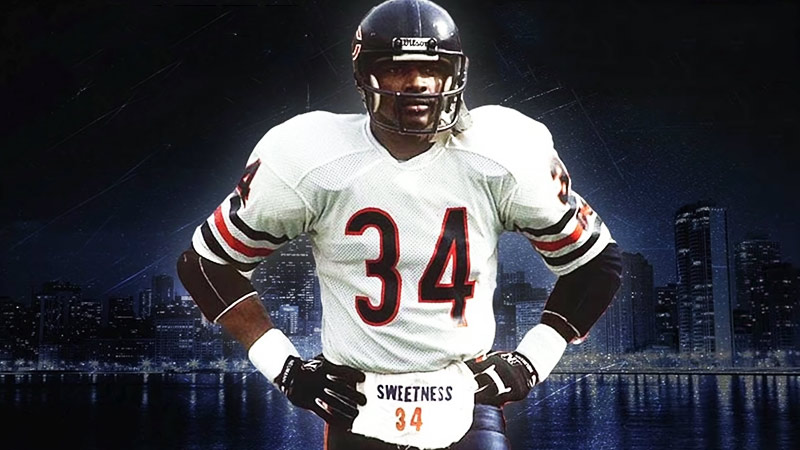
When watching a professional football game, the visual landscape is defined by pristine helmets, perfectly tailored jerseys, and highly specialized protective gear.
To the casual spectator, these uniforms represent team identity and athletic tradition. To the businesses operating behind the scenes, however, this apparel represents a highly regulated, logistically complex, and expensive category of corporate assets.
A common question among sports enthusiasts and business analysts alike is whether professional athletes are responsible for funding their own game-day attire and protective equipment. Given the multi-million-dollar contracts signed by elite competitors, it is easy to assume that players might personally manage and purchase their gear.
However, the operational reality of the league is much more aligned with standard corporate employment frameworks, where the employer bears the primary responsibility for supplying the essential tools of the trade.
The Standard Employment Framework: Equipment as a Corporate Responsibility
In any professional workplace, an employer is legally and operationally required to provide the safety equipment and specialized tools necessary for employees to perform their duties safely and effectively. Professional sports leagues operate under this same principle.
Players do not pay out of pocket for their standard game uniforms or required protective equipment.
Within the operational structure of a franchise, all costs associated with official game-day gear—including helmets, shoulder pads, leg pads, pants, and game jerseys—are fully covered by the team as an integral part of the player’s standard employment package. This arrangement serves several critical business and legal purposes:
Risk Mitigation and Workplace Safety
Professional football is an inherently high-risk sport. If players were responsible for sourcing their own protective equipment, it would introduce significant variance in gear quality and maintenance.
By centralizing the procurement of helmets and padding, franchises ensure that all equipment meets the rigorous safety standards established by governing bodies and independent testing laboratories.
This centralization protects the franchise’s most valuable balance-sheet assets: the players themselves.
Brand Uniformity and Licensing Compliance
The league operates under massive, multi-billion-dollar apparel licensing agreements.
To maintain absolute brand consistency across television broadcasts, digital media, and retail merchandise, every element of a player’s on-field appearance must be meticulously standardized.
Centralized team procurement ensures that every jersey, pant, and helmet matches the exact corporate color codes, fabric specifications, and sponsor placements required by league partners.
Logistical Efficiency
Managing the equipment needs of a 53-man active roster, plus practice squads and training camp invitees, requires a dedicated, full-time staff.
Equipment managers and their assistants operate a continuous cycle of fitting, cleaning, repairing, and preparing gear.
Sourcing this material through corporate channels allows teams to leverage bulk purchasing agreements and maintain direct lines of communication with elite manufacturers.
The Financial Exceptions: When the Athlete Bears the Cost
While the baseline professional needs of an athlete are fully supplied by the franchise, the boundary between corporate responsibility and personal expense becomes distinct in specific scenarios.
There are three primary areas where players must personally navigate the financial implications of their on-field gear.
The True Cost of the Post-Game Jersey Swap
One of the most visible traditions in modern professional sports is the post-game jersey exchange. At the conclusion of a matchup, opposing players frequently meet at midfield to sign and swap their game-worn jerseys as a gesture of mutual respect.
While this appears to be an informal, personal interaction, it carries a direct business consequence. Jerseys are considered corporate property and carefully tracked assets within a team’s inventory.
When a player decides to participate in a jersey exchange, the franchise typically charges them a fee ranging from $350 to $500 per jersey.
This out-of-pocket charge is designed to cover:
- Replacement and Manufacturing Costs: Each game jersey is a highly engineered piece of athletic apparel, featuring custom tailoring, moisture-wicking fabrics, and reinforced stitching designed to withstand extreme physical impact.
- Customization Labor: Replacing a swapped jersey requires the equipment staff to custom-prepare a new asset, which involves heat-pressing or sewing the player’s specific nameplate, numbers, and any captaincy or commemorative patches.
- Inventory Control: By imposing a financial cost, franchises discourage reckless depletion of team assets while allowing players the freedom to build personal collections or participate in charitable auctions.
Regulatory Penalties: Uniform and Branding Violations
The league maintains a highly restrictive uniform policy that dictates everything from the height of a player’s socks to the visibility of corporate logos. These rules are established to protect the exclusive commercial rights of official league sponsors who pay hundreds of millions of dollars for on-field exposure.
If a player chooses to alter their uniform or wear unauthorized branded gear on the field, they are personally and solely responsible for paying the resulting financial fines.
These violations typically fall into several categories:
- Unsanctioned Footwear or Accessories: While players have some flexibility in choosing cleat models from approved brands, wearing unapproved custom designs, unauthorized corporate logos, or non-compliant color schemes during a game triggers automatic financial penalties.
- Improper Assembly: Failing to wear socks at the mandated height, exposing skin between the pants and socks, or altering the jersey fit in a way that obscures league or sponsor branding is viewed as a direct violation of broadcast standards.
- Unauthorized Commercial Messaging: Wearing headbands, undershirts, or towels featuring unapproved corporate logos or personal messaging during pre-game warmups or active play is met with strict disciplinary action. Because these actions bypass the league’s official commercial partnerships, the financial consequences are passed directly to the employee rather than being absorbed by the team.
Custom Performance Personalization: Extra and Specialized Gear
Every professional athlete has unique physical preferences and biomechanical needs. While franchises fully supply the standard, high-performance equipment necessary to play the game, players occasionally desire specialized, retail-level personal gear that falls outside the standard team-allotment guidelines.
In these instances, specialized or highly customized personal gear outside the standard team-issued inventory may occasionally be paid for out of pocket by the player.
This can include custom-molded mouthguards, specialized therapeutic compression wear, or niche training accessories that are not part of the standard locker room supply.
However, even when a player purchases this gear independently, it must still be vetted and approved by the team’s medical and equipment staff to ensure it meets safety guidelines and does not violate league-wide apparel contracts.
The Supply Chain and Logistics of a Franchise Equipment Room
To fully appreciate why the uniform ecosystem is structured this way, it is helpful to analyze the sheer scale of a professional equipment operation.
An elite equipment room functions like a high-precision corporate logistics hub, managing thousands of individual stock-keeping units (SKUs) over the course of a multi-month season.
+-------------------------------------------------------------------------+
|                       FRANCHISE EQUIPMENT ROOM
+-------------------------------------------------------------------------+
                                     |
         +---------------------------+---------------------------+
         |                                                       |
         v                                                       v
+----------------------------------+           +----------------------------------+
|      STANDARD TEAM ISSUE         |           |       ATHLETE INDEPENDENT        |
|  (Fully Covered by Franchise)    |           |          RESPONSIBILITY          |
+----------------------------------+           +----------------------------------+
|  * Certified Helmets             |           |  * Post-Game Jersey Swaps        |
|  * Impact-Absorbing Shoulder Pads|           |    ($350 - $500 per unit)        |
|  * Tailored Game & Practice Pants|           |  * League Apparel Fines          |
|  * Official Game & Practice      |           |    (Non-compliant brands/cuts)   |
|    Jerseys                       |           |  * Non-Standard Retail Extras    |
|  * Baseline Protective Inserts   |           |    (Specialized accessories)     |
+----------------------------------+           +----------------------------------+
During a typical week, the equipment staff must prepare for various environmental conditions, travel logistics, and practice schedules.
The inventory required for a single away game is massive, requiring specialized trunks, custom mobile racks, and climate-controlled transport vehicles.
Because the physical demands of the sport cause rapid degradation of fabrics and protective elements, the equipment department must maintain constant quality control.
This continuous cycle of inspection, maintenance, and replacement is financed entirely at the franchise level to preserve operational continuity.
When a helmet sustains an impact that could compromise its structural integrity, it is immediately decommissioned and sent to the manufacturer for re-certification or recycling, with the franchise absorbing the replacement cost to maintain a flawless safety standard.
Conclusion: The Intersecting Economics of Sports Apparel
The financial framework governing professional sports uniforms is a clear reflection of modern corporate organization.
Rather than viewing a uniform as a simple personal item, franchises treat on-field gear as critical physical assets that directly impact safety, corporate liability, and brand equity.
By fully funding and managing standard protective equipment and uniforms, sports franchises protect their investments, minimize legal risks, and maintain the absolute visual consistency required by global broadcast standards.
Meanwhile, by passing specific costs—such as jersey swap fees and uniform alteration fines—directly to the players, the system successfully balances personal player expression with strict corporate accountability.
This elegant economic compromise ensures that the business of sports runs just as smoothly as the plays executed on the field.