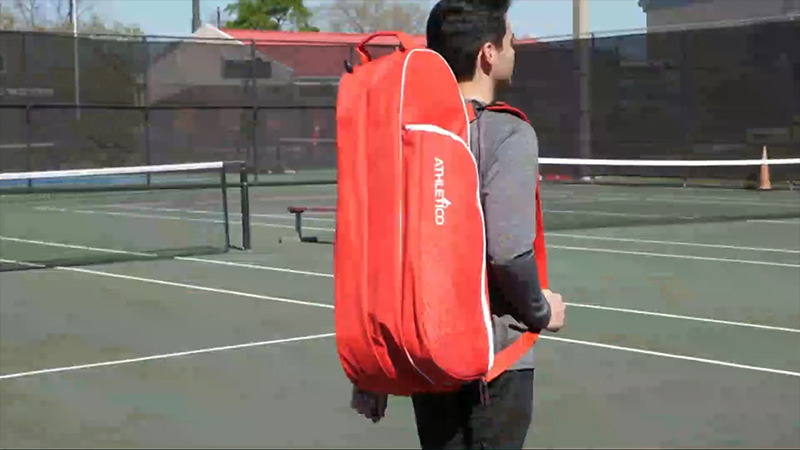
The transition from a casual interest in tennis to a committed practice often begins with a single question: Do I really need a dedicated bag for my racket? For many, a standard gym duffel or a backpack seems perfectly adequate during those first few clinics.
However, as your court time increases and your equipment evolves, the limitations of “making do” become apparent.
Choosing the right equipment is about more than aesthetics; it is about protecting an investment and streamlining your performance.
Whether you are a weekend warrior or a competitive league player, understanding the functional architecture of a tennis-specific bag is essential for maintaining your gear and your sanity on the court.
The Fundamental Question: Necessity vs. Convenience
In the strictest sense, you do not need a specialized bag to play tennis. Many players successfully use motorbike backpacks, old gym duffels, or even simple plastic grocery bags to transport their gear.
If you hit the court once a month with a single racket and a can of balls, a standard backpack is often sufficient.
However, for those playing consistently, a dedicated bag becomes a matter of practical necessity. A tennis racket is a precision instrument. High-quality frames and modern strings represent a significant financial investment, often exceeding several hundred dollars per unit.
Placing a $300 racket into a bag where it can rub against shoes, keys, or abrasive gear risks cosmetic damage and structural compromise. Specialized bags provide dedicated, padded compartments that isolate the racket, ensuring it remains “fresh and clean” for every session.
The Technical Case for Protection
Beyond simple organization, specialized bags offer technical protections that general-purpose luggage cannot match.
1. String Tension and Thermal Insulation
One of the most critical features found in premium bags is thermal insulation. Modern tennis strings, particularly polyesters and natural guts, are highly sensitive to temperature fluctuations.
Leaving a racket in a car or exposing it to direct sunlight on a hot day can cause the strings to lose tension or go “wonky”. Thermal linings act as a climate-controlled barrier, ensuring that your strings maintain their playing characteristics regardless of the weather.
2. Structural Safety and Enclosure
A common frustration with generic backpacks is that the racket handles often stick out of the top. This leaves the grip exposed to the elements, sweat, and dirt.
Furthermore, carrying rackets with exposed handles in a backpack can be hazardous; there are numerous cautionary tales of players accidentally snapping a racket handle by closing a car door on it.
A traditional racket bag fully encloses the frame and handle, providing a total shield against scuffs and weather damage.
3. Hygiene and Ventilation
Tennis is a high-exertion sport that produces damp clothes and dirty shoes. Placing a pair of clay-covered shoes into the same compartment as your clean spare t-shirt is a recipe for a mess.
Specialized bags frequently feature ventilated shoe “tunnels” or compartments. This allows air to circulate, reducing odor buildup and keeping your clean gear isolated from the “grime” of the court.
Decoding the “Pack” System: Finding Your Ideal Size
Tennis bags are typically categorized by the number of rackets they can hold, commonly referred to as the “pack” system.
It is important to note that these numbers often represent the total volume of the bag rather than a strict requirement for how many rackets you should carry.
- The 3-Pack Bag: These are the most compact options, designed for players who want to carry one or two rackets plus the absolute essentials: balls, a water bottle, and perhaps a towel. They are perfect for those who prefer to travel light.
- The 6-Pack Bag: Widely considered the “sweet spot” for most regular players. A 6-pack bag typically features two main compartments. This allows you to store two or three rackets in one side while using the other side for shoes, balls, and a change of clothes. It provides enough room to be prepared without being overly cumbersome.
- The 9-Pack to 15-Pack Bags: These “tour-style” bags are designed for competitive players and those who travel for tournaments. While very few amateurs carry 15 rackets, the massive volume is necessary for holding backup frames, multiple towels, spare outfits, first aid kits, and extensive hydration supplies. If you find yourself staying at the courts for four or five hours at a time, this extra space is invaluable.
Style and Form Factor: Choosing Your Carriage
How you get to the court should influence the style of bag you select.
- Backpacks: Ideal for players who commute via bicycle, motorcycle, or public transit. Modern tennis backpacks are highly underrated, often featuring padded sections that can double as laptop sleeves and bottom compartments for wet clothes.
- Traditional Racket Bags: These are shaped like the rackets themselves and typically feature backpack-style straps for easy carrying. They offer the highest level of protection and organization for multiple frames.
- Duffles and Totes: For the style-conscious player, high-end duffles and totes offer a more “fashion-forward” look. These are excellent for club environments where you might transition directly from the court to a social setting, though they may lack the specialized thermal protection of traditional bags.
The Reality of the Public Court Player
If you primarily play on public courts, your bag needs to function as a mobile base of operations. Unlike private clubs, public parks rarely offer amenities like water fountains, shade, or equipment shops.
Seasoned public court players often find that “bigger is better” when it comes to bag size. You may need to carry a large vacuum-insulated water bottle or even a 5-gallon jug to stay hydrated during a long session.
Additionally, your bag may need to house non-standard items, such as a pair of vise grips to tighten a sagging court net or a first aid kit for minor scrapes. The hotter the weather and the more remote the court, the more “survival gear” you will find yourself needing.
Overcoming “Gear Anxiety”
A common barrier for new players is the fear of looking like a “dork” by showing up with a professional-level bag. There is a lingering social stigma that high-end gear should be reserved for high-end talent.
However, most experienced players will tell you to ignore this sentiment. Practicality should always trump perception. If you need to carry two rackets, shoes, and water, a dedicated bag is simply the most efficient tool for the job.
If you are concerned about drawing too much attention, look for “subtle” brands that prioritize durable materials over flashy logos and neon colors.
As one community member noted, it is far better to have the space and not need it than to be frustrated by a bag that is too small for your evolving needs.
Strategic Investment: Why “Go Big” Early?
For many, the bag is the most cost-effective part of the tennis lifestyle. When compared to the price of rackets, monthly club memberships, or the recurring cost of strings and balls, a high-quality bag is a one-time investment that can last for years.
If you are committed to the sport, consider “going bigger early”. You might only have two rackets now, but as you improve, you will likely add a third or fourth to your rotation to ensure you aren’t stranded if a string breaks mid-match.
Starting with a 6-pack or 9-pack bag prevents you from having to purchase a new one just a few months into your journey.
Enhanced FAQ
Q: Can I use a regular backpack if I only have one racket?
A: Yes, but be mindful of the handle. Exposed handles are vulnerable to damage and can make the bag difficult to zip closed, leading to items falling out during transit.
Q: Do I really need an insulated compartment?
A: If you live in a region with extreme heat or cold, insulation is highly recommended to protect your string tension. It also keeps your water and snacks cool during long matches.
Q: What is the most important feature to look for?
A: Beyond racket protection, look for a bag with padded shoulder straps. As you fill the bag with water, balls, and shoes, it can become heavy; good straps will distribute that weight and prevent shoulder strain.
Q: Is it okay to buy a used bag?
A: Absolutely. Many high-quality bags can be found at thrift stores or secondhand markets for a fraction of their original price. Just ensure the zippers and thermal linings are still intact.
Conclusion: The Final Verdict
Do you need a tennis bag? Technically, no. But will a tennis bag make your life easier, protect your expensive equipment, and help you stay organized on the court? Indisputably, yes.
The right bag serves as a dedicated home for your hobby. It lives in your garage or closet, pre-packed and ready to go, so you can grab it and hit the court at a moment’s notice.
By isolating your rackets, venting your shoes, and protecting your strings from the heat, you ensure that your gear is always in peak condition for the next game.
Evaluate your current “haul”—the rackets, the water, the extra shirts, and the snacks. If your current bag is bulging at the seams or your rackets are clattering together unprotected, it is time to upgrade.
Start with a size that offers a little more room than you think you need today; your future self will thank you when you’re fully prepared for a grueling three-set match in the midday sun.