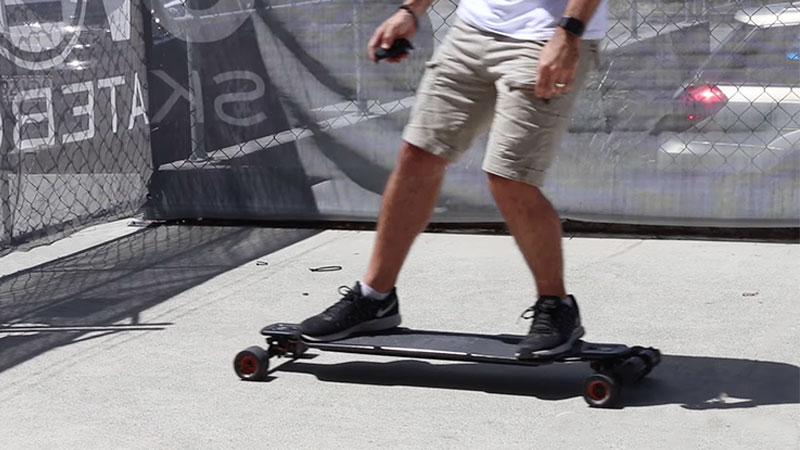
If you are considering transitioning from a traditional longboard to an electric version, or if you are simply a tech enthusiast looking at the latest in personal electric vehicles (PEVs), one of the first questions that likely comes to mind is: “How do I stop this thing?”
For decades, skateboarders relied on “foot braking”—literally dragging a shoe on the pavement—or performing technical slides to shed speed.
However, with electric skateboards (e-boards) capable of reaching speeds upwards of 25–30 mph, the stakes are much higher.
The short answer is yes, almost all modern electric skateboards are equipped with dedicated braking systems.
Unlike their analog counterparts, these boards provide the rider with active, motorized control over their deceleration. This article explores the mechanics, safety considerations, and best practices for using electric skateboard brakes.
The Core Technology: How Electric Skateboard Brakes Work?
The defining feature of an electric skateboard’s braking system is its integration with the board’s drivetrain. Most modern systems are controlled via a handheld wireless remote.
This remote acts as the “brain” of your ride, communicating your inputs to the Electronic Speed Controller (ESC) inside the board.
The Remote Interface
Operating the brakes is designed to be intuitive for the rider. On the majority of consumer models, the remote features a thumbwheel or a trigger:
- Acceleration: To speed up, the user typically pulls the trigger or rolls the wheel backward (depending on the specific remote design).
- Braking: To slow down, the user pushes the trigger or wheel forward.
This setup allows for controlled, safe, and gradual deceleration, which is a significant upgrade over the “all-or-nothing” nature of manual braking methods. By applying pressure to the remote, you can modulate exactly how much stopping power you need, whether you are coming to a gentle halt at a stop sign or need to shed speed quickly for a sharp turn.
Types of Braking Systems
While the user interface remains similar across most brands, the technology happening under the deck can vary.
1. Regenerative Braking
This is the most common type of braking system found in the industry today. Regenerative braking is an ingenious piece of engineering where the motor acts as a generator.
When you engage the brakes on the remote, the ESC reverses the flow of electricity. Instead of the battery sending power to turn the motors, the momentum of the spinning wheels turns the motors, which creates resistance.
This resistance slows the board down. The energy generated during this process is then fed back into the battery, slightly extending your range.
2. Mechanical Friction Brakes
In some specific cases, boards may use mechanical friction brakes. These are more common on DIY builds or heavy-duty off-road boards. These function more like a traditional bicycle or car brake, where a physical pad or disc creates friction against a moving part to stop the board.
The Importance of Controlled Descent
One of the most dangerous aspects of traditional longboarding is “bombing” a hill. Once you reach a certain speed, stopping becomes nearly impossible without advanced sliding skills.
Electric skateboards change this dynamic entirely. The inclusion of an electronic braking system allows for controlled and safe deceleration, specifically when going downhill.
Rather than surrendering to gravity, a rider can use the remote to maintain a constant, safe speed throughout the entire descent.
This makes electric boards much more accessible to commuters and hobbyists who may not have the years of experience required to master high-speed manual braking.
Safety Warnings: When Brakes Might Fail
While electronic brakes are highly reliable, they are not infallible. Users must be aware of two specific technical limitations that can lead to “brake failure.”
1. The “Full Battery” Problem
Because most boards use regenerative braking, they need a place to send the energy they generate. If your battery is already fully charged (100%), the system may have no way to dump the excess energy created by braking.
In this scenario, many ESCs will automatically cut the brakes to protect the battery from overcharging and catching fire. If you live at the top of a hill, it is often recommended not to charge your board to 100% so that you have “room” in the battery to use your brakes on the way down.
2. Overheating Issues
Electronic components generate heat. If you are riding aggressively or using the brakes continuously on a very long, steep descent, the system may overheat. If the ESC or the motors reach a critical temperature, the braking performance may diminish or shut off entirely as a safety fail-safe.
3. Steep Inclines
It is also important to note that while brakes are effective, they have a limit. On extremely steep hills, the electronic resistance may not be enough to bring a heavy rider to a complete stop. Always scout your route and ensure the hills are within your board’s rated specifications.
A Guide for New Riders: How to Practice
Because the feeling of electronic deceleration is different from any other sport, there is a learning curve involved. It is critically important to practice using the brakes in a controlled environment, such as an empty parking lot or a flat, quiet street.
Tips for Mastering the Stop:
- Get Used to the Force: The “braking curve” (how hard the brakes kick in) varies between boards. Some are jerky, while others are smooth. You need to get used to the specific deceleration force of your model so you aren’t thrown off the front of the board.
- Brace Your Body: When braking, lean your weight back and lower your center of gravity. This counteracts the forward inertia that occurs when the motors slow the wheels.
- Test the “Dead Man’s” Scenario: Practice what you would do if the remote disconnected or the battery died. Knowing how to foot-brake manually is still a vital safety skill for any e-skateboarder.
The Evolutionary Leap in Safety
The addition of brakes has transformed the skateboard from a toy or a niche extreme sports tool into a legitimate mode of transportation.
By providing the rider with a handheld interface to manage speed, manufacturers have significantly lowered the barrier to entry.
Regenerative technology not only makes the ride safer but also more efficient by recycling energy.
However, as with any motorized vehicle, the safety of the ride ultimately depends on the rider’s knowledge of their equipment’s limitations—specifically regarding battery levels and heat management.