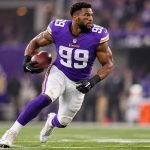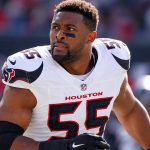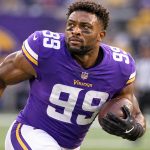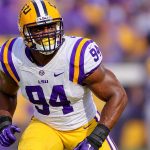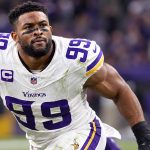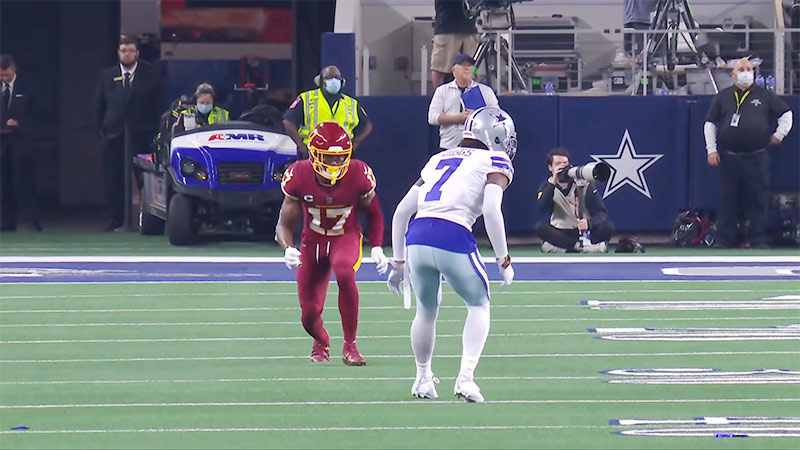
When fans watch Trevon Diggs track an airborne football, leap in front of an intended receiver, and sprint down the sideline with an interception, they are witnessing a masterclass in spatial awareness. His movements look effortless, almost supernatural.
But this unique skill set is no accident. Long before he was locking down elite pass-catchers on Sundays, Diggs was the one running the routes.
Did Trevon Diggs use to be a wide receiver? Yes, he did. In fact, his journey from a high school star wideout to a collegiate pass-catcher and, ultimately, to an NFL All-Pro cornerback is one of the most fascinating developmental arcs in modern football history.
High School Dominance: Making a Name as a Wideout
Long before the national recruiting spotlight found him, Trevon Diggs was carving up defenses in the Maryland high school football scene. Initially attending Thomas S. Wootton High School in Rockville, Maryland, Diggs later transferred to The Avalon School in Wheaton to play alongside his high school coach.
It was at Avalon where his offensive output exploded. Operating primarily as an explosive wide receiver and return specialist, Diggs showcased elite hands, sudden acceleration, and an uncanny ability to high-point contested balls.
Junior Season: Hauled in 78 receptions for 1,008 yards and 15 touchdowns.
Senior Season: Followed up his dominant junior campaign with 1,269 receiving yards, earning back-to-back All-Washington, D.C. Metro selections.
Rated as a consensus four-star recruit and one of the top wide receiver prospects in the country, Diggs had clear aspirations. He wanted to follow the footsteps of his older brother, Stefon Diggs, making a living catching passes in the NFL.
When it came time to choose a college program, he committed to the University of Alabama with every intention of starring on the offensive side of the ball under legendary head coach Nick Saban.
The Crimson Tide Beginnings: Catching Passes in Tuscaloosa
Arriving in Tuscaloosa in 2016, Diggs stepped onto a powerhouse Alabama roster as a true freshman wide receiver. In his debut collegiate season, he saw immediate, albeit limited, action on offense and special teams.
He caught 11 passes for 88 yards and a touchdown, while also contributing as a kick returner. By all accounts, he possessed the athletic traits required to develop into a reliable contributor in the SEC. He was fast, fluid, and fiercely competitive.
However, championship-level college football programs are built on identifying where a player’s absolute maximum ceiling lies—not just for the team’s immediate success, but for the athlete’s professional future. Following the conclusion of that 2016 freshman season, Nick Saban called a meeting that would change the trajectory of Diggs’ football life forever.
The Hard Conversation: Nick Saban’s Bold Vision
When Nick Saban evaluated the roster ahead of the 2017 season, he saw a pressing team need at cornerback, but he also saw something deeper in Diggs.
Saban recognized that Diggs’ rare combination of length, fluid hips, and extraordinary ball skills could translate into elite defensive production.
The head coach approached Diggs with a proposition: move across the line of scrimmage and transition permanently to cornerback.
For a young player whose identity was wrapped up in catching passes—and who wanted to emulate his older brother’s offensive success—the news was devastating. Diggs candidly admitted years later that the initial request broke his heart.
“I was hurt at first, honestly. I called my brother. I was crying,” Diggs recalled in interviews regarding the position switch.
Looking for comfort, he reached out to his brother Stefon, who was already playing wide receiver in the NFL. But instead of coddling him, Stefon delivered a reality check: “He’s not someone to be like, ‘Oh, it’s OK.’ He be like, ‘Nah, let’s go. Now we got to go to work.’… So that’s basically what his message to me was, and I just sucked it up and got to work.”
Mastering the Flip Side: Evolution at Alabama
Trusting his coaches and channeling his competitive drive, Diggs threw himself into mastering the nuances of playing defensive back. The transition did not happen overnight.
Learning how to backpedal, flip your hips against elite vertical speedsters, and defend without drawing pass interference flags requires an entirely different mental and physical wiring.
Slowly but surely, his offensive background became his greatest competitive advantage. Because Diggs spent years running routes, understanding route trees, and reading coverages from a receiver’s perspective, he could anticipate what the man across from him was going to do before it happened.
2017–2018: Gradual integration into the defensive rotation, contributing primarily as a sub-package defender and special teams standout, capturing a CFP National Championship along the way.
2019 Breakout: Fully entrenched as a lockdown starter, earning First-Team All-SEC and Third-Team All-American honors after recording 3 interceptions and 11 pass breakups.
Nick Saban’s projection proved entirely accurate. Not only did the position change maximize Diggs’ utility for the Crimson Tide, but it completely unlocked his professional potential.
Transitioning to the NFL: The Dallas Cowboys and Beyond
Recognizing his rare blend of size (6-foot-1, 202 pounds) and ball-tracking mastery, the Dallas Cowboys selected Trevon Diggs in the second round (51st overall) of the 2020 NFL Draft.
It didn’t take long for him to translate his college traits to the professional level.
Rookie Campaign (2020): Started 11 games, intercepting 3 passes and defending 14 total passes despite missing time due to injury.
All-Pro Season (2021): Put together one of the most dynamic defensive seasons of the modern era, leading the NFL with 11 interceptions, returning two for touchdowns, and earning First-Team All-Pro and Pro Bowl honors.
His background as a wide receiver is precisely what makes him such a unique ballhawk in the secondary. When quarterbacks test him downfield, Diggs doesn’t just play the receiver’s hands; he attacks the football as if he were the intended target.
Conclusion
The evolution of Trevon Diggs stands as a testament to elite adaptability and coaching foresight.
What began as a tearful, reluctant positional shift in a Tuscaloosa meeting room transformed into the catalyst for an elite career.
By taking his deep, granular understanding of route-running and weaponizing it on the defensive side of the ball, Diggs carved out a path from high school pass-catcher to one of the most feared defensive playmakers in professional football.