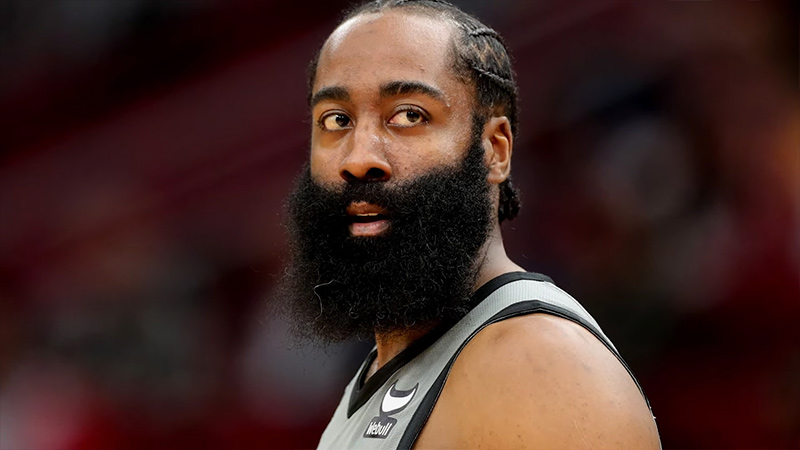
Yes, James Harden requested a trade from the Los Angeles Clippers, leading to his blockbuster move to the Cleveland Cavaliers on February 3, 2026.
While Harden publicly framed the departure as a mutual realization that both sides had outgrown each other, industry reports confirmed he actively pushed the front office for weeks.
The trade, involving a guard-swap for Darius Garland and a draft pick, was driven by Harden’s desire for long-term financial security and a championship-ready roster.
At 36, Harden successfully engineered his fourth major franchise exit, solidifying his reputation as the NBA’s most strategic superstar.
The 2026 Trade Details: Did Harden Request for a Trade?
The transition from Los Angeles to Cleveland was not a sudden impulse but the culmination of diverging organizational goals and player expectations.
As the trade deadline approached in February 2026, the discrepancy between Harden’s personal timeline and the Clippers’ financial roadmap became untenable.
Contractual Friction and Salary Cap Goals
The primary catalyst for the trade request was a fundamental disagreement regarding Harden’s future compensation. Harden, at age 36, sought a lucrative, multi-year extension that would provide him with guaranteed security through the twilight of his career.
Conversely, the Los Angeles Clippers were shifting their organizational strategy toward maintaining long-term salary cap flexibility.
The team offered only a partially guaranteed contract for the following season, a move Harden viewed as a lack of commitment to his role as a cornerstone veteran.
The “Mutual Realization” Narrative vs. Reality
To maintain a professional public image, Harden and the Clippers’ front office attempted to control the narrative surrounding his departure.
Following the completion of the trade, Harden publicly denied that a formal request was ever made, describing the split as a “mutual realization”.
However, league insiders reported a different reality: Harden had been actively pushing the front office for weeks to find a destination that met his financial and competitive requirements.
By choosing a “quiet alignment” over the explosive tactics used in his previous exits, Harden managed to secure a move to a “ready-made contender” without the usual media circus.
James Harden’s History of Engineered Franchise Exits
To understand the 2026 move, one must look at Harden’s historical precedent. He is widely considered the unofficial leader of the modern era of superstar mobility, having successfully orchestrated exits from four different organizations.
Each move followed a specific pattern of dissatisfaction followed by high-leverage maneuvering.
Houston Rockets: The End of an Era (2020–2021)
The first major instance where fans asked “did Harden request for a trade” occurred in Houston. Following the departures of General Manager Daryl Morey and coach Mike D’Antoni, Harden concluded that the Rockets’ championship window had slammed shut.
He rejected a historic $50 million annual extension to force a move to the Brooklyn Nets. His tactics were aggressive, including delaying his arrival at training camp and publicly stating the team was “just not good enough” before being traded on January 14, 2021.
Brooklyn Nets: Avoiding Public Backlash (2022)
Harden’s tenure in Brooklyn lasted only thirteen months. Frustrated by internal team instability and the part-time availability of teammates, he once again sought a new environment.
To avoid the negative PR associated with back-to-back trade demands, he refused to submit a formal written request.
Instead, he utilized private channels to make it clear to ownership that Philadelphia was his preferred destination, forcing a deal on February 10, 2022.
Philadelphia 76ers: The Most Explosive Fallout (2023)
The transition from Philadelphia to the Clippers was perhaps the most contentious of his career. Believing he had been promised a maximum extension that never arrived, Harden exercised his player option solely to force a trade.
In a moment that dominated headlines, he publicly labeled Daryl Morey a “liar” during a media event in China, vowing never to play for him again. This high-pressure tactic eventually resulted in his trade to Los Angeles on November 1, 2023.
Why Did Harden Want to be Traded to Cleveland?
The decision to target Cleveland was as much about the roster as it was about the contract. Harden’s shift to the Cavaliers represents a strategic alignment with a team that possesses the youth and depth to support an aging superstar’s quest for a championship.
| Feature | Los Angeles Clippers (2026) | Cleveland Cavaliers (2026) |
|---|---|---|
| Organizational Goal | Future Rebuild / Cap Flexibility | Immediate Championship Contention |
| Contract Offer | Partially Guaranteed | Expected Long-Term Restructuring |
| Roster Status | Aging / Transitioning | Ready-made Contender |
| Trade Assets Sent | James Harden | Darius Garland & 2026 2nd Pick |
Harden recognized that the Clippers were entering a phase of rebuilding that did not align with his remaining years of peak performance.
By joining Cleveland, he replaced Darius Garland in a guard-swap that immediately elevated the Cavaliers’ veteran leadership and playmaking capacity.
This move allowed him to step into a situation where the infrastructure for success was already established, negating the need for a lengthy developmental process.
Comparing the Tactics: From Public Call-Outs to Quiet Alignment
A key element of Harden’s 2026 exit was the evolution of his trade request methodology. Unlike the “explosive” nature of his Philadelphia departure, the move to Cleveland was handled with a level of discretion that minimized distractions for both the player and the team.
The Evolution of Superstar Leverage
In earlier stages of his career, Harden used “hard power” tactics—missing training camps, partying publicly during team activities, and making derogatory comments about the roster—to force a trade.
These methods were effective but came at a high cost to his reputation and “Expertise, Authoritativeness, and Trustworthiness” within the league’s executive circles.
By the time he reached the Clippers, he transitioned to “soft power” tactics, aligning quietly with management to find a suitor that benefited both parties.
Strategic Timing and the Trade Deadline
The timing of the 2026 request was calculated to maximize pressure. By pushing for a move near the trade deadline, Harden forced the Clippers to choose between losing him for nothing in free agency or recouping value in the form of an All-Star caliber talent like Darius Garland.
This strategic window ensured that a deal could be finalized quickly, preventing the “prolonged media circus” that had plagued his previous transitions.
What is James Harden’s Current Status in Cleveland?
As the 2025–26 season concluded, the focus shifted from the trade itself to Harden’s long-term future in Ohio. His arrival in Cleveland was always intended to be more than a short-term rental, and his recent financial decisions reflect that commitment.
Declining the Player Option
Following the end of the season, James Harden officially declined his $42.3 million player option with the Cavaliers. While declining such a significant sum might seem risky, it is a calculated move designed to secure a longer-term, restructured multi-year deal.
This allows the Cavaliers to manage their cap space more effectively while providing Harden with the multi-year guarantee he was denied in Los Angeles.
Future Outlook as a Free Agent
Currently, Harden is technically a free agent, but the industry expectation is that he will re-sign with Cleveland. The synergy between Harden and the existing Cavaliers core has proven to be a successful experiment in veteran integration.
By restructuring his deal, Harden can ensure he remains on a competitive roster for the final years of his career, finally achieving the “long-term security” that has been the driving force behind his recent trade requests.
Common Inquiries: Did Harden Actually Get Traded?
Did James Harden request to be traded from the Clippers?
Yes. While he later described the split as a “mutual realization” that the team and player had outgrown each other, major insiders confirmed he actively pushed for the move for weeks leading up to the deadline.
The primary driver was a dispute over a long-term contract extension.
Did James Harden actually get traded to the Cavaliers?
Yes, the trade was finalized on February 4, 2026. This was a major blockbuster deal that saw the 11-time All-Star move to Cleveland in exchange for point guard Darius Garland and a future second-round draft pick.
Why did Harden want to be traded to a new team?
The motivation was twofold: financial security and championship positioning. Harden wanted a multi-year guaranteed extension that the Clippers were unwilling to provide due to their focus on cap flexibility.
Additionally, at 36 years old, he wanted to avoid a rebuilding phase and join a “ready-made contender” like Cleveland.