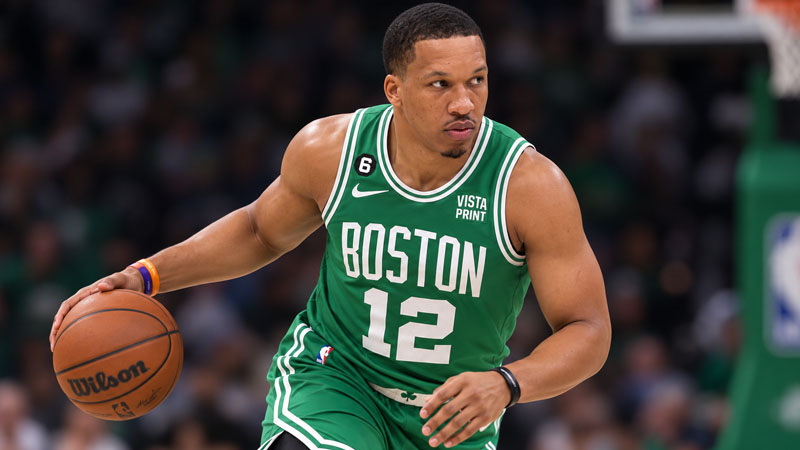
No, NBA player Grant Williams did not go to Harvard. He chose the University of Tennessee to balance elite athletics with a strategic three-year graduation plan.
While he received offers from Harvard, Yale, and Princeton, he prioritized playing time and scholarship opportunities in the SEC. Williams avoided the Ivy League’s rigid engineering curriculum to pursue a Bachelor of Science in Business Administration.
By completing his Supply Chain Management degree in record time, he secured his academic future before being drafted by the Boston Celtics in 2019. This calculated path optimized his professional basketball trajectory and academic goals.
Grant Williams Academic Background and Elite Recruiting Offers
The narrative surrounding Grant Williams often focuses on his intellect, which is deeply rooted in his family history and his performance at Providence Day School.
| Category | Details |
|---|---|
| Family Influence | Raised in an academic household; mother is an electrical engineer for NASA. |
| High School Record | Standout student-athlete at Providence Day School with a high GPA. |
| Extracurriculars | Well-rounded portfolio including singing a solo in a school musical. |
| Ivy League Offers | Received formal recruitment offers from Harvard, Yale, and Princeton. |
Williams was the definition of a “student-athlete” who had the luxury of choosing between the highest tiers of American education and high-level collegiate sports. His coaches and family initially viewed the Ivy League as an essential “security blanket” for his future.
Why Did Grant Williams Choose Tennessee Over Harvard?
Choosing a college is a multifaceted decision, but for Williams, it came down to a strategic analysis of his future in both business and basketball.
The Roster Depth and Position Crunch at Harvard
One of the primary reasons Williams moved away from Harvard was the existing roster structure. During his recruitment cycle, Harvard had already secured six other commits. Critically, four of those players occupied the exact same position as Williams.
He correctly identified that a crowded frontcourt would limit his playing time, which is the most vital resource for any player hoping to develop into a professional.
The Lack of Athletic Scholarships in the Ivy League
A practical hurdle that often goes unmentioned in the “prestige” debate is the financial structure of the Ivy League. Unlike the University of Tennessee and other SEC schools, Ivy League institutions do not offer athletic scholarships.
While financial aid is available, the standard athletic scholarship provides a level of coverage and support that aligns better with the life of a dedicated Division I athlete.
Academic Major Restrictions and Rigidity
Williams had a strong desire to major in engineering, a field his mother excelled in. However, the engineering curriculum at an Ivy League school is notoriously rigid.
Williams realized that balancing a high-level engineering workload with the travel and training schedule of a Division I basketball player would make it nearly impossible to graduate early.
Tennessee offered the flexibility he needed to pursue a high-value business degree on an accelerated timeline.
Understanding the Grant Williams Degree and Accelerated Education
The decision to attend the University of Tennessee was not a move away from academics, but rather a move toward a more efficient educational model.
The Bachelor of Science in Business Administration
At Tennessee, Williams pursued a Bachelor of Science in Business Administration. He chose to major in Supply Chain Management and added a minor in Marketing.
This choice of major was highly strategic, as Supply Chain Management is a robust, data-driven field that offered significant professional upside while allowing for a more manageable schedule than a traditional engineering degree.
The Famous Three-Year Graduation Plan
Perhaps the most impressive aspect of his tenure with the Tennessee Volunteers was his speed of completion. Williams managed to finish his entire degree program in just three years, spanning from 2016 to 2019.
This allowed him to enter the 2019 NBA Draft with a completed degree in hand, providing him the “security blanket” his family desired without sacrificing his professional basketball timeline.
How the Tennessee Volunteers Prepared Him for the NBA
The athletic component of Williams’ decision was centered on the quality of competition he would face on a nightly basis.
| Feature | Tennessee (SEC) Advantage |
|---|---|
| Competition Level | Faced elite, high-major talent in the Southeastern Conference (SEC). |
| NBA Exposure | Regular nationally televised games and matchups against future NBA stars. |
| Player Development | Focused coaching staff that helped him become a back-to-back SEC Player of the Year. |
| Draft Readiness | Entered the 2019 NBA Draft as a polished, experienced prospect. |
By choosing the SEC over the Ivy League, Williams was able to test his physical and technical limits against the best players in the country. This visibility was crucial in his journey to becoming a first-round draft pick for the Boston Celtics in 2019.
The Decision-Making Process: Strategy Over Prestige
Williams’ choice serves as a case study for high-achieving athletes who must navigate the pressure of “prestige” vs. “utility.”
Managing Family Expectations
It is well-documented that his mother and high school coaches were strong advocates for the Ivy League route. They saw the long-term value of a Harvard or Yale degree as an unparalleled asset.
Williams had to demonstrate that his plan at Tennessee—graduating in three years with a business degree—was just as intellectually rigorous while being more athletically advantageous.
The Mathematical Approach to Recruitment
Williams treated his recruitment like a business problem. He looked at the “position crunch” at Harvard, the “academic major restrictions” of an engineering track, and the “athletic scholarship” differences.
By weighing these variables, Tennessee emerged as the mathematically superior choice for his specific goals of reaching the NBA while maintaining academic excellence.
Common Questions Regarding Grant Williams’ College Career
Did Grant Williams go to an Ivy League school?
No, he did not attend an Ivy League school, although he was heavily recruited by Harvard, Yale, and Princeton. He chose the University of Tennessee as the best fit for his dual goals of early graduation and NBA preparation.
What is Grant Williams’ degree in?
He holds a Bachelor of Science in Business Administration from the University of Tennessee. His primary major was Supply Chain Management, and he also completed a minor in Marketing.
How long did it take Grant Williams to graduate?
He successfully completed his undergraduate degree in just three years, finishing in 2019. This achievement is particularly notable given the demands of playing Division I basketball in the SEC.
Conclusion: A Masterclass in Career Planning
The story of Grant Williams and his rejection of the Ivy League is not a story of someone who chose “sports over school.” Instead, it is a story of a student who was smart enough to realize that a different institution offered a more effective path to his goals.
By selecting Tennessee, he was able to secure a high-level business degree in record time while playing against the elite competition necessary to refine his skills for the NBA.
Williams proved that “academic prestige” is not a one-size-fits-all solution. For an athlete with NBA aspirations, the “smart” move is often the one that provides the best balance of visibility, playing time, and academic flexibility.
Today, as a veteran in the league with a degree from a top business program, Williams stands as a testament to the power of independent, strategic thinking during the recruitment process.
He didn’t need the Harvard name to prove he was intelligent; his career trajectory has already done that for him.