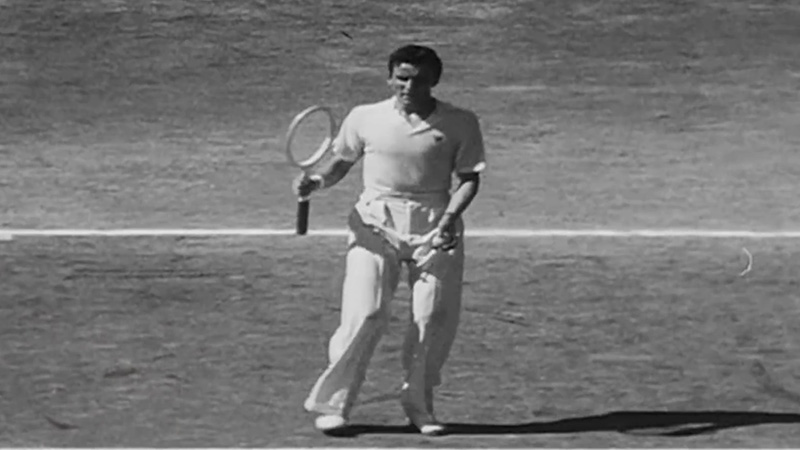
Yes, Fred Perry won the French Open singles title in 1935, cementing his place in tennis history. By defeating Gottfried von Cramm on the red clay of Stade Roland-Garros, Perry became the first male player to complete a Career Grand Slam.
Entering the tournament as the number two seed, he showcased unparalleled fitness and tactical precision. Beyond this singles triumph, Perry also secured French titles in men’s doubles and mixed doubles.
His success in Paris was the final piece of a puzzle that included titles in Australia, Wimbledon, and the United States, establishing an enduring sporting legacy.
Did Fred Perry Win the French Open and Make History?
The 1935 French Championships served as the definitive proving ground for Fred Perry, who arrived in Paris with the weight of history on his shoulders.
Having already conquered the major grass and hard courts of the world, the red clay of Roland-Garros remained the final obstacle to total dominance.
The 1935 French Championships Triumph
On June 2, 1935, the 26-year-old Perry stepped onto the court for a final that would define his amateur career. Facing the top-seeded defending champion, Gottfried von Cramm, Perry executed a strategy built on relentless pressure and physical conditioning.
The final score of 6–3, 3–6, 6–1, 6–3 reflected a match where Perry’s defensive armor eventually wore down his opponent.
This victory was not merely a tournament win; it was the moment Perry became the first male tennis player in history to achieve a Career Grand Slam.
A Career Grand Slam Milestone
While the term “Career Grand Slam” was not yet a standard part of the tennis vocabulary in the 1930s, the magnitude of the achievement was undeniable. By winning in Paris, Perry completed a collection of all four major singles trophies.
He had previously secured the US Championships in 1933 and 1934, the Australian Championships in 1934, and Wimbledon in 1934.
This achievement solidified his status as the premier player of his era, proving he could transition his game from the fast grass of London to the slow, demanding clay of France.
Breaking Records for British Tennis
Perry’s victory was a landmark moment for his home nation, as he became the first British man to ever win the French singles title. This record highlighted the difficulty British players often faced when transitioning to continental clay courts.
Perry’s ability to adapt his aggressive style to the Parisian environment remains a benchmark for versatility in the sport.
His success at Roland-Garros was the culmination of six years of consistent effort, during which he reached at least the quarterfinals in five of his six appearances.
The Path to the 1935 French Open Title
Perry’s journey through the 1935 bracket was a demonstration of clinical efficiency, as he navigated a field of the world’s best clay-court specialists with minimal resistance.
Dominating the Early Rounds
Throughout the early stages of the tournament, Perry appeared nearly invincible. He dominated his opponents, dropping only a single set prior to the final match.
This minor setback occurred in the early rounds against the unseeded Vladimir Landau; after losing the opening set, Perry quickly adjusted his tactics and stormed back to take control.
Subsequent matches against Enrique “Bubi” Maier and the number 15 seed, Don Turnbull, saw Perry advance in comfortable straight sets.
Overcoming Elite Competition in the Latter Stages
As the tournament reached the business end, the caliber of opposition increased significantly. In the quarterfinals, Perry faced the seventh seed, Christian Boussus, dispatching him in straight sets to set up a heavyweight semifinal clash.
There, he met the third seed, Jack Crawford, a perennial rival on the international circuit. Perry’s performance against Crawford was a masterpiece of clay-court tennis, securing another straight-set victory and propelling him into the historic final against von Cramm.
The 1935 Final: A Tactical Masterclass Against von Cramm
The final match was a fascinating study in contrasting styles and psychological endurance, played out over two hours in a display of exceptional sportsmanship.
Technical Analysis of Perry’s “Early Ball” Playstyle
One of the primary reasons Perry found success on the slow Parisian clay was his unique technical approach. He utilized table-tennis-honed reflexes to take the ball early on the rise.
While many clay-court players preferred to stay deep behind the baseline to account for the high bounce, Perry moved forward, effectively neutralizing the spin and pace of von Cramm.
This aggressive positioning allowed him to dictate the tempo of the rallies and keep his opponent off-balance.
Fitness and Defensive Superiority on Clay
The match dynamics shifted heavily in Perry’s favor during the third and fourth sets. Although von Cramm managed to take the second set and level the match, Perry’s exceptional fitness became the deciding factor.
His “defensive armor” allowed him to retrieve difficult shots and force von Cramm into risky maneuvers.
As the match progressed, Perry’s physical conditioning allowed him to maintain a high level of intensity that the reigning champion simply could not match, leading to a dominant finish.
Fred Perry’s Career Statistics at Roland-Garros
The following data outlines Perry’s consistent performance at the French Championships, illustrating his progression toward the 1935 title.
| Year | Round Reached | Opponent | Result |
|---|---|---|---|
| 1931 | Fourth Round | Giorgio de Stefani | Loss |
| 1932 | Quarterfinals | Roderich Menzel | Loss |
| 1933 | Quarterfinals | Jack Crawford | Loss |
| 1934 | Quarterfinals | Giorgio de Stefani | Retired (Injury) |
| 1935 | Champion | Gottfried von Cramm | Win (6-3, 3-6, 6-1, 6-3) |
| 1936 | Runner-up | Gottfried von Cramm | Loss (5-set marathon) |
Beyond Singles: Perry’s Versatility in Paris
While the 1935 singles title is the hallmark of his time in France, Perry’s mastery of the red clay extended to the doubles disciplines, where he achieved significant success earlier in the decade.
Success in Men’s Doubles with Pat Hughes
In 1933, two years before his historic singles win, Perry captured the French Men’s Doubles title. Partnering with fellow British player Pat Hughes, Perry demonstrated that his “early ball” tactics were equally effective in the doubles format.
This victory provided him with essential experience on the center court of Roland-Garros and contributed to his growing reputation as a global force in amateur tennis.
Championship Glory in Mixed Doubles
Perry’s first taste of championship success in Paris actually came in 1932 in the mixed doubles discipline.
Partnering with Betty Nuthall, one of Great Britain’s most prominent female players, Perry secured the title and proved his ability to adapt to different partners and match dynamics.
These cumulative experiences in doubles were instrumental in building the tactical intelligence he would later use to dismantle the world’s best singles players on the same courts.
The Rivalry That Defined an Era: Perry vs. von Cramm
The relationship between Fred Perry and Gottfried von Cramm is often cited as one of the most gentlemanly yet competitive rivalries in the history of the sport.
The 1936 Rematch and Marathon Final
Following Perry’s 1935 victory, the two icons met again in the 1936 French final in what would become a legendary encounter. Unlike the four-set match of the previous year, the 1936 final was a grueling five-set marathon.
In a dramatic reversal of the previous result, von Cramm emerged victorious with a scoreline of 6–0, 2–6, 6–2, 2–6, 6–0.
This match highlighted the razor-thin margins between the two champions and solidified their status as the dominant pair in men’s tennis during the mid-1930s.
Mutual Respect and Sporting Excellence
Contemporary accounts of their matches frequently noted the clean, sporting nature of their competition. Despite the high stakes of their meetings—which included multiple Grand Slam finals—the two players maintained a high level of mutual respect.
Just weeks after their 1935 battle in Paris, Perry would again face and defeat von Cramm in the Wimbledon final, further intertwining their legacies in the record books.
Fred Perry’s Complete Major Championship Legacy
Perry’s single French Open title was part of a larger, legendary amateur career that saw him capture eight major singles trophies.
| Tournament | Titles Won | Years of Victory |
|---|---|---|
| Wimbledon | 3 | 1934, 1935, 1936 |
| US Open | 3 | 1933, 1934, 1936 |
| Australian Open | 1 | 1934 |
| French Open | 1 | 1935 |
Frequently Asked Questions About Fred Perry’s Career
How many times did Fred Perry win the French Open?
Fred Perry won the French Open singles title once, in 1935. However, he was also a runner-up in 1936 and a champion in both men’s doubles (1933) and mixed doubles (1932) at the same venue.
Who did Fred Perry defeat to complete his Career Grand Slam?
He defeated Germany’s Gottfried von Cramm in the 1935 final. The match lasted four sets and was played on the red clay of Roland-Garros.
Why was Perry’s 1935 victory so significant?
It made him the first male tennis player in history to win all four major singles titles. Additionally, he was the first British man to win the French singles championship.
Did an injury ever stop Perry at the French Open?
Yes, in 1934, Perry had to retire during his quarterfinal match against Giorgio de Stefani due to an ankle injury. This was a significant disappointment, as he had won the Australian Open earlier that year and was in peak form.
Conclusion: The Enduring Legacy of a Champion
The question of whether Fred Perry won the French Open is answered with a resounding yes, but the context of that win is what truly matters.
His 1935 triumph was the crowning achievement of a career defined by firsts—the first Career Grand Slam for a man and the first French title for a British male.
By mastering the red clay through tactical innovation and superior physical conditioning, Perry proved that he was more than just a grass-court specialist.
His eight major titles and his successful transitions across all surfaces ensure that his name remains at the very top of the pantheon of tennis greats.