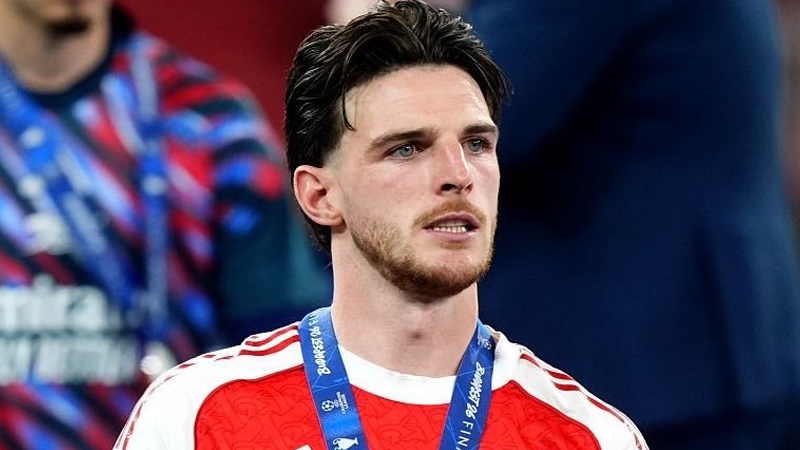
In the elite world of global football, few narratives capture the complexity of identity like the Declan Rice nationality debate. Born in London but possessing deep roots in Ireland, Rice’s professional journey serves as a case study for modern eligibility rules.
Today, he is a cornerstone of the England midfield, yet his early career was marked by three appearances in the green jersey of the Republic of Ireland.
This article examines the legalities, the emotional weight of his decision, and how his choice fundamentally reshaped his career trajectory and the future of two national teams.
The Legal Foundations of Declan Rice’s Dual Citizenship
Understanding how a player can represent two nations requires a look at the legal framework governing citizenship and FIFA’s eligibility criteria.
Rice’s status was never a matter of simple preference but a reflection of his ancestry, which granted him rights in two different jurisdictions.
The London Birthplace and British Roots
Declan Rice was born on January 14, 1999, in Kingston upon Thames, London. As a native of England, he was naturally eligible for the Three Lions from birth.
Growing up in the London suburbs, his footballing education took place within the English academy system, first with Chelsea and later with West Ham United.
This environment provided the tactical and physical foundation that would eventually make him one of the most sought-after defensive midfielders in the world.
His primary identity for much of his youth was tied to the city of his birth, yet his family home held strong connections to another land.
The Connection to the Republic of Ireland
His dual eligibility stems from his paternal grandparents, who were from Cork, Ireland. Under Irish law and FIFA’s “Grandparent Rule,” this provided him with Irish citizenship and the right to represent the Republic on the international stage.
This rule has historically been a vital tool for the Football Association of Ireland (FAI), allowing them to recruit talented players from the Irish diaspora in the United Kingdom.
For Rice, this meant he could wear the green shirt with the same legal standing as a player born in Dublin or Galway.
A Timeline of International Allegiance
The transition from a promising youth prospect for Ireland to a senior leader for England did not happen overnight. It involved a specific sequence of professional milestones, emotional reflections, and legal declarations that spanned several years.
| Year | National Team | Key Milestone |
|---|---|---|
| 1999 | N/A | Born in Kingston upon Thames, London |
| 2017 | Ireland | Represented Ireland at various youth levels |
| 2018 | Ireland | Played 3 senior international friendly matches |
| 2019 | England | Officially pledged allegiance to England in early 2019 |
| 2019-Pres | England | Established as a regular starter for the Three Lions |
The Significance of the Three Irish Caps
Many fans often ask why Rice was allowed to switch after playing for the senior Irish team. The answer lies in the specific nature of those matches and the FIFA regulations that governed player eligibility at that time.
Friendly Appearances vs. Competitive Ties
In 2018, Rice earned three senior caps for the Republic of Ireland. These matches were played against Turkey, France, and the USA.
However, because these were “friendly” matches rather than competitive tournament qualifiers or finals, he was not “cap-tied” under the rules then in place.
At that time, FIFA rules dictated that only a competitive appearance for a senior national team would permanently lock a player to that nation.
This legal distinction provided the window for his eventual shift to England, though it sparked intense debate within the Irish football community.
The Professional Development Phase
During his time with the Irish setup, Rice was frequently praised for his maturity and leadership. He was viewed as a future captain for the Republic, a player around whom a new generation could be built.
His performances in those three friendlies were so impressive that they caught the attention of the England coaching staff.
The irony of his situation was that the very talent he displayed while playing for Ireland was what ultimately accelerated England’s interest in bringing him back into their fold.
The Strategic Shift to the England National Team
The decision to switch in early 2019 was one of the most scrutinized moves in recent football history. It was a choice that combined personal ambition with professional reality, occurring at a time when England was undergoing a resurgence under Gareth Southgate.
The Official Pledge in 2019
By early 2019, Rice made his final decision to represent his country of birth. He released a lengthy statement explaining that his decision was made after deep thought and consultation with his family.
While he expressed immense pride in having played for Ireland, he ultimately felt that his future lay with England. This move allowed him to integrate into the squad just as they were preparing for the UEFA Nations League and the upcoming European Championship qualifiers.
Integrating into the Southgate System
Upon joining the England camp, Rice was quickly identified as the “missing piece” in Southgate’s tactical puzzle. England had long struggled to find a disciplined defensive midfielder who could both protect the backline and initiate attacks with precision.
Rice’s ability to read the game and his physical presence made him an immediate fit. His transition was seamless on the pitch, even if the public discourse surrounding his switch remained heated for several months.
Impact on Player Performance and Market Value
Choosing a national team isn’t just about identity; it has massive implications for a player’s career arc, their status in the global market, and their ability to compete for the sport’s highest honors.
Increased Visibility and Tournament Access
Playing for England provides consistent access to major tournaments like the UEFA European Championship and the FIFA World Cup. These platforms offer a level of visibility that is difficult to replicate elsewhere.
For Rice, performing on these stages has been a catalyst for his development into one of the world’s premier defensive midfielders.
The pressure of playing for a nation with “Golden Generation” expectations has refined his temperament and prepared him for high-stakes club football at the highest level.
Commercial and Transfer Valuation
From a purely professional standpoint, being an established England international significantly inflates a player’s market value. This is partly due to the “homegrown” rules in the Premier League and the massive commercial appeal of the England brand.
When Rice eventually moved from West Ham to Arsenal, his status as a core member of the England squad was a major factor in his record-breaking transfer fee. His nationality and international pedigree made him a “blue-chip” asset in the footballing world.
The Emotional Complexity of National Identity
Beyond the technicalities of the Declan Rice nationality switch lies a human story of heritage. For many players with dual citizenship, the choice is rarely binary, and the emotional ties to both nations can be profound.
Navigating Multiple Cultural Identities
Rice has often spoken with respect about his Irish heritage while acknowledging his pride in being English. This duality is common in multicultural hubs like London, where second and third-generation citizens often balance multiple allegiances.
In many ways, Rice represents a modern generation of athletes who do not see their identities as mutually exclusive. While he plays for England, his connection to his grandparents’ home in Cork remains a part of his personal history.
Managing Public and Media Pressure
The fallout from his switch was significant, particularly in the Irish media. Rice had to develop a thick skin at a young age to handle the criticism that followed his move to the England camp.
This experience arguably accelerated his mental growth, forcing him to become more professional and focused.
Dealing with such a high-profile controversy early in his career prepared him for the intense scrutiny that comes with being a captain and a high-priced transfer target.
Analyzing FIFA’s Eligibility Rules
The Rice case was a turning point for how many fans and associations view the “switch.” It highlights the specific criteria used to define international eligibility and has even influenced subsequent rule changes intended to provide more clarity.
- Birthplace: A player is always eligible for the country where they were born.
- Lineage: Having a parent or grandparent born in the territory opens the door for representation.
- The “Friendly” Loophole: Under the rules at the time of Rice’s switch, non-competitive matches did not tie a player to a nation.
- The 2020 Amendment: Partially due to cases like Rice’s, FIFA later updated its rules to allow players to switch if they have played no more than three competitive matches before the age of 21, provided they occurred at least three years prior.
Comparing the Rice Switch to Other Major Players
While Rice is the most prominent recent example, he is not alone. Several top-tier players have navigated the complexities of dual nationality, often making switches that sparked similar levels of debate.
| Player | Original Allegiance | Final Allegiance | Reason for Switch |
|---|---|---|---|
| Jack Grealish | Ireland (Youth) | England | Country of birth and professional opportunity |
| Wilfried Zaha | England (Friendly) | Ivory Coast | Heritage and guaranteed playing time |
| Diego Costa | Brazil (Friendly) | Spain | Residency and tactical fit |
| Jamal Musiala | England (Youth) | Germany | Country of residence and development |
The Future of Dual Nationality in Football
As global migration continues to shape populations, the number of players eligible for multiple countries is increasing. This trend will likely redefine international scouting and the way national associations recruit talent.
The Rise of the “Global Player”
The Declan Rice nationality story is a precursor to a future where more elite athletes will have to make definitive choices at a young age. National associations are now more aggressive than ever in securing the commitment of dual-nationality prospects.
We are seeing a shift where “eligibility scouting” is becoming as important as traditional talent scouting. The Rice precedent serves as a reminder to associations that until a player is competitively tied, their allegiance remains a fluid asset.
Strengthening Internal Academies
To counter the risk of losing players to other nations, many associations are investing more heavily in their own youth systems to build a stronger sense of loyalty from an early age.
The goal is to make the path to the senior national team so clear and attractive that players feel less inclined to explore their secondary options. However, as long as the “Grandparent Rule” exists, the pull of heritage will always be a factor in international football.
Frequently Asked Questions About Declan Rice’s Nationality
Is Declan Rice Irish?
He holds Irish citizenship through his grandparents and represented the Republic of Ireland at the senior level in three matches, though his primary nationality and current footballing allegiance is English.
Where was Declan Rice born?
He was born and raised in Kingston upon Thames, London, England.
How many games did Rice play for Ireland?
He played three senior international friendly matches in 2018 before making his switch.
Why was he allowed to switch to England?
Because his three appearances for Ireland were in friendly matches, he was not “cap-tied” under FIFA rules at that time.
When did Rice switch to England?
He officially pledged his allegiance to the England national team in early 2019.
Final Professional Assessment
The career of Declan Rice is defined by his ability to excel under pressure, both on the pitch and in his decision-making. His choice to play for England has resulted in him becoming a cornerstone of the national team and a leader in the Premier League.
While the Declan Rice nationality narrative began as a controversy, it has evolved into a story of a player who understood his value and chose the path that offered the greatest professional growth.
His journey remains one of the most intriguing chapters in modern sport, proving that in the world of global football, identity is a complex blend of where you come from and where you are determined to go.
For England, he is the midfield general they waited decades for; for Ireland, he remains the greatest “what if” of the modern era. Regardless of one’s perspective, his impact on the international game is undeniable.