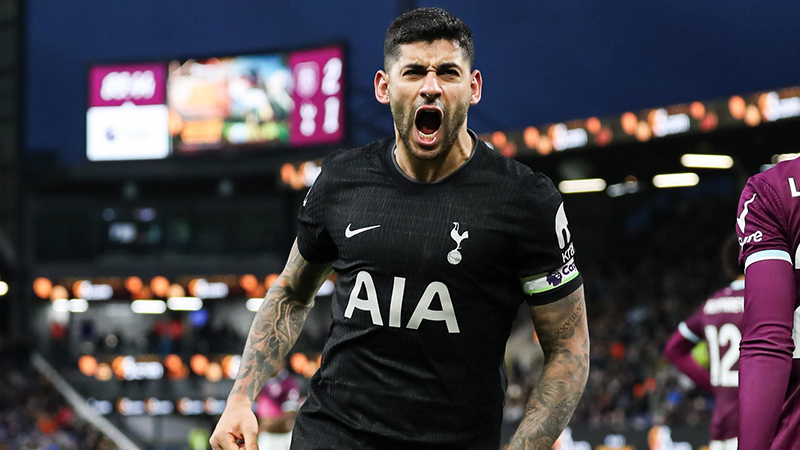
The landscape of European football is currently defined by a shift toward defensive stability and leadership, as elite clubs recognize that tactical sophistication begins at the back.
At the center of this paradigm shift is Cristian Romero, the Tottenham Hotspur captain and Argentine international, whose future has become a primary focus for the continent’s most storied institutions.
As we approach the summer 2026 window, the intersection of contractual nuances, club performance, and financial strategy has created a high-stakes environment for a transfer that could redefine the defensive hierarchy of La Liga.
The Strategic Context: A Defensive Rebuild in Catalonia
FC Barcelona’s interest in Cristian Romero is not merely a reactionary pursuit of a talented individual; it is a calculated effort to anchor a defensive unit with proven elite experience.
The Catalan side is actively exploring a transfer for the summer of 2026, identifying Romero as a key target to reinforce their backline.
This move comes at a time when the club is seeking to balance youth development with the immediate necessity of veteran leadership—a role Romero has inhabited with distinction at both the club and international levels.
The pursuit is framed by a broader competitive landscape. While Barcelona has prioritized the 28-year-old, they are not alone in their admiration.
Real Madrid is also reportedly monitoring the defender’s situation, setting the stage for a potential transfer battle between Spain’s two dominant powers.
The allure of Romero stems from his consistent performance in the Premier League and his foundational role in Argentina’s recent international successes, including their World Cup and Copa América titles.
Analyzing the Financial Framework: The “Spanish” Release Clause
The most significant lever in this potential transaction is the existence of a specific release clause. Financial architecture in modern football often includes tiered exit strategies, and Romero’s contract is no exception.
Reports indicate a clause that allows for a move to Spanish clubs for a fee structured between £40 million and £53 million (€40 million to €60 million). For a player of Romero’s caliber, this range represents a significant market opportunity.
Given that his current market valuation is frequently quoted at upwards of €60 million—bolstered by his status as a Europa League winner and club captain—the ability to secure his services for a fee potentially as low as £40 million is a compelling proposition for the Barcelona board.
The existence of this clause, which has been described as potentially controversial, suggests a strategic foresight during his 2025 contract negotiations.
By specifically facilitating a path to Spain, the defender’s representatives have ensured that the primary titans of La Liga have a clear, pre-negotiated entry point, regardless of Tottenham’s willingness to sell.
The Institutional Catalyst: Tottenham’s Competitive Instability
A transfer of this magnitude rarely occurs in a vacuum. The internal dynamics at Tottenham Hotspur are catalyzing Romero’s potential departure.
Despite signing a contract extension in August 2025 that binds him to the North London club until June 2029, there is significant uncertainty regarding his long-term future.
This uncertainty is largely driven by the club’s recent performance. Following a difficult 2025-26 season, rumors have intensified regarding a high-value, high-salary exit.
The competitive pressure is so acute that some reports have even speculated that a potential relegation for Tottenham could further simplify the departure of their captain.
For an elite athlete in his prime years, the prospect of competing for the highest honors is paramount.
If Tottenham cannot provide a platform for Champions League football or domestic silverware, the pull of a club like Barcelona—which offers a perennial path to trophy contention—becomes nearly impossible to ignore.
Player Pedigree: From Serie A Standout to Premier League Captain
To understand why Barcelona and Real Madrid are willing to commit substantial capital to this pursuit, one must examine Romero’s trajectory.
His rise began in Serie A, where he earned a reputation as a fierce, proactive defender with Atalanta during a stellar 2020–21 campaign.
His subsequent move to the Premier League saw him adapt seamlessly to the most physically demanding league in the world, eventually assuming the captaincy at Tottenham.
Romero’s profile is characterized by several elite traits:
- Proactive Defending: He excels in a high-line system, often stepping out of the defensive block to intercept play—a tactical requirement for any modern Barcelona manager.
- Leadership and Maturity: As the 2024-25 Europa League winner and a club captain, he brings a level of psychological fortitude that is essential for navigating the pressure of the Camp Nou.
- International Success: His experience with the Argentine national team provides him with the “big game” temperament required for the latter stages of the Champions League.
Tactical Suitability for the Catalan System
Barcelona’s defensive philosophy demands more than just tackling ability. It requires defenders who are comfortable in possession, capable of initiating the build-up, and physically dominant enough to cover large spaces behind them. Romero’s time under various tactical regimes at Spurs has prepared him for this role.
In a system that emphasizes high pressing and ball retention, Romero’s ability to remain composed under pressure and find vertical passing lanes would be an asset.
Furthermore, his aggression in the air and timing in the tackle provide a necessary “edge” that can occasionally be lacking in technically oriented sides. His transition from Serie A to the Premier League has rounded out his game, making him a complete modern center-back.
The 2026 Timeline: Why Timing Is Everything
The decision to target the summer of 2026 is strategic. By that point, Romero will have three years remaining on his contract, typically the window where a club’s leverage begins to diminish if a player shows reluctance to renew.
For Barcelona, this timing allows for further financial stabilization before triggering the release clause.
The 2026 window also aligns with the potential conclusion of the current competitive cycle at Tottenham. If the club fails to rebound from its recent struggles, the pressure to liquidate high-value assets to fund a broader rebuild may become unavoidable.
For Romero, moving at age 28 represents the final opportunity to secure a “legacy” move to one of the world’s most prestigious clubs while still in his physical peak.
The Competitive Threat: The Real Madrid Factor
The interest from Real Madrid cannot be understated. Madrid’s recruitment strategy has recently focused on securing “market opportunities”—elite players available for fees below their true value or on free transfers.
If the “Spanish clause” is indeed as accessible as reports suggest, Madrid may view Romero as the natural successor to their aging defensive core.
This rivalry adds a layer of urgency to Barcelona’s pursuit. The club must ensure that its project—both sporting and financial—is more attractive than the lure of the Santiago Bernabéu.
The race for Romero is, in many ways, a proxy for the broader competition between these two institutions to dominate the next era of Spanish football.
Conclusion: A Definitive Junction for Club and Player
The potential transfer of Cristian Romero to FC Barcelona is a narrative of convergence. It is the convergence of a club’s need for defensive leadership, a player’s desire for elite competition, and a financial clause that makes an otherwise difficult deal feasible.
As Tottenham navigates a period of profound uncertainty, their captain stands at a crossroads. The summer of 2026 will likely serve as the definitive junction for Romero’s career.
Whether he chooses to remain the anchor of a rebuilding Spurs side or takes his place in the legendary defense of the Blaugrana will depend on the evolution of the 2025-26 season.
For Barcelona, the objective is clear: secure one of the world’s premier defenders and signal a return to the pinnacle of European football.
Strategic Analysis: Key Transfer Components
| Feature | Detail |
|---|---|
| Primary Target | Cristian Romero (28, Argentina/Tottenham) |
| Interested Parties | FC Barcelona (Priority), Real Madrid |
| Contract Duration | June 2029 |
| Spanish Release Clause | £40m – £53m (€40m – €60m) |
| Market Valuation | €50m – €60m+ |
| Catalyst for Move | Tottenham’s difficult 2025-26 season and potential relegation rumors |
Frequently Asked Questions
Why is Barcelona targeting Romero specifically for 2026?
The club views him as a foundational leader who can provide immediate stability. The 2026 timeline aligns with his contract cycle and Barcelona’s financial restructuring plans.
Does the release clause apply to all clubs?
Current reports suggest the clause is specifically designed to facilitate moves to Spanish clubs, which gives Barcelona and Real Madrid a significant advantage in negotiations.
How does Tottenham’s performance impact this transfer?
A difficult season and lack of Champions League football make it increasingly difficult for Spurs to retain their captain. Speculation regarding their competitive standing has directly fueled the rumors of Romero’s departure.
Is Romero’s age a factor in the valuation?
At 28, he is entering his prime for a central defender. His extensive experience in Serie A, the Premier League, and international football justifies the €50m–€60m+ valuation.
What role does Real Madrid play in this pursuit?
As a direct competitor, Real Madrid’s interest forces Barcelona to act decisively. The battle for Romero could become the next high-profile “Clasico” transfer saga.