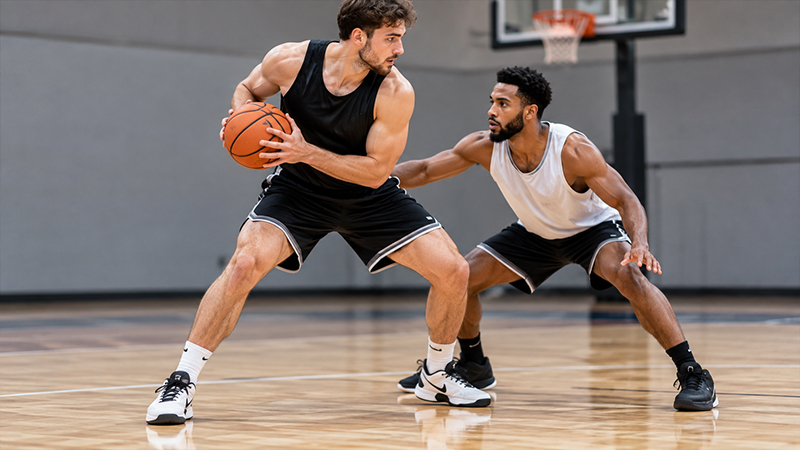
The nuances of basketball footwork represent the thin line between an elite offensive highlight and a frustrating turnover. Among the most debated and misunderstood regulations in the game is the status of the pivot foot.
For years, a common misconception has circulated through gyms and playgrounds alike: the idea that the pivot foot must remain perpetually fixed to the hardwood until the ball is released.
However, a technical analysis of the regulations reveals a much more dynamic reality that high-level players leverage to create scoring opportunities.
Understanding the Mechanics of the Pivot Foot
The foundation of offensive mobility begins with the establishment of a pivot foot. This occurs when a player catches the ball with one foot on the floor or lands with one foot first after a catch.
Once this foot is established, it serves as the anchor for all subsequent movements until the player decides to dribble, pass, or shoot.
It is a definitive fact that you can absolutely pick up your pivot foot during the course of play. The legality of this action is not determined by the act of lifting the foot itself, but rather by what the player does with the ball while that foot is in the air.
To maintain a legal standing and avoid a traveling violation, the player must legally pass or shoot the ball before the lifted pivot foot touches the floor again.
The Protocol for Passing and Shooting
When an offensive player is looking to finish at the rim or find an open teammate, the ability to lift the pivot foot becomes a powerful tool. This maneuver is most commonly seen in the “step-through” move, a staple of post-play and crafty guard finishes.
Once your pivot foot is established, the rules permit you to pick it up to execute a jump shot, a specialized step-through, or a pass.
This allows the player to gain additional ground or change their vertical plane to clear a defender’s outstretched arms. The critical regulatory hurdle is the timing of the release.
The only restriction is that the ball must be entirely out of your hand before the pivot foot lands back on the ground.
In a standard jump shot, both feet typically leave the floor. If the player’s pivot foot is the last to leave or leaves simultaneously with the non-pivot foot, the legality remains the same: the ball must be released before either foot returns to the hardwood.
If the player returns to the floor while still in possession of the ball, a traveling violation is called, often referred to in coaching circles as “up and down.”
The Dribble Trap: Timing the Initial Move
While the rules are relatively permissive regarding the lift-and-release for shots and passes, they are significantly more stringent when it comes to initiating a dribble.
This is where a majority of traveling violations occur, particularly among players transitioning from a stationary “triple-threat” position into a drive toward the basket.
If you are stationary and want to begin a dribble, the sequence of operations is vital. You must release the ball to start the dribble before the pivot foot is lifted off the floor.
Many players make the mistake of lifting their pivot foot to generate power for their first step before the ball has actually left their hand.
This “quick start” is a primary focus for officials at every level of the game, from youth leagues to professional organizations. To avoid this, players must focus on “putting the ball down” a fraction of a second before the anchor foot moves.
Advanced Footwork: The Jump Stop and Non-Pivot Movement
For players looking to maximize their efficiency in the paint, understanding the jump stop is essential. This move allows a player to maintain balance and keep their options open after ending their dribble or catching a pass on the move.
If you catch the ball while airborne or during a legal stop, the rules allow you to jump off your pivot foot and land on both feet simultaneously.
This is a strategic advantage because when you land on both feet simultaneously in this manner, you no longer have a pivot foot.
By neutralizing the pivot status, the player is then able to jump off both feet for a shot or pass, though they cannot establish a new pivot foot to move again.
Furthermore, players often underutilize the freedom afforded to their non-pivot foot. While the pivot foot is the anchor, the other foot acts as a probe to test defensive positioning.
You can lift, move, or plant your non-pivot foot as many times as you want while holding the ball, provided your pivot foot remains firmly glued to the floor.
This allows for jab steps, ball fakes, and pivots that can displace a defender without ever risking a violation.
Maximizing the Step-Through for Elite Performance
The step-through is perhaps the most effective application of the rule allowing a player to lift their pivot foot.
Imagine a player who has ended their dribble and established their left foot as the pivot. They fake a jump shot, causing the defender to leave their feet.
The offensive player then steps forward with their right foot (the non-pivot) and lifts their left foot (the pivot) to lean toward the basket.
As long as the player releases the layup or a short jumper before that left foot touches the ground, the move is perfectly legal.
This allows the player to essentially take a “step and a half” after their pivot is established to navigate around a defender.
Mastering the timing of this release is what separates high-IQ scorers from those who play with restricted mobility.
Analyzing Common Violations
To truly understand the legality of the pivot, one must also recognize where players typically fail.
- The Drag: Often, as a player pivots aggressively to find a passing lane, their pivot foot will slide or drag across the floor. Even if the foot is not “lifted” in the traditional sense, any displacement from its original spot on the floor is a travel.
- The Premature Lift: As discussed, lifting the foot before the ball hits the floor on a dribble start is the most common turnover in transition.
- The Return to Earth: During a contested shot or a “broken” play where a player expects to be fouled, they may lift their pivot foot to jump and then land back on the floor while still holding the ball because they didn’t have a clear opening. This is a violation every time.
Strategic Implementation for Coaches and Athletes
For coaches, training this mechanic requires a focus on balance and “ball-first” initiation. For athletes, it requires a mental shift to view the pivot foot not as a shackle, but as a spring-loaded tool.
- Drill 1: The Stationary Release. Practice starting a drive from a triple threat, ensuring the “thud” of the ball on the floor happens before the pivot foot lifts.
- Drill 2: The Step-Through Finish. Practice catching in the post, establishing a pivot, and then stepping through with the non-pivot foot while lifting the pivot to finish, focusing on releasing the ball at the apex.
Frequently Asked Questions
Can I pick up my pivot foot and then put it back down?
No. You may pick it up to shoot or pass, but if that foot touches the floor again while you are still holding the ball, it is a traveling violation.
Does the “two-step” rule in the NBA change this?
While the NBA has specific “gather” rules that allow for extra movement during a continuous drive, the rules for a stationary player remain consistent with the fundamental mechanics: you cannot lift the pivot foot to start a dribble, but you can lift it to shoot or pass.
What happens if I jump off both feet?
If you have a pivot foot and jump off both feet, the pivot foot has technically been lifted. You must then release the ball before you land back on the floor.
Is the “Euro-step” related to picking up the pivot foot?
The Euro-step is typically executed while a player is in the process of ending a dribble (the gather). The rules regarding the pivot foot apply primarily to players who have already come to a stop or are in a stationary position.
Summary of the Golden Rules
To excel on the court, memorize these core principles:
- For Passing and Shooting: You can lift the pivot foot as long as the ball leaves your hand before the foot returns to the floor.
- For Starting a Dribble: The ball must leave your hand before the pivot foot leaves the floor.
- For the Jump Stop: Landing simultaneously on both feet after a jump off the pivot foot removes the pivot status.
- For the Non-Pivot Foot: It has total freedom of movement as long as the pivot foot is stationary.
By mastering these technicalities, players can play with more confidence and officials can make more accurate assessments of high-speed plays. Understanding that you can pick up your pivot foot opens a new dimension of offensive creativity, allowing for more sophisticated footwork and efficient scoring.
Elevate Your Game
Basketball is a game of inches, and those inches are often won or lost through footwork. Whether you are a post player looking to master the up-and-under or a guard trying to eliminate unnecessary turnovers on the perimeter, the mechanics of the pivot foot are your greatest asset.
Continue to refine these movements in practice until the legal “lift and release” becomes second nature.
For more in-depth tutorials on advanced offensive maneuvers and defensive positioning, explore our full library of technical guides. Knowledge of the rules is the first step toward breaking through your performance plateaus.