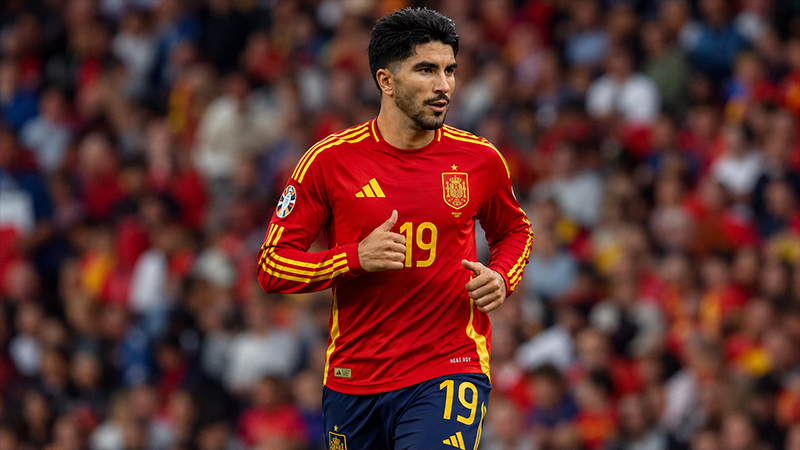
Carlos Soler has become one of football’s most intriguing tactical chameleons, evolving from a creative wide threat at Valencia into a versatile central presence for some of Europe’s most prominent clubs.
As he has transitioned through Paris Saint-Germain, West Ham United, and Real Sociedad, a recurring question has surfaced among analysts and tactical enthusiasts: Can Carlos Soler play CDM?
While his traditional profile leans toward an offensive “8” or even a “10,” the demands of the modern game have seen him dropped deeper into the pitch. This analysis explores how Soler adapts to the defensive midfield role and the tactical implications of such a move.
The Modern Interpretation of the Defensive Midfielder
To understand if Soler can inhabit the defensive midfield space, we must first define the evolution of the position. Traditionally, a defensive midfielder was a “destroyer”—a physical player whose primary duty was to disrupt opposition attacks through tackling and interceptions.
However, the modern game has shifted toward the “Deep-Lying Playmaker” or the “6” who dictates the tempo from a deep position.
Soler as the Technical Anchor
While CDM is not his natural or primary position, Carlos Soler has proven to be a highly versatile tactical asset across multiple top-tier leagues.
Rather than acting as a traditional, destructive “destroyer” CDM, Soler is typically deployed as a deep-lying number six when placed at the base of the midfield.
This role suits his specific technical toolkit, allowing him to influence the game through distribution rather than pure physicality.
The Strengths of Soler’s Deep-Lying Profile
When a manager chooses to deploy Soler in a deeper role, they are prioritizing ball retention and progressive passing over defensive aggression. His success in this position is built on several key attributes that differentiate him from a standard defensive player.
Tactical Intelligence and Vision
Soler relies on his excellent passing range, ball control, and tactical intelligence to dictate play from deep. His ability to scan the field before receiving the ball allows him to find exit routes under pressure, making him an ideal candidate for teams that look to build out from the back.
Technical Proficiency and Ball Progression
One of Soler’s greatest assets at the base of the midfield is his composure. He rarely panics when closed down by an opposing high press.
By utilizing short, crisp passes or shifting the point of attack with a long diagonal, he ensures that the transition from defense to attack is seamless. This technical proficiency is what allows him to function as a “6” despite lacking the typical defensive stats of a specialist.
The Strategic Importance of the Double Pivot
A critical factor in Soler’s effectiveness at CDM is the surrounding tactical structure. He is not a player who should be asked to patrol the entire width of the defensive third alone as a single pivot.
Compatibility with Physical Partners
Soler is highly effective when paired with a more physical, defensively-minded partner in a double pivot. In formations like the 4-4-2 or 4-2-3-1, this partnership allows for a “balanced” midfield.
While Soler focuses on ball progression and maintaining the rhythm of the game, his partner covers defensive gaps and handles the more grueling physical duels.
Formation Flexibility
The use of a double pivot provides a safety net for Soler’s defensive limitations. It ensures that the team does not lose defensive stability while gaining an elite passer in the first phase of play.
This setup has been utilized throughout his career to maximize his utility without exposing the back four to unnecessary risk.
Identifying Tactical Sacrifices and Trade-offs
Deploying a player of Soler’s caliber as a CDM is never without its costs. While it aids the team’s buildup play, it necessitates certain strategic sacrifices that can impact the team’s overall goal-scoring output.
The Loss of Offensive Threat
Soler naturally excels at late attacking runs, long shots, and creative play in the final third. His history at Valencia showcased a player with a keen eye for goal and the ability to arrive in the box at the perfect moment.
By pinning him to a CDM role, a manager effectively limits his goal-scoring threat. The team gains a stabilizer but loses a player who can decide matches in the opposition’s penalty area.
Defensive Style and Limitations
From a defensive standpoint, Soler is characterized by his discipline rather than his aggression. He is a disciplined player who understands positioning, but he does not heavily dive into tackles.
This lack of “bite” can be a liability in high-intensity matches where the midfield needs to win second balls or stop counter-attacks through tactical fouls and physical dominance.
| Feature | Destroyer CDM | Soler (Deep-Lying Playmaker) |
|---|---|---|
| Primary Focus | Ball recovery/Tackling | Distribution/Tempo |
| Defensive Style | Aggressive/Physical | Positional/Disciplined |
| Passing Range | Short/Safe | Short to Long/Progressive |
| Best Formation | Single Pivot (4-3-3) | Double Pivot (4-2-3-1) |
| Goal Threat | Minimal | Medium (Limited by depth) |
Carlos Soler in the Digital Arena: EA Sports FC Insights
The debate regarding Soler’s position extends beyond the real-life pitch and into the world of football simulation. For players of EA Sports FC (formerly FIFA), Soler presents a unique tactical opportunity in both Ultimate Team and Career Mode.
In-Game Positioning and Tactics
In the digital space, Soler’s default position is usually a Central Midfielder (CM). However, his attributes are remarkably balanced, making him a “hidden gem” for those looking to convert him to a defensive role.
Due to his decent physical profile and medium/medium work rates, he can easily shift to CDM in-game using custom tactics or position modifiers.
Optimizing the Midfield Setup
For the best results in-game, Soler should be used in a two-midfielder set where he is instructed to “Stay Back While Attacking.” This mirrors his real-life application in a double pivot.
His passing stats often exceed those of specialized CDMs, allowing gamers to launch accurate counter-attacks immediately after winning the ball.
The Evolution of the Utility Player
The ability of Carlos Soler to play CDM is a testament to the value of the “utility” player in modern football.
Managers at the highest level—whether at Paris Saint-Germain or West Ham—value players who can adapt to different tactical requirements mid-game. Soler provides a technical solution to a defensive problem.
If a team is dominating possession and needs a player to pick apart a low block from deep, Soler is an excellent choice at CDM.
If a team is under heavy pressure and needs a midfield “wall,” he may not be the primary candidate. This nuance is what makes him such a valuable squad member; he allows for tactical shifts without requiring a substitution.
Frequently Asked Questions on Soler’s Positioning
Is Carlos Soler naturally a defensive midfielder?
No, his natural and primary positions are as a central midfielder (CM) or an attacking midfielder (CAM). His deployment at CDM is a tactical adaptation based on team needs.
Which formation suits Soler best when playing deep?
Soler is most effective in a double pivot, such as a 4-4-2 or 4-2-3-1, where he has a defensive partner to handle physical duels.
Can Soler play as a lone CDM in a 4-3-3?
It is generally not recommended unless the team expects to have overwhelming possession. His lack of aggressive tackling makes him vulnerable as a single pivot against teams that transition quickly.
How does Soler’s playstyle compare to other deep-lying playmakers?
Soler is similar to players like Jorginho or Thiago Alcantara, who rely on positioning and passing quality rather than physical stature to control the defensive third of the pitch.
Conclusion: A Tactical Verdict
In answer to the central question—can Carlos Soler play CDM?—the answer is a definitive yes, provided the system is designed to support his technical strengths.
He offers a unique blend of ball control and tactical awareness that can transform how a team builds its attack from the back. While there are trade-offs in terms of his offensive output and defensive aggression, his versatility remains one of his most significant assets.
For managers looking to increase their team’s technical floor, moving Soler to a deep-lying role is a strategic masterstroke. It turns the base of the midfield into a creative hub, ensuring that every attack starts with precision and intelligence.
Whether on the real pitch or the digital one, Carlos Soler continues to redefine what it means to be a modern, versatile midfielder.