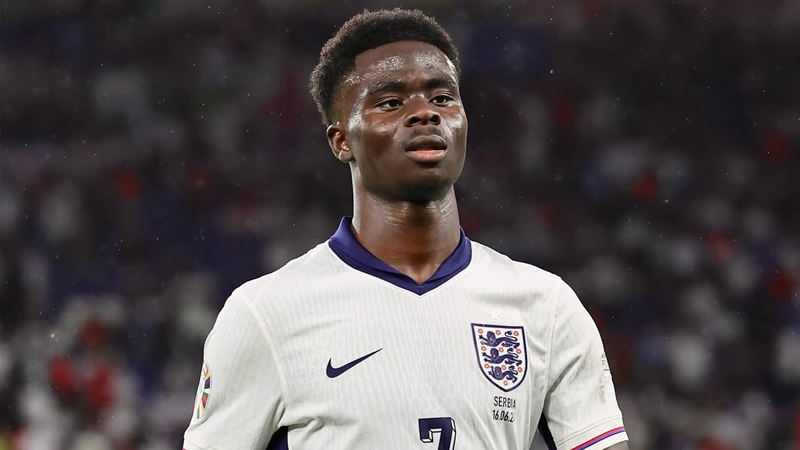
Bukayo Saka is a name that resonates across the global footballing landscape, representing both the pinnacle of Premier League excellence and the modern face of multi-ethnic identity in sport.
While his skill on the pitch is undeniable, fans frequently inquire about the specific cultural and national roots that shaped him.
This deep dive explores the nuances of Bukayo Saka’s nationality, his deep-seated Nigerian heritage, and his journey from the streets of Ealing to becoming a national treasure for England.
Understanding Saka requires looking beyond the jersey to the rich history of migration and ambition that defines his family’s story.
Defining Bukayo Saka’s Nationality
To understand the core of the inquiry regarding Bukayo Saka’s nationality, one must first distinguish between his legal citizenship, his place of birth, and his international sporting allegiance.
Bukayo Saka is a British citizen, born and raised within the borders of the United Kingdom, which grants him full English nationality by birthright.
Birthplace and Early Identity
Bukayo Saka was born in Ealing, Greater London, on September 5, 2001. Growing up in a borough known for its cultural diversity, Saka was immersed in a community that celebrated both British traditions and the various cultures of its immigrant populations.
This dual exposure is a cornerstone of his identity. His early years in Greenford, a suburb within Ealing, provided the foundation for his development as a footballer, where he was able to hone his skills in a competitive urban environment while remaining grounded by his family’s values.
International Representative Status
In the world of professional football, nationality is often defined by the “Three Lions” on a player’s chest. Saka represents the England national team internationally.
Despite his eligibility to play for another nation, his commitment to the English setup began at the youth levels. He progressed through the U16, U17, U18, U19, and U21 ranks before making his senior debut.
This progression solidified his status as a key pillar of England’s “Golden Generation” under Gareth Southgate, making him a symbol of national pride during major tournaments like the UEFA European Championship and the FIFA World Cup.
Ancestral Origins: The Nigerian Heritage
While his passport and international career are firmly rooted in England, Bukayo Saka is of Nigerian descent. This aspect of his identity is not merely a footnote in his biography; it is a fundamental part of his persona and public image.
Saka has always been open about his pride in his roots, often engaging with his Nigerian fan base and acknowledging the cultural influence his parents brought from West Africa.
The Yoruba Tribe Connection
Saka’s family lineage traces back to the Yoruba tribe, one of the largest and most influential ethnic groups in Nigeria. The Yoruba people are known for their rich history in arts, education, and commerce.
This heritage often manifests in Saka’s professional demeanor—characterized by humility, a strong work ethic, and a sense of community.
In many interviews, Saka has noted that the values instilled in him by his Yoruba upbringing have been instrumental in navigating the pressures of elite-level football.
The Story of Economic Migration
The presence of the Saka family in London is the result of a courageous journey undertaken by his parents. They emigrated from Nigeria to London as economic migrants, seeking better opportunities and a stable environment to raise their children.
Their story is reflective of a larger wave of Nigerian migration to the UK, where families sought to combine their traditional values with the educational and professional infrastructure of Great Britain.
The sacrifices made by his parents are frequently cited as Saka’s primary motivation, driving his desire to succeed at Arsenal and for the England national team.
A London Childhood: Growing Up in Ealing
The geography of Saka’s upbringing played a critical role in his transition from a promising talent to a household name. Ealing provided the perfect backdrop for a young athlete of dual heritage.
| Feature | Description |
|---|---|
| Birthplace | Ealing, Greater London, England |
| Primary School | Edward Betham Church of England Primary School |
| High School | Greenford High School |
| Early Club | Greenford Celtic |
| Academy | Arsenal Hale End Academy |
Educational Foundation and Discipline
Saka was not just a standout on the pitch; he was also an exceptional student. At Greenford High School, he achieved high grades in his GCSEs, proving that the discipline required for professional sports could be translated into academic success.
This period of his life was crucial in developing the “football brain” he is lauded for today.
His ability to process information and remain calm under pressure was nurtured in the classrooms and playgrounds of Ealing, where he learned to balance the demands of Arsenal’s academy with his formal education.
The Hale End Influence
Saka joined Arsenal’s famed Hale End academy at a young age. This institution is responsible for producing some of the finest talents in English football, but for Saka, it was also a place where his identity was further shaped.
At Hale End, he was surrounded by players from various backgrounds, many of whom shared similar stories of migration and dual heritage.
This environment allowed him to feel comfortable in his skin—proud of his Nigerian roots while being fully committed to his growth within the English football system.
The International Choice: England vs. Nigeria
One of the most discussed topics throughout Saka’s early career was his international eligibility. Because of his parentage, he was eligible to represent the Super Eagles of Nigeria.
The Nigerian Football Federation (NFF) has a long history of attempting to recruit high-profile “dual-nationality” players born in the UK, such as Alex Iwobi and Ademola Lookman.
Why He Chose the Three Lions
The decision to represent England was not a rejection of Nigeria, but rather a reflection of his journey through the English system.
Having been part of the England youth setups since the age of 15, Saka felt a deep sense of loyalty to the coaches and teammates who had helped him grow.
He stated in various interviews that while he is proud of his Nigerian heritage, representing the country where he was born and where he developed his craft felt like the natural progression for his career.
Impact on the Nigerian Diaspora
Saka’s choice had a significant impact on football fans in Nigeria and the diaspora. While there was an initial sense of disappointment among Super Eagles supporters, it was quickly replaced by immense pride.
Today, Saka is one of the most supported players in Nigeria, with fans regularly tuning in to Arsenal matches to cheer on a “son of the soil.”
He serves as a bridge between the two nations, proving that one can be fully committed to the England national team while still honoring and celebrating Nigerian ancestry.
A Symbol of Modern Multicultural England
Bukayo Saka’s nationality and the way he carries himself make him a powerful symbol of modern Britain. In an era where identity is often a complex and debated topic, Saka represents a harmonious blend of cultures.
He is proof that the “English” identity is evolving to include those with deep roots in other parts of the world.
Handling Adversity with Grace
The true test of Saka’s connection to the English public came after the Euro 2020 final. Following a heart-wrenching penalty miss, Saka was subjected to racial abuse online.
However, the response from the vast majority of the British public was a massive outpouring of love and support. Walls in Ealing and London were covered with letters of encouragement, and he received thousands of messages from fans of all backgrounds.
This moment solidified his status not just as a player for England, but as a beloved member of the national community.
Role Model for the Next Generation
For young children in Ealing, Lagos, and beyond, Saka is a beacon of hope. He demonstrates that talent, combined with a strong sense of self and respect for one’s heritage, can lead to the very top of the world stage.
His success has encouraged other young players of dual nationality to embrace their full identities, rather than feeling they must choose one over the other.
Saka’s story is a testament to the fact that heritage is an asset that adds depth to one’s professional and personal life.
Frequently Asked Questions About Bukayo Saka’s Nationality
What is Bukayo Saka’s official nationality?
Bukayo Saka is officially British. He was born in Ealing, London, and holds a British passport. He represents England in international football competitions.
Is Bukayo Saka Nigerian?
Saka is of Nigerian descent. His parents moved to the UK from Nigeria before he was born, and he belongs to the Yoruba ethnic group. While he has Nigerian heritage, he does not hold Nigerian sporting nationality.
Can Bukayo Saka speak Yoruba?
While he has not frequently spoken the language in public interviews, Saka has mentioned that he understands the cultural nuances of the Yoruba tribe and was raised with the values and traditions of his parents’ homeland.
Why did Saka not play for Nigeria?
Saka chose to play for England because he had come through the entire English youth system. He felt it was the right path for his career, given his development occurred entirely within the British football infrastructure.
Where were Bukayo Saka’s parents born?
Both of his parents were born in Nigeria. They moved to London as economic migrants to provide a better future for their family, which ultimately led to Bukayo’s birth in Ealing.
The Enduring Legacy of the “Starboy”
The story of Bukayo Saka’s nationality is more than a simple fact of birth or citizenship; it is a narrative of cultural fusion. By embracing his English birthplace and his Nigerian heritage, Saka has created a brand of excellence that transcends borders.
He remains a key figure for Arsenal and England, but his impact as a representative of the Yoruba people and the Nigerian diaspora ensures that his legacy will be felt far beyond the pitch.
As he continues to break records and lead his teams to victory, Saka remains a humble reminder that our roots provide the strength to reach incredible heights.
Whether he is being cheered on in London or celebrated in Lagos, Bukayo Saka is a global icon who perfectly embodies the beauty of a dual identity.