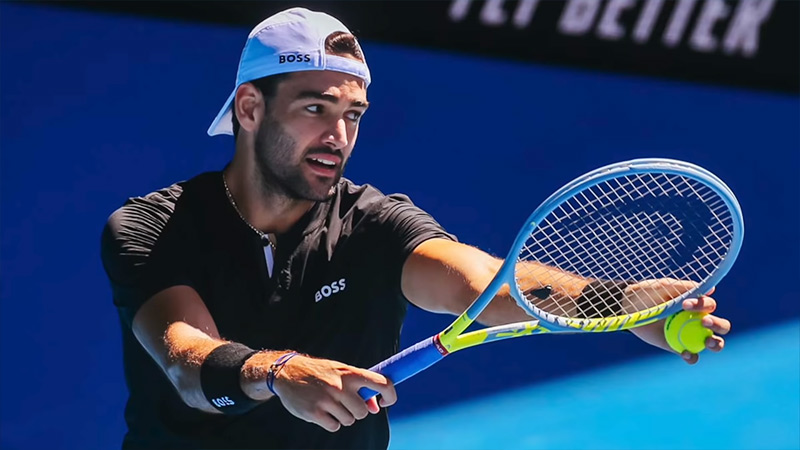
In the refined world of competitive tennis, few maneuvers spark as much immediate debate as the underhand serve.
Often dismissed as a gimmick or a breach of etiquette, this tactical choice frequently finds itself at the center of polarized discussions among fans, officials, and athletes.
However, beyond the subjective lens of tradition lies a clear framework of regulations that define the boundaries of the game.
Understanding whether the underarm serve is permitted requires a deep dive into the official mechanics of the sport and the strategic rationale that drives modern players to employ it.
The Definitive Verdict on Legality
The most fundamental question regarding this technique has a definitive answer: underhand serves are perfectly legal in both competitive and recreational tennis.
There is a widespread misconception that a serve must be struck from an overhead position to be valid; however, the governing bodies of the sport do not mandate a specific height or racket path for a legal delivery.
To ensure an underhand serve is recognized as valid and does not result in a fault, a player must adhere to three specific technical requirements:
- Contact in the Air: The ball must be struck with the racket before it makes contact with the court surface. Any instance where the ball bounces before being hit results in an immediate service fault.
- A Valid Release: The server must release the ball from their hand properly, mirroring the standard requirements of an overhead toss. This ensures that the ball is “in play” the moment it leaves the hand, preventing players from simply dropping and hitting the ball in a way that obscures the start of the motion.
- Baseline Integrity: Just as with an overhead serve, the player must remain entirely behind the baseline until the moment of contact. Stepping on or over the line before the racket meets the ball constitutes a foot fault.
As long as these criteria are met, the serve is technically indistinguishable from an overhead delivery in the eyes of the rules. The USTA provides detailed guides on these specifics to help players navigate the historical context and exactness of these regulations.
The Tactical Rationale: Weaponizing Surprise
If the underhand serve is legal, why is it used so sparingly? The answer lies in the risk-reward profile of the shot. Traditionally, the overhead serve is the most dominant weapon in tennis, allowing players to utilize height, leverage, and gravity to generate immense speed and spin.
Transitioning to an underhand motion sacrifices this power. However, modern tennis has seen a shift in court positioning that has made the underhand serve a viable tactical counter-measure.
Exploiting Deep Positioning
The primary strategic use of the underhand serve is to catch opponents off guard, particularly those who stand significantly behind the baseline to return heavy, fast serves.
When a returner is positioned six to ten feet behind the baseline, they give themselves more time to react to a 120-mph overhead serve.
However, this distance makes them extremely vulnerable to a short, low-bouncing underhand delivery. By the time the opponent recognizes the change in motion and sprints forward, the ball has often already bounced twice or forced a weak, defensive return.
Disrupting Rhythm and Psychology
Beyond the physical placement of the ball, the underhand serve acts as a psychological disruptor. Tennis is a game of rhythm and anticipation. By breaking the expected visual cue of an overhead toss, the server forces the returner to abandon their pre-programmed response.
This “element of surprise” can linger in an opponent’s mind for several subsequent games, making them second-guess their positioning and potentially eroding their confidence in their return game.
The Etiquette Impasse: Sportsmanship vs. Strategy
Despite its technical legality, the underhand serve remains one of the most controversial shots in the game.
This tension arises from the unwritten “gentleman’s code” that has governed tennis for over a century. Many traditionalists view the underhand serve as a sign of disrespect or a lack of competitive integrity.
The “Disrespect” Narrative
The stigma associated with the shot often stems from the perception that the server is “tricking” the opponent rather than beating them with skill.
This sentiment is particularly heightened when the serve is used during high-stakes moments, such as match point. In these instances, critics argue that the server is looking for a “cheap” win rather than engaging in a standard baseline or service battle.
The Counter-Argument: A Tool for Efficiency
On the other side of the debate, many modern analysts and players argue that any legal move should be fair game.
From this perspective, if an opponent chooses to stand so far back that they cannot cover the front of the court, the server is simply being efficient by exploiting that gap.
In a professional landscape where margins are razor-thin, ignoring a legal tactical advantage could be seen as a failure in strategy rather than a sign of respect.
Technical Execution and Training
For players looking to integrate this maneuver into their repertoire, execution is key. It is not merely about tapping the ball over the net; it is about replicating a consistent motion that disguises the intent until the last possible microsecond.
- The Disguise: The most effective underhand serves begin with a stance that looks identical to an overhead serve. Only at the last moment, as the arm begins its upward path, does the player drop the racket head to strike the ball underhand.
- Spin and Placement: Like a drop shot, the underhand serve benefits from backspin (underspin). This causes the ball to stay low and “die” upon impact with the court, making it nearly impossible for a deep-standing opponent to reach it in time.
- The “When” Factor: It is rarely wise to use this serve multiple times in a single set. Its value is almost entirely tied to its rarity. Using it too often allows the opponent to adjust their positioning, effectively neutralizing the advantage.
Frequently Asked Questions
Is the underhand serve legal in professional ATP and WTA matches?
Yes. The rules regarding the serve are standardized across competitive levels. As long as the ball is hit in the air and the toss is valid, it is permitted.
Can I use the underhand serve on match point?
Technically, yes. However, be aware that this is often where the most controversy arises. Using it on a match point is frequently viewed by opponents and spectators as a sign of disrespect.
What happens if the ball bounces before I hit my underhand serve?
That is a service fault. The rules state you must strike the ball with your racket before it touches the ground.
Why do some people think it’s illegal?
Most players are taught the overhead serve from day one, and it is the dominant method used by nearly everyone. Because it is rarely seen in professional play, many assume there must be a rule against it. Reviewing the official USTA guides clarifies that no such prohibition exists.
Conclusion: A Legitimate Tool in the Modern Game
The underhand serve occupies a unique space in tennis: it is a bridge between the rigid rules of the USTA and the fluid, often subjective world of sportsmanship. While it may never replace the overhead serve as the primary method of starting a point, its legality is unquestionable.
For the modern athlete, the underhand serve represents a commitment to versatility. It is a reminder that tennis is not just a contest of power, but a game of chess played on grass, clay, or hard court.
By understanding the exact rules—striking the ball in the air, ensuring a proper toss, and avoiding foot faults—players can safely employ this tactic without fear of an official penalty.
Whether one views it as a brilliant strategic adjustment or a breach of tradition, the underhand serve is a permanent and legal fixture of the sport, offering a subtle reminder that in tennis, as in life, it pays to expect the unexpected.