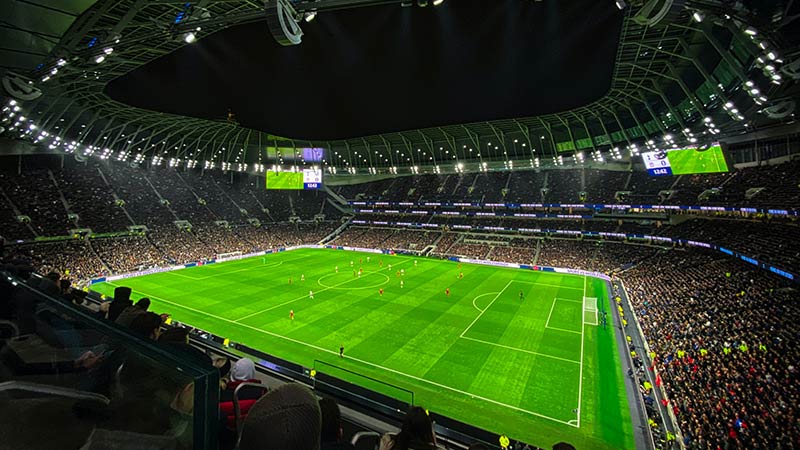
Many football enthusiasts assume that every professional match takes place on an identical rectangle of grass.
While the Premier League strives for a level of uniformity to ensure fair competition, the reality is a fascinating mix of strict regulations and historic exceptions.
Under the official league handbook, a standard size is mandated, yet several iconic stadiums deviate from these figures due to physical and geographical constraints.
This guide explores the regulatory framework of Rule K, the specific dimensions of every top-flight ground, and how these variances influence modern tactical strategies and home-ground advantages.
The Regulatory Framework: Understanding Rule K
The governance of pitch dimensions is not left to chance or club whim. The Premier League establishes clear expectations to ensure that the “product” remains consistent for broadcasters, players, and officials alike.
This consistency is vital for the technical application of the game, including the calibration of tracking technologies and tactical planning.
The Role of the Premier League Handbook
The primary authority on this subject is Rule K of the Premier League Handbook. This rule serves as the constitutional baseline for every club entering the top flight.
It explicitly states that the standardized pitch measurement for all matches is 105 meters in length by 68 meters in width. For the vast majority of teams, this 7,140-square-meter area is the non-negotiable stage for their home fixtures.
This alignment with international standards ensures that players transitioning from domestic league play to European or international competitions face no significant adjustment in their spatial awareness.
Special Exemptions and Historic Constraints
Despite the strict wording of Rule K, the Premier League Board acknowledges that football is a game deeply rooted in history.
Many English stadiums were built long before modern standardization was a priority, often nestled into tight urban environments or restricted by natural landmarks.
Consequently, the Board grants special exemptions to clubs that can prove it is physically impossible to meet the 105m x 68m requirement.
These exemptions are not permanent passes but are reviewed based on the stadium’s infrastructure, ensuring that whenever a club renovates or moves, they move closer to the standardized ideal.
Comparing Dimensions Across the League
When analyzing the current landscape of the league, one finds that while the “standard” is the majority, the “outliers” are what create the unique character of English football.
These variations, though seemingly small in terms of meters, represent thousands of square feet of difference in total playing area.
The Standardized Majority
Currently, sixteen clubs in the Premier League strictly adhere to the 105m x 68m requirement. This group includes the league’s most modern and high-capacity venues.
Stadiums such as Manchester City’s Etihad Stadium, Manchester United’s Old Trafford, and Arsenal’s Emirates Stadium are all designed to these exact specifications.
For these clubs, the consistency of the pitch size allows for a highly repeatable tactical approach, where players can rely on “muscle memory” regarding the distance of a cross-field switch or the timing of a through-ball into the channels.
A Breakdown of Pitch Deviations
The following data highlights the clubs that operate under exemptions and how their surfaces differ from the league norm:
| Stadium | Club | Dimensions | Total Area | Key Characteristics |
|---|---|---|---|---|
| City Ground | Nottingham Forest | 105m x 71m | 7,455 m² | The league’s largest and widest pitch. |
| Standard Pitch | 16 Clubs | 105m x 68m | 7,140 m² | The official league requirement. |
| Stamford Bridge | Chelsea | 103m x 67m | 6,901 m² | Shorter and narrower than the average. |
| Anfield | Liverpool | 101m x 68m | 6,868 m² | A significantly shorter playing surface. |
| Selhurst Park | Crystal Palace | 101m x 68m | 6,868 m² | Historic constraints from 1924. |
| Craven Cottage | Fulham | 100m x 65m | 6,500 m² | The league’s smallest playing area. |
The Tactical Impact: How Size Dictates Play
The variation in pitch dimensions is far from a mere statistical curiosity; it is a fundamental component of match strategy. Coaches and analysts spend hours tailoring their game plans to the specific dimensions of the upcoming weekend’s venue.
A team that thrives on a sprawling surface might find themselves suffocated in the tight confines of a historic ground.
Exploiting the Width at Nottingham Forest
Nottingham Forest’s City Ground provides the most expansive playing surface in the league, measuring 105m x 71m. With an extra three meters of width compared to the standard, the total area reaches 7,455 square meters.
This extra space is a haven for high-intensity, possession-based teams. It allows wingers to hug the touchline, pulling opposition full-backs out of position and creating massive gaps in the “half-spaces” for creative midfielders to exploit.
Defending on such a wide pitch requires immense lateral fitness, as players must cover more ground to shift their defensive block from side to side.
The “Squeeze” at Craven Cottage and Stamford Bridge
On the opposite end of the spectrum, Fulham’s Craven Cottage is the smallest pitch in the division at just 100m x 65m. This reduction in size—nearly 1,000 square meters less than Nottingham Forest—fundamentally changes the flow of the game.
Smaller, tighter fields naturally block passing lanes and aid defensive shapes. It is much easier for a well-organized team to “park the bus” or execute a mid-block when the pitch is five meters shorter and three meters narrower.
At Stamford Bridge, which is also shorter and narrower than average (103m x 67m), the game often feels more physical and frantic, as players have less time on the ball before being pressured by an opponent.
Historical Context and Infrastructure Constraints
The reasons for these deviations are rarely tactical by choice; they are almost always a result of architectural necessity.
In the early 20th century, stadiums were built to fit the available land in industrial hubs, with little regard for the standardized regulations that would arrive decades later.
Geography vs. Regulation: The Case of Fulham
Craven Cottage is perhaps the most famous example of geographical limitation. Situated on the banks of the River Thames, the stadium is physically hemmed in by the water on one side and historic residential housing on others.
To expand the pitch to the standard 105m x 68m would require major structural changes to the stands that are either financially unviable or restricted by local planning laws.
As a result, the Premier League permits the smaller dimensions, which in turn creates one of the most intimate and intense atmospheres in professional football.
Legacy Grounds: Anfield and Selhurst Park
Both Liverpool’s Anfield and Crystal Palace’s Selhurst Park feature pitches that are 101 meters long—four meters shorter than the league standard.
Selhurst Park, built in 1924, reflects the era’s stadium design where stands were placed as close to the pitch as possible to maximize capacity and atmosphere.
While Liverpool has undergone massive stadium expansions with the New Main Stand and the Anfield Road End, the pitch itself remains constrained by the footprint of the original stands.
This shorter length can actually benefit teams that employ a high-pressing style, as it reduces the distance the forwards need to travel to trap the opposition in their own defensive third.
The Psychological Edge and Fan Proximity
Beyond the tactical board, pitch dimensions influence the psychological environment of a match. The physical distance between the touchline and the front row of the stands can vary significantly based on the pitch size and stadium design.
Amplifying the Atmosphere
In smaller stadiums with tighter pitches, the crowd is often literally on top of the players. This proximity can be intimidating for visiting teams and officials alike.
At grounds like Selhurst Park or Craven Cottage, the noise from the fans is more concentrated, creating a “cauldron” effect. This environment aids the home team’s defensive resolve, making the smaller pitch feel even more congested for the attacking side.
The Modern Multi-Purpose Venue
In contrast, modern standardized stadiums like the Tottenham Hotspur Stadium or the London Stadium are built with larger perimeters. While they adhere to the 105m x 68m rule, they often have more significant “run-off” areas.
This can sometimes lead to a perceived loss of atmosphere compared to the historic grounds, but it provides a safer and more consistent environment for players to perform at their technical peak without fear of colliding with stadium walls or fans.
Frequently Asked Questions
Are these pitch sizes the same for the Champions League?
While the Premier League allows exemptions for historic grounds, UEFA is often stricter for the Champions League. However, most Premier League teams that qualify for Europe already have standard 105m x 68m pitches.
Does the pitch size affect VAR?
VAR systems are calibrated to the specific dimensions of each pitch before every match. While the size doesn’t change the rules of offside, the camera angles in tighter stadiums can sometimes make the visualization of lines more challenging for broadcasters.
Why don’t clubs just change their pitch size every week?
Clubs must register their pitch dimensions with the Premier League before the season starts. They are not allowed to move the lines between games to suit a specific opponent, as this would undermine the integrity of the competition.
Conclusion: The Enduring Value of Variety
The fact that Premier League pitches are not all the same size is one of the league’s most charming and competitive features.
While Rule K provides a necessary anchor of 105m x 68m, the exemptions granted to clubs like Fulham, Liverpool, and Chelsea preserve the historical integrity of the sport.
These variations ensure that “home-ground advantage” is a tangible reality based on spatial geometry and tactical adaptation, rather than just crowd noise.
Whether it is the wide-open expanse of the City Ground or the tight, river-side confines of Craven Cottage, the diversity of these playing surfaces remains a cornerstone of the English game’s unique identity.