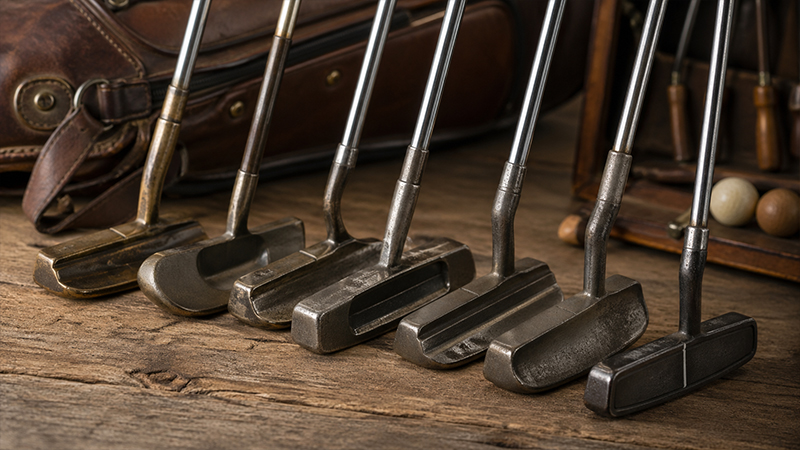
In the world of sports memorabilia, few items bridge the gap between functional equipment and high-value historical artifacts as seamlessly as vintage Ping putters.
What might look like a tarnished piece of metal in a garage sale could potentially be a “Scottsdale” era masterpiece worth thousands of dollars.
For the modern collector or the casual golfer who has inherited a legacy bag, understanding the nuances of these clubs is essential for both preservation and profit.
This comprehensive guide explores the evolution of Karsten Solheim’s revolutionary designs, providing a deep dive into the specific markers that dictate market value, from the legendary “Scottsdale” address to the chemical composition of the metals used.
The Heritage of Innovation: Why Ping Putters Hold Value
To understand the value of a vintage Ping putter, one must first understand the “Karsten” legacy. Before Ping, putters were largely blade-style or heavy mallets with little forgiveness.
Karsten Solheim, an engineer by trade, revolutionized the game in his garage by introducing heel-toe weighting and the “Anser” design.
The market value of these putters is not merely based on age; it is driven by their role in golf history.
A putter used to win a Major in the 1960s or 70s carries an inherent “DNA of success” that collectors crave. Today, the market for these clubs ranges from $50 to over $1,000, with rarity and specific manufacturing stamps serving as the primary price drivers.
The “Address” Factor: The Definitive Valuation Marker
The most critical step in identifying a high-value Ping putter is looking at the address stamped into the cavity or on the sole of the club head. This physical location denotes the era of production and is the first thing any serious appraiser will check.
The “Scottsdale” Holy Grail
Putters stamped with a “Scottsdale” address (typically P.O. Box 1345, Scottsdale, AZ) are the most sought-after and valuable models in existence. These represent the earliest years of Karsten Manufacturing, before the company moved to its larger Phoenix facility.
- Market Reality: If you find a Scottsdale Anser or a 69BC in mint condition, you are looking at a high-value asset that can easily exceed $1,000 in the collector’s market.
The “Phoenix” Transition
As the company grew, production moved to Phoenix. While these putters are still highly functional and collectible, they were produced in much higher volumes.
- Market Reality: “Phoenix” stamped putters are generally more common and usually fall into the mid-to-lower valuation tiers, though specific limited runs remain outliers.
Decoding Model Rarity: From Ansers to 69BCs
While Ping has produced dozens of models, a few stand out as the pillars of the vintage market.
The Legendary Anser
The Anser is arguably the most influential club design in golf history. However, not all Ansers are created equal.
- The “Slot” in the Back: Early Anser models featuring a “slot” or “sound slot” in the sole are highly prized. This slot was designed to give the putter its signature “ping” sound upon impact.
- Patent Labels: Look for “Patent Pending” or specific patent numbers (like 8,241,146). These early designations indicate a putter from the initial production runs, significantly boosting value.
The 69BC and Specialty Models
Beyond the Anser, models like the 69BC are considered premium finds. A Scottsdale-stamped 69BC in mint condition is a “blue chip” investment in the golf collecting world, often reaching the upper echelons of the $100–$1,000+ price bracket.
Material Science: The Allure of BeCu and BeNi
In the 1980s and 90s, Ping experimented with materials that offered a softer feel and a unique aesthetic.
These materials have since become legendary because they are no longer used in mass production due to environmental and safety regulations regarding the casting process.
Copper Beryllium (BeCu)
BeCu putters are easily identified by their deep, reddish-gold hue that oxidizes into a dark, chocolatey brown over time.
- Why they are valuable: Collectors prize BeCu for its distinct feel and the fact that they are “finite” resources. These models are often highly collectible and command a premium over standard stainless steel versions.
Copper Nickel (BeNi)
Similar to BeCu, Copper Nickel (BeNi) models offered a different density and feel. While slightly less common than BeCu, they are equally sought after by enthusiasts looking for a specific “soft” response off the face.
Condition and the “Patina” Debate
In many antique markets, “mint condition” means shiny and new. In the vintage Ping market, the rules are slightly different.
The Value of Natural Patina
Experienced collectors often prefer a natural, aged patina over a club that has been polished to a high shine. For metals like Copper Beryllium, the dark oxidation is a sign of authenticity and age.
- Pro Tip: Avoid using harsh chemicals or abrasive cleaners on vintage Pings. Over-cleaning can actually decrease the value by removing the character that collectors look for.
Originality Matters
A vintage putter is a sum of its parts. To reach the highest valuation tier, a club should ideally retain its:
- Original Shaft: Look for the original “True Temper” or Ping stickers.
- Original Grip: While rubber degrades over time, an original “Ping Man” grip in good condition adds significant value to the piece.
The Valuation Matrix: What Is Your Putter Worth?
Based on current market trends and historical data, vintage Ping putters generally fall into three distinct pricing tiers:
| Tier | Price Range | Characteristics |
|---|---|---|
| High-Value | $100 – $1,000+ | Early Scottsdale models (Anser, 69BC), mint condition rare patents, BeCu models in exceptional state. |
| Mid-Value | $50 – $150 | Standard 1970s/80s Phoenix models (Anser 2, PAL, Cushin) in good condition with original parts. |
| Low-Value | $10 – $40 | Common, heavily used, or modified models (cut shafts, non-original grips) often found in bargain bins. |
FAQ: Expert Insights for Collectors
Q: How can I tell if my Ping Anser is a “Scottsdale” model?
A: Look at the cavity on the back of the putter. It will explicitly state “Scottsdale, AZ” along with a P.O. Box. If it says “Phoenix, AZ,” it is a later model. This single word difference can mean a value swing of hundreds of dollars.
Q: Should I restore my old Ping putter to make it look new?
A: Generally, no. While a light cleaning with soap and water is fine, aggressive polishing or re-tumbling can strip the original patina and stamps, which is what collectors value most. Original condition is almost always favored.
Q: Are “Patent Pending” models more valuable?
A: Yes. These denote the very first production runs before the trademark or patent was fully granted. For an Anser, a “Pat. Pend.” stamp is a strong indicator that the club belongs in the mid-to-high value tier.
Q: What is the most common “bargain bin” find?
A: You will frequently see stainless steel Phoenix-era Anser 2s or PAL models. While these are fantastic putters to play with, they were mass-produced and typically stay in the $50–$75 range unless they are in “new-old-stock” condition.
Strategic Conclusion: Your Next Steps
Whether you are looking to flip a thrift store find for a profit or you want to preserve a family heirloom, the key to success in the vintage Ping market is diligent identification.
- Check the Address: Scottsdale is the goal.
- Identify the Material: BeCu and BeNi are the “premium” metals.
- Assess the Components: Keep the original grip and shaft if possible.
- Embrace the Patina: Don’t scrub away the history.
Vintage Ping putters are more than just golf clubs; they are the blueprints of the modern game. By understanding these value drivers, you can ensure that you are making informed decisions in the ever-growing market of golf collectibles.